
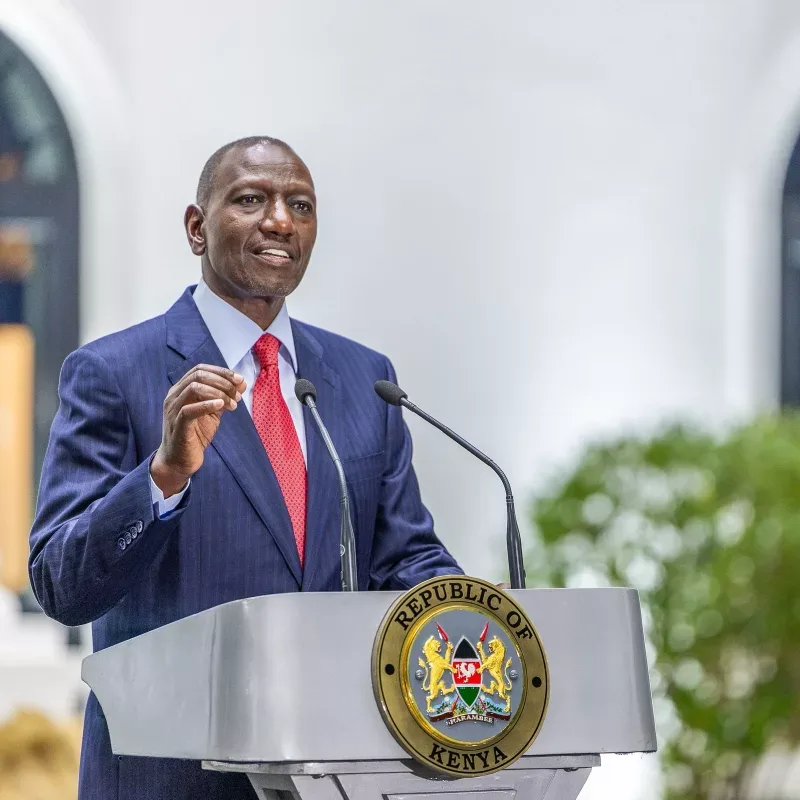
Speaking during the Industrialisation Summit at the Kenyatta International Convention Centre (KICC) on Wednesday, November 4, 2026, the Head of State challenged Kenyan footwear manufacturers to increase production and take advantage of the huge market presented by millions of learners across the country.
According to a report by Kenyans.co.ke published on Wednesday, Ruto said the government wanted local manufacturers to take responsibility for producing shoes for school-going children rather than relying on imported footwear.
"We will now move a step further. We want you to manufacture all the shoes for our school-going children, and we have 14 million of them," Ruto stated.
The announcement signals a major opportunity for Kenya's leather industry, with the government seeking to transform locally available raw materials into finished products while creating a reliable market for manufacturers.
The initiative is also expected to support the government's Buy Kenya, Build Kenya agenda by encouraging institutions and consumers to purchase products manufactured within the country.
The Star, in its November 4 coverage of the Industrialisation Summit, reported on Ruto's engagement with local manufacturers and his promotion of locally produced goods during the event.
The President's latest announcement comes as the government advances investments in leather processing and footwear manufacturing.
One of the major projects supporting this ambition is the Kenya Leather Industrial Park in Kinanie, Machakos County, which is intended to provide facilities for leather processing, footwear production and other related industries.
According to the Kenya News Agency, the government officially handed over the park's first warehouse to Realeather Limited on September 1, 2026, marking an important step towards attracting private investment into the sector.
The Kenya Leather Development Council has also identified the industrial park as a major project intended to bring together leather manufacturers, footwear producers and other businesses involved in the leather value chain.
In September, KBC Digital reported on the establishment of a modern leather testing laboratory at the industrial park, an investment expected to help Kenyan manufacturers improve product quality and meet international standards.
Ruto's announcement also builds on his previous commitments to reduce Kenya's dependence on imported footwear.
On October 8, while addressing Kenyans during an Agriculture and Food Security town hall at Jamhuri Park in Nairobi, the President announced that the country was targeting an end to shoe imports within the next two to three years.
People Daily reported on October 9 that Ruto wanted Kenya to manufacture its own footwear and other leather products, arguing that the country should benefit more from its livestock resources instead of importing finished products.
The Standard also reported on the President's concerns over the smuggling of Kenyan hides and skins to other countries, noting that the government wanted more raw materials processed locally.
Beyond supplying schoolchildren, the government's wider leather industry ambitions include increasing local footwear production, attracting investors, expanding manufacturing capacity and creating employment for young people.
If successfully implemented, the proposed school footwear initiative could create a substantial market for local manufacturers, support livestock farmers, stimulate leather processing and open up new employment opportunities across the country.
However, the government will need to address production capacity, affordability, quality standards and distribution to ensure manufacturers can meet the footwear needs of millions of learners nationwide.


Comments
No approved comments yet.