

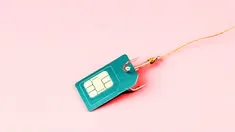
As millions of Kenyans rely on mobile phones for M-Pesa, mobile banking, business transactions and access to digital services, criminals are increasingly targeting something many people take for granted: their phone number.
A SIM swap occurs when criminals fraudulently convince a mobile network operator to transfer a victim's phone number to a SIM card controlled by them.
Once the transfer is successful, the victim's original SIM card can stop working while the criminal's SIM begins receiving calls, SMS messages and potentially authentication codes linked to the victim's financial accounts.
But SIM-swap fraud does not necessarily begin with a criminal knowing your M-Pesa PIN.
Sometimes, it starts with something much simpler:
Your identity.
What is SIM-swap fraud?
SIM-swap fraud is a form of cybercrime in which a criminal takes control of a victim's mobile number by obtaining a replacement SIM card and having the number transferred to it.
The fraud often relies on social engineering — manipulating a person or system into believing that the criminal is the legitimate owner of the number.
Criminals may obtain personal information through phishing, impersonation, compromised accounts or other methods.
That information can then be used to facilitate a fraudulent SIM replacement.
Once the criminal controls the number, the victim may suddenly lose network connectivity while the fraudster begins receiving calls and messages intended for the legitimate subscriber.
If the phone number is linked to mobile money, banking, email or other digital accounts, the consequences can be serious.
The danger, therefore, is not simply losing a SIM card.
It is losing control of a digital identity that may be connected to your money.
How does a SIM-swap attack work?
Although the exact method can vary, a typical SIM-swap attack may follow several stages:
1. The criminal gathers information.
The fraudster obtains personal details that can help them impersonate the victim.
2. The criminal impersonates the subscriber.
The fraudster attempts to convince a mobile network representative or agent that they are the legitimate owner of the number.
3. A replacement SIM is activated.
The victim's number is transferred to a SIM card controlled by the criminal.
4. The victim loses network service.
The original SIM may suddenly stop connecting to the network.
5. The criminal receives calls and messages.
SMS-based authentication codes and other communications may now reach the fraudster.
6. Linked accounts may be targeted.
The criminal can attempt to access financial or digital services connected to the compromised number.
This is why an unexplained loss of mobile connectivity should not always be dismissed as an ordinary network problem.
Kenya's fraud complaints are rising
The Communications Authority of Kenya's latest consumer complaints data also points to growing concerns around fraud and digital financial services.
Between April and June 2026, complaints involving fraud and scams within the digital financial services and mobile-money category rose to 86, up from 47 in the previous quarter — an 83 per cent increase.
The regulator has also highlighted risks involving compromised subscriber identities, unauthorised SIM replacement, identity theft and misuse of personal information.
The figures are significant because Kenya's digital economy is increasingly built around mobile connectivity.
For millions of Kenyans, a mobile number is no longer simply a way to make and receive calls.
It can be connected to M-Pesa, mobile banking, email accounts, business platforms and other digital services.
That makes a compromised phone number potentially much more valuable than the SIM card itself.
KSh4.4 million case exposes the danger
The threat became particularly clear in a Kenyan case involving a customer who lost approximately KSh4.4 million after fraudsters hijacked her phone line through a SIM swap.
The money was subsequently withdrawn from her Diamond Trust Bank account.
The High Court later found both Safaricom and Diamond Trust Bank responsible for the loss, allocating 60 per cent of the liability to Safaricom and 40 per cent to DTB.
The case is significant because it moves the conversation beyond the assumption that digital fraud is simply the result of a customer losing or revealing their PIN.
Instead, it raises a much bigger question:
Who is responsible when criminals exploit weaknesses across telecommunications and financial systems?
The case also demonstrates why SIM-swap fraud should not be treated solely as a telecommunications problem.
When a mobile number becomes a gateway to financial services, weaknesses in the process of replacing or transferring a SIM can have consequences far beyond the phone itself.
DCI cases show how SIM-swap criminals operate
The threat is not theoretical.
In July 2026, Kenya's Directorate of Criminal Investigations announced the arrest of eight suspects over an alleged SIM-swap scheme in Marsabit.
According to the DCI, the suspects allegedly posed as customers at an M-Pesa shop and deceived the operator before swapping the M-Pesa SIM card.
Investigators said the fraudulent swap provided unauthorised access to the complainant's bank account, resulting in the theft of more than KSh1.2 million.
The DCI subsequently advised M-Pesa agents and members of the public to exercise caution and avoid handing over their SIM cards, phones or M-Pesa handsets to customers.
In another case, DCI detectives arrested a suspected SIM-swap fraudster accused of siphoning KSh450,500 from a woman's M-Pesa account.
According to investigators, the victim's mobile and M-Pesa services stopped working in 2024. The stolen money was subsequently transferred in two transactions to a number registered under the suspect's name.
These cases demonstrate an important evolution in digital fraud.
Criminals do not necessarily need to hack directly into a bank's computer systems.
Sometimes, the easiest way into a financial account is through the human and administrative processes surrounding the phone number.
SIM-swap fraud is becoming a bigger cybercrime threat
The scale of the problem becomes clearer when individual Kenyan cases are placed alongside broader cybercrime data.
INTERPOL's African Cyberthreat Assessment Report 2026 cites a 327 per cent increase in SIM-swap fraud investigations in Kenya in 2025.
More than 123,000 fraudulent SIM cards were reportedly issued, while an estimated US$3.8 million — roughly KSh491 million — was drained from Kenyan mobile wallets.
The figures suggest that SIM-swap fraud is no longer a niche crime affecting a handful of unlucky victims.
It is becoming part of Kenya's wider digital-financial crime problem.
And as more Kenyans rely on mobile platforms for payments, savings, banking and business transactions, the financial incentive for criminals remains significant.
What are the warning signs of a SIM swap?
One of the biggest warning signs can be surprisingly simple:
Your phone suddenly loses network service for no obvious reason.
If your SIM suddenly stops connecting to the network while your phone itself appears to be functioning normally, do not automatically assume it is a temporary network problem.
It could mean that someone has transferred your number to another SIM.
Other warning signs may include:
- Unexpected loss of mobile network connectivity.
- Suddenly being unable to make or receive calls or SMS messages.
- Unexplained changes involving your mobile-money or bank accounts.
- Password-reset or authentication messages you did not request.
- Unexpected notifications about account activity.
- Friends or family telling you they cannot reach your number.
A single sign does not automatically prove that a SIM swap has occurred. However, an unexplained loss of service — particularly when accompanied by suspicious financial or account activity — should be treated seriously.
What should you do if you suspect a SIM swap?
Act immediately.
If you suddenly lose mobile service and suspect that your number may have been transferred without your permission:
1. Contact your mobile network operator immediately.
Use an official customer-care channel and report the loss of service and suspected SIM swap.
2. Contact your bank.
Tell the bank that your mobile number may have been compromised and ask what immediate steps can be taken to protect your account.
3. Secure your mobile-money account.
Report any suspicious transactions immediately and follow the provider's security procedures.
4. Change important passwords.
Prioritise email, banking and other accounts that use your phone number for authentication or password recovery.
5. Check for unauthorised transactions.
Review your bank and mobile-money activity for anything you do not recognise.
6. Report suspected fraud.
If money has been stolen or your identity has been misused, report the matter to the relevant authorities.
7. Preserve evidence.
Keep transaction messages, account notifications, phone records and other information that could help investigators.
Do not wait until the next morning.
When criminals have potentially gained control of your phone number, time matters.
How can you protect yourself from SIM-swap fraud?
You cannot completely eliminate the risk of SIM-swap fraud, but you can make it harder for criminals to impersonate you.
Avoid publicly sharing unnecessary personal information, particularly details that could help someone answer identity-verification questions or impersonate you.
Be suspicious of anyone asking for your:
- M-Pesa PIN
- Bank password
- One-time password
- Authentication code
- SIM details
- Other confidential account information
Never disclose authentication codes to someone who contacts you unexpectedly, even if they claim to represent a bank, mobile network operator or another trusted organisation.
M-Pesa agents should also be particularly cautious about handing over their SIM cards, phones or M-Pesa handsets.
Following the Marsabit arrests, the DCI specifically warned agents and members of the public against handing over such devices to customers and urged them to treat unusual requests as potential red flags.
And if your SIM suddenly stops working without explanation, treat it as a potential security incident, not merely an inconvenience.
Why SIM-swap fraud matters to every Kenyan
SIM-swap fraud exposes an uncomfortable weakness in Kenya's digital economy.
The country has built one of the world's most successful mobile-money ecosystems, allowing millions of people to send, receive, save and access money using a mobile phone.
But the same convenience that makes digital payments powerful can also make them attractive to criminals.
Your phone number can connect your identity to your money.
That means protecting your SIM card is no longer simply about protecting your ability to make calls.
It may be about protecting your bank account, your business, your identity and your financial future.
The next time your phone suddenly shows “No Service,” don't just restart it.
Stop and ask yourself:
“What if someone else is now receiving my calls?”
Do you want to be published? E-mail info@thedailywhistle.co.ke or WhatsApp 0721930260



Comments
No approved comments yet.