

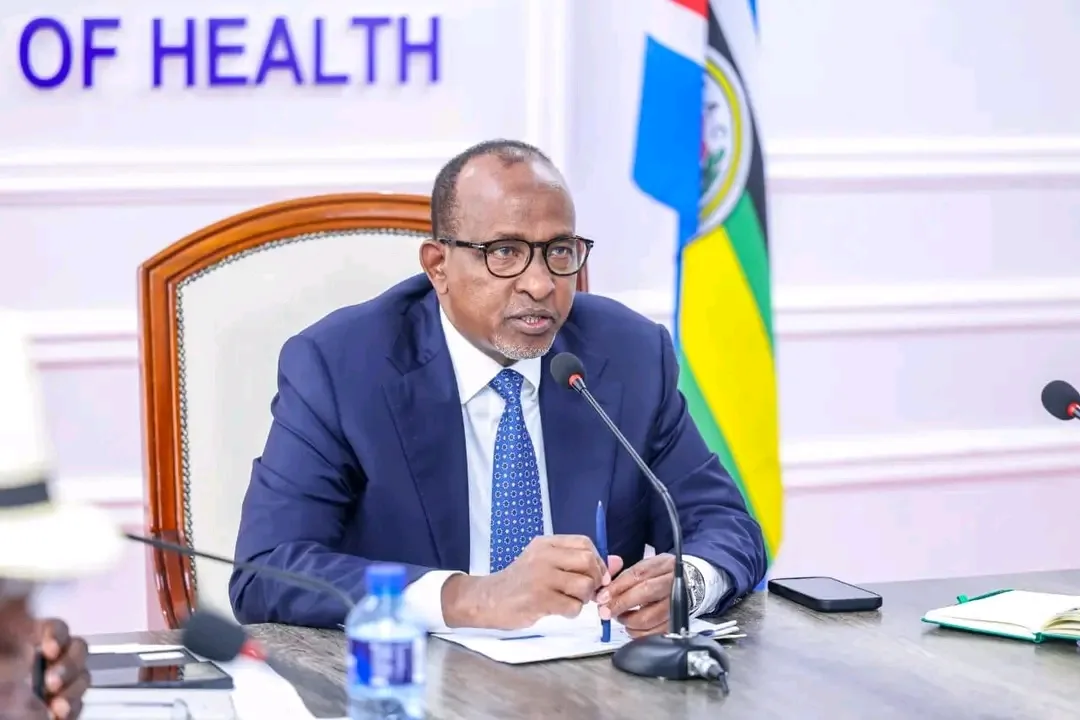
Duale has dismissed the coalition’s interpretation of Kenya’s electoral framework as “pure sophistry”, arguing that its position overlooks provisions of the Constitution and Elections Act that, in his interpretation, provide for the tallying and verification of presidential results at the national level.
The latest confrontation has opened a fresh legal and political battle over one of the most sensitive stages of Kenya’s presidential election process: how results from thousands of polling stations are aggregated, verified and ultimately declared.
“Former CJ Maraga coalition assertion on Bomas National tallying centre is not correct but pure sophistry!” Duale said.
“It is a ‘convenient’ interpretation of the Constitution and disregard of the electoral law which is anchored by the same Constitution,” he added.
Duale’s remarks came a day after the People’s Coalition on Electoral Reforms, led by Maraga, demanded that Bomas of Kenya—or any other facility—should not be used as a national presidential tallying centre.
Maraga’s coalition argues that the Constitution does not provide for a national tallying centre and that the IEBC should not retally, reverify or alter presidential results already declared at polling stations and constituency tallying centres.
Maraga: ‘There shall be no tallying centre at Bomas’
Maraga has grounded the coalition’s proposal on its interpretation of Articles 86 and 138 of the Constitution.
The former Chief Justice argues that presidential votes should be counted, tallied, verified and announced at polling stations, after which the results should be openly and accurately collated and announced by returning officers at the constituency level.
Maraga has also invoked the Supreme Court’s decision in the Maina Kiai case, arguing that results declared at polling stations are final and cannot subsequently be altered by the IEBC or any other person.
“You know the Maina Kiai decision made it very clear that the results announced at the polling stations are final. They cannot be altered by anybody. They cannot be altered by the commissioners of IEBC themselves or any other person,” Maraga said.
He further argued that the Constitution does not expressly establish a national tallying centre.
“The Constitution makes no provision, please understand me, the Constitution makes no provision for a national tallying centre,” Maraga said.
According to Maraga, the IEBC chairperson’s national responsibility should be limited to declaring the presidential result based on figures already announced at polling stations and constituency tallying centres.
“The Constitution doesn't give IEBC any authority to retally the results that have been announced at the polling stations and at the constituency level,” he said.
The coalition has therefore made abolition of the national tallying centre one of its key electoral reform demands ahead of the 2027 polls.
“So, the first mandatory reform that we are asking before the 2027 general election is that there shall be no tallying centre in Bomas or elsewhere and the IEBC chairman and commissioner shall not retally, re-verify or alter the results declared at the constituencies and at the polling stations,” Maraga said.
Duale: ‘Read the Constitution and electoral laws’
Duale has now challenged that interpretation, arguing that the Constitution must be read alongside national electoral legislation.
“Article 88(5) of the Constitution obligates the IEBC to perform its functions in accordance with the Constitution and national legislation which is the Elections Act,” Duale said.
He also pointed to Article 138, which sets out the constitutional framework for presidential elections.
“Article 138(3) of the Constitution further provides for the procedure to be followed in a presidential election which takes place in the manner prescribed by an Act of Parliament being the Elections Act,” he said.
Duale's intervention follows an earlier post in which he questioned how presidential results from thousands of polling stations would be aggregated if the national tallying process were scrapped.
“Really? Who will do the aggregation of the results from the thousands of polling stations across the country, Mr Former CJ. Don’t think we are idiots. Read the Constitution and electoral laws. Bure Kabisa,” Duale wrote.
He has now expanded that argument by citing specific constitutional provisions.
Duale invokes Article 138 in Bomas battle
Duale directly disputed the argument that the IEBC lacks constitutional authority to tally and verify presidential election results.
He cited Article 138(3)(c), arguing that it expressly provides for the IEBC to tally and verify the count after votes have been counted at polling stations.
“Article 138(3)(c) of the Constitution clearly provides that the IEBC after counting the votes in the polling stations, shall tally and verify the count and declare the result,” Duale said.
He also cited Article 138(10), which deals with the role of the IEBC chairperson in declaring the presidential election result.
“Additionally, Article 138(10) of the Constitution defines the role of the IEBC Chairperson to declare the result of the election,” Duale said.
The competing interpretations have placed Article 138 at the centre of the emerging debate over whether Kenya should retain the current national tallying arrangement or move to a system in which presidential results effectively conclude at constituency level.
Duale challenges claim that Bomas has no legal basis
Duale also rejected Maraga’s argument that Kenya’s constitutional framework does not provide for a national tallying centre.
“On the assertion that the Constitution does not make provision for a national tallying centre; Articles 88(5) and 138(3)(b) of the Constitution as read with section 39 of the Elections Act provides for the procedure for the determination and declaration of results,” he said.
He argued that the legal framework provides for results to move from polling stations to constituency tallying centres and subsequently to the national tallying centre.
“The IEBC shall transmit and deliver results from a polling station to the constituency tallying centre and to the national tallying centre,” Duale said.
He further pointed to provisions concerning the tallying and verification of results received at the constituency and national levels.
Duale's argument therefore directly challenges the Maraga coalition’s contention that the national tallying stage should be eliminated before the 2027 election.
Maraga coalition challenges Elections Act
The dispute goes beyond the physical location of Bomas of Kenya.
Maraga’s coalition has also questioned provisions of the Elections Act and election regulations that provide for a national tallying centre or appear to give the IEBC authority to retally and verify presidential results.
The coalition argues that those provisions should be changed because, in its interpretation, they conflict with the constitutional structure governing presidential results.
The coalition has also cited Supreme Court decisions arising from the 2017 and 2022 presidential election petitions in making its case against the current national tallying arrangement.
The result is a fundamental disagreement over the respective roles of presiding officers, constituency returning officers, the IEBC chairperson and the commission itself.
‘Constitution and Elections Act are still speaking loudly’
Duale has maintained that the existing constitutional and statutory framework already provides an answer to the controversy.
“From the foregoing, the Constitution and the Elections Act are still speaking loudly on matters elections notwithstanding the attempt at creating unnecessary arguments,” he said.
The Bomas dispute is now emerging as a major issue in Kenya’s preparations for the 2027 General Election.
For Maraga and his coalition, the priority is to prevent a national tallying centre from being used to retally, reverify or alter results already declared at lower levels.
For Duale, the Constitution and Elections Act must be read together, and the existing legal framework provides for the transmission, tallying and verification of presidential results at the national level.
The disagreement means the battle over Bomas is unlikely to remain a debate about a physical venue. It has become a wider contest over how Kenya should aggregate, verify and declare presidential results in 2027.
With Maraga insisting that “there shall be no tallying centre in Bomas or elsewhere” and Duale describing that position as “pure sophistry”, the legal framework governing Kenya’s next presidential election has once again moved to the centre of the political debate.
Comments
No approved comments yet.