

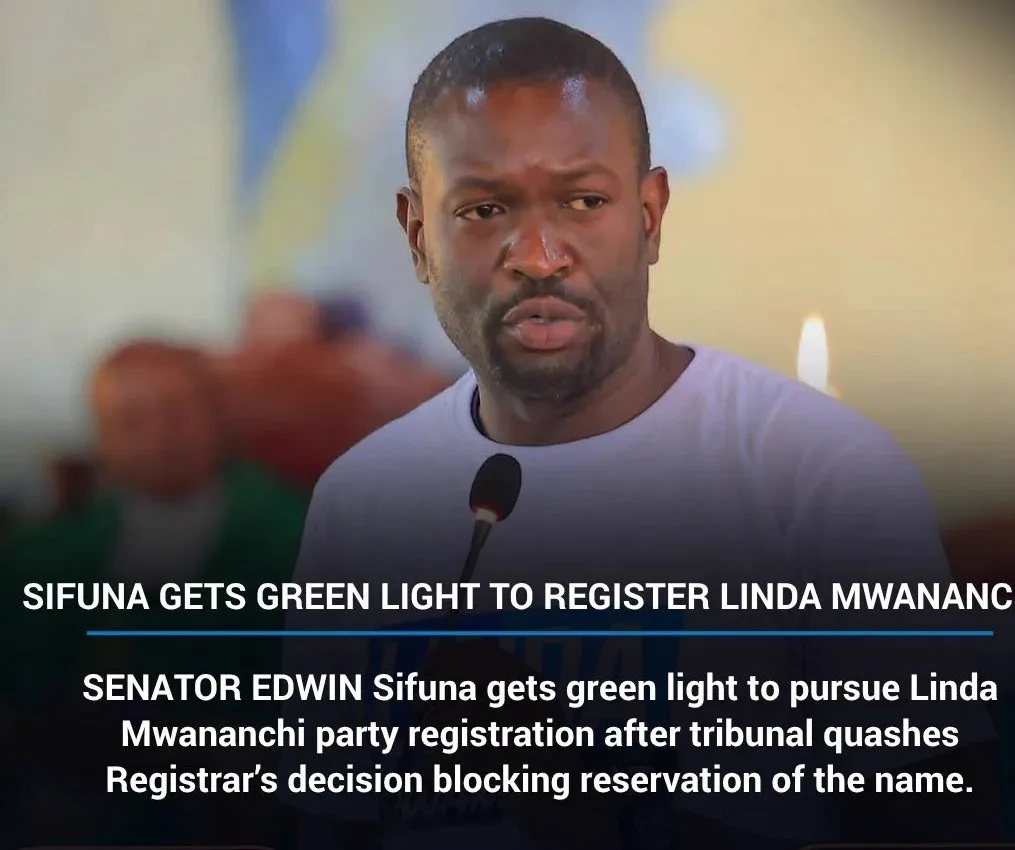
The decision allows the movement to proceed with its planned conference, where delegates are expected to consider the proposed transformation of The Equitable Party into the Linda Mwananchi Movement and ratify other organisational changes.
However, the ruling comes amid growing disagreements over the party's leadership, delegate selection and the procedures being used to formalise its political identity.
Daily Nation, in its November 12 report, confirmed that the Political Parties Disputes Tribunal dismissed applications seeking to stop the conference, clearing the way for the meeting to proceed.
The conference is expected to provide an important platform for Sifuna's political camp to formalise its organisational arrangements as the country approaches the 2027 General Election.
The Eastleigh Voice reported that the tribunal declined to suspend the November 13 meeting after two party members challenged the legality of the process used to convene it.
The complainants, Paul Kiragu Gachoka and Pamela Achieng Simwata, questioned the selection of delegates and argued that the party had failed to establish properly constituted structures to support the conference.
Their lawyer, Eddy Otieno, also questioned whether the party's National Governing Council had approved the proposed agenda and whether the necessary electoral structures had been established.
However, the tribunal allowed the conference to proceed while directing that the substantive complaint be heard fully.
This means that although Sifuna's camp has been cleared to hold the meeting, the underlying legal dispute has not been concluded. Resolutions adopted during the conference could still be affected by the eventual determination of the complaint.
People Daily, in its November 12 coverage, reported that the movement had maintained that its National Delegates Conference would proceed despite another legal challenge seeking to suspend the meeting.
In a communication to supporters, the movement explained that attendance would be restricted to designated delegates drawn from members of The Equitable Party who were registered by the time the conference notice was published.
It also indicated that counties had been allocated specific numbers of delegates according to their registered membership.
The conference is expected to consider the proposed party name change and ratify other decisions necessary to complete the transition.
Capital FM reported that the planned meeting had also attracted a separate legal challenge from Emmanuel Willyngtone Khamala, who questioned the manner in which the party's leadership and delegate structures had been constituted.
The petitioner argued that significant decisions had been made without sufficient consultation with registered members.
He further questioned the process through which Sifuna was unveiled as party leader and the subsequent decision to change the party's name.
Sifuna was named as an interested party in the proceedings.
Kenyans.co.ke also reported on the legal disagreements surrounding the planned conference, including objections to leadership appointments and the proposed organisational changes.
The disputes have placed the movement's internal governance under scrutiny as it seeks to establish itself as a political vehicle ahead of the next General Election.
Meanwhile, The Standard reported on October 30 that Sifuna's Equitable Party had unveiled its proposed leadership structure during the launch of the Linda Mwananchi political outfit.
Former Meru Governor Kawira Mwangaza, former Law Society of Kenya president Faith Odhiambo and Mavoko MP Patrick Makau were among those proposed for deputy leadership positions.
Vihiga Senator Godfrey Osotsi was proposed as party chairperson, while Suba South MP Caroli Omondi was named as the proposed secretary-general.
Trans Nzoia Governor George Natembeya was also unveiled as the proposed presidential campaign coordinator.
The proposed arrangements are among the matters expected to be addressed as the movement seeks to formalise its political structures.
In another development, TUKO reported on November 13 that the movement had decided to hold its National Delegates Conference behind closed doors, with journalists barred from covering the proceedings.
The movement's head of communication, Pauline Njoroge, confirmed that media coverage would not be permitted during the meeting.
The development means that the conference will take place under restricted attendance as delegates consider the proposed changes.
Sifuna's political reorganisation comes at a time when different political formations are positioning themselves ahead of the 2027 General Election.
The outcome of Friday's conference will therefore be closely watched, particularly regarding the proposed party name, leadership arrangements and the outstanding legal disputes.
For now, the tribunal's decision has allowed the meeting to proceed, but the final legal position on the contested internal processes remains pending.

Comments
No approved comments yet.