

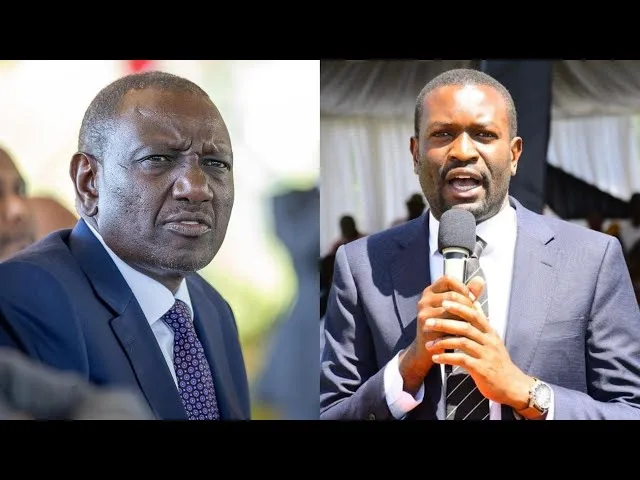
At the centre of the emerging contest is a question likely to matter directly to millions of voters: Should Kenya continue mobilising more revenue to finance government programmes, or should the government first cut waste and reduce the tax burden on citizens?
Sifuna is positioning his 2027 presidential bid around the latter approach, promising tax relief, tighter government spending, greater accountability and expanded economic opportunities.
Ruto, meanwhile, is defending an economic transformation agenda built around investment in sectors including agriculture, housing, healthcare, infrastructure and small businesses, alongside efforts to strengthen government revenue and fiscal management.
The contrast could give the 2027 presidential race a significant policy dimension beyond the political alliances and personalities already taking shape.
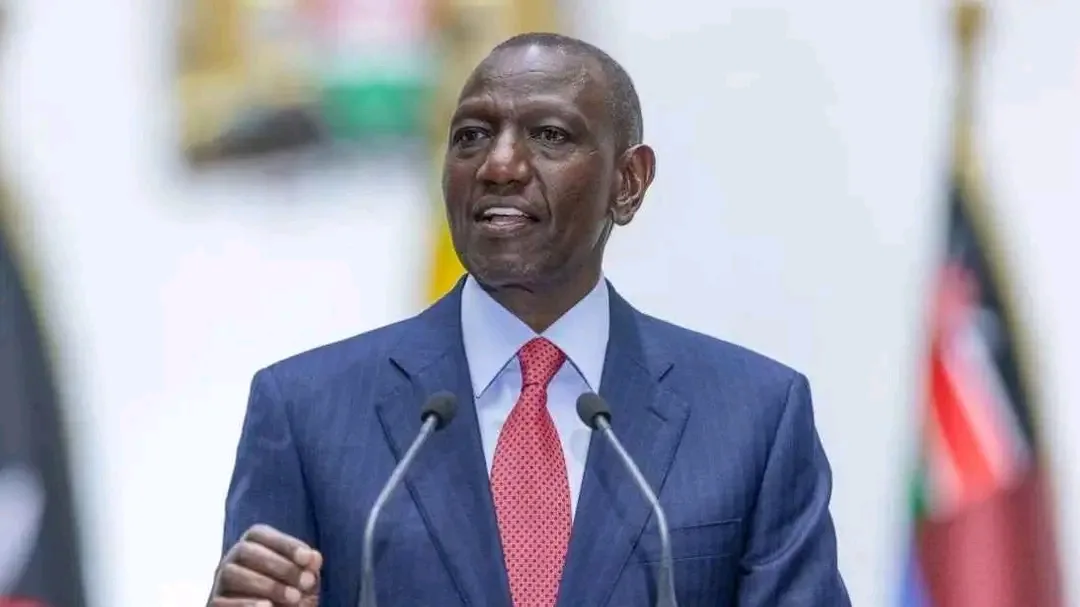
Ruto vs Sifuna: 5 Key Policy Differences
| Issue | William Ruto | Edwin Sifuna |
|---|---|---|
| Taxation | Revenue mobilisation to finance government programmes | Promises significant tax relief |
| Housing Levy | A key component of the affordable housing programme | Wants the levy scrapped |
| Government spending | Development spending alongside efforts to control waste | Major focus on eliminating wastage |
| Borrowing | Fiscal consolidation while financing development | Wants to reduce domestic borrowing and redirect credit to the private sector |
| Governance | BETA economic transformation agenda | Citizen participation, accountability and constitutionalism |
Sifuna's starting point: Cut waste before raising taxes
Sifuna's emerging economic programme is built around the argument that Kenya's problem is not simply how much money government collects, but how existing resources are spent.
During the unveiling of TEP in Nairobi on October 4, Sifuna said his team of experts had identified between Sh500 billion and Sh1.8 trillion in what he described as government wastage and “budgeted corruption”.
He said the experts were preparing a line-by-line analysis of the national budget to demonstrate where the savings could be found.
Sifuna has linked those proposed savings directly to tax relief.
He said a TEP administration would seek to scrap the Housing Levy and VAT on fuel and electricity if it could eliminate the wastage he identified.
The proposal would represent a significant change in the way the government approaches taxation and public expenditure.
For Sifuna, the argument is straightforward: government should become more efficient before asking Kenyans to contribute more.
Ruto's economic model: Investment and revenue mobilisation
Ruto's economic programme has centred on the Bottom-Up Economic Transformation Agenda, commonly known as BETA.
The approach has placed emphasis on agriculture, MSMEs, affordable housing, healthcare, infrastructure and other areas intended to expand economic activity and create employment.
The government's fiscal strategy has also involved efforts to mobilise domestic revenue while pursuing fiscal discipline.
That approach reflects a different view of the role of government in the economy.
Rather than relying primarily on expenditure cuts to create room for tax relief, the Ruto administration has sought to raise and manage public resources while using government investment to drive economic transformation.
Taxation could become the biggest 2027 fault line
Taxes could become one of the clearest areas of disagreement between Ruto and Sifuna.
Sifuna is promising to remove the Housing Levy and VAT on fuel and electricity, arguing that the resulting relief can be supported by eliminating government waste.
The proposals are particularly significant because the Housing Levy is linked to one of Ruto's flagship programmes, the affordable housing initiative.
That means a Sifuna administration would not simply be changing individual tax measures. It would be proposing a different approach to financing government priorities.
The question that will follow Sifuna's proposal is whether the savings he has identified can actually be realised and whether they would be sufficient to replace the revenue affected by the proposed tax cuts.
That is where his forthcoming manifesto and detailed budget analysis could become crucial.
Government spending: Two different starting points
Both political camps can point to the need for prudent management of public resources, but Sifuna is making government wastage a central part of his economic argument.
He has argued that Kenya can find substantial savings by eliminating unnecessary expenditure and corruption.
Ruto's model, on the other hand, continues to place significant emphasis on government-funded development programmes as instruments for economic transformation.
The difference is therefore not simply about whether government should spend.
It is about how much government should spend, where the money should go and how much taxpayers should be required to contribute.
Sifuna's borrowing proposal
Sifuna has also proposed reducing the government's appetite for domestic borrowing.
He says reducing domestic borrowing could free up credit for private businesses and potentially support investment and employment.
He has further claimed that his proposed measures could enable Kenya to balance its budget within 15 months.
Those are significant proposals, but they remain commitments from a political candidate rather than an implemented economic programme.
The TEP manifesto and the promised line-by-line budget analysis will therefore face scrutiny over how the proposed savings would be achieved while maintaining government services.
Young Kenyans at the centre of Sifuna's message
Sifuna is also attempting to make young people central to his political platform.
At the TEP launch, he said young Kenyans should not merely be mobilised for political rallies but should have a meaningful role in determining government policies and leadership.
He also promised greater participation for women and equal consideration for different regions and communities.
That gives his campaign a broader political message beyond taxation.
His argument is that economic opportunity, representation and accountability should be connected.
Accountability and constitutionalism
Sifuna is also presenting constitutionalism and accountability as fundamental parts of his proposed government.
He has said TEP would build its politics around ideas, programmes, accountability and service, while giving citizens a greater role in decision-making.
“We will listen before we speak. We will consult before we decide,” Sifuna said during the party's launch.
He has also argued that government should operate within the Constitution and the law, linking good governance to economic development.
The question Sifuna must answer
Sifuna's proposals offer a straightforward political message: cut government waste, reduce taxes and put more resources in the hands of citizens and the private sector.
But the most important test will be whether the proposed savings can be independently demonstrated.
The Sh500 billion to Sh1.8 trillion figure is a claim attributed to Sifuna and his policy experts. It should therefore not be treated as an established amount of recoverable government funds until the promised budget analysis is published and subjected to scrutiny.
That financial question could become one of the biggest economic debates of the 2027 campaign.
Could this policy divide shape 2027?
The emerging Ruto-Sifuna contest is becoming about more than political parties and alliances.
It is beginning to present voters with two different approaches to taxation, government expenditure, borrowing and economic opportunity.
Ruto's model places government investment and revenue mobilisation at the centre of economic transformation. Sifuna's emerging alternative puts tax relief, expenditure cuts, accountability and reduced borrowing at the centre.
Neither approach can be judged solely by campaign promises.
The decisive question will be whether each side can demonstrate that its policies are financially sustainable and capable of delivering the jobs, lower living costs, public services and economic opportunities Kenyans are seeking.
As the 2027 campaign develops, that could make the Ruto vs Sifuna policy divide one of the most closely watched debates in Kenya's presidential race.
Do you want to be published? E-mail info@thedailywhistle.co.ke or WhatsApp 0721930260


Comments
No approved comments yet.