
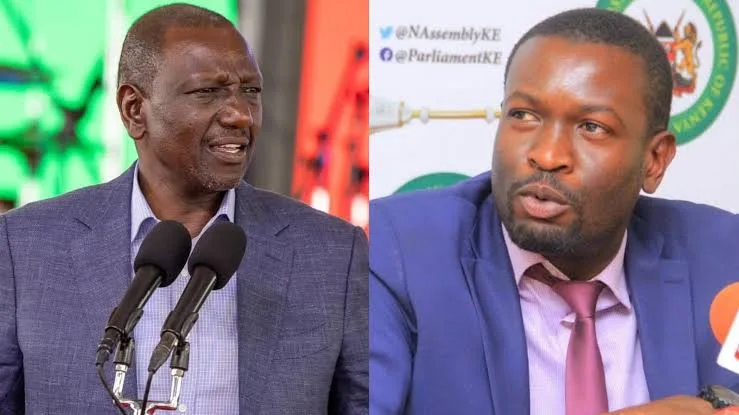
The latest survey by Trends and Insights For Africa (TIFA) Research, released on Thursday, November 12, 2026, places both leaders at 31 per cent when Kenyans are asked whom they would like to win the next presidential election.
The findings mark a significant rise in Sifuna's national political profile, positioning the Linda Mwananchi leader alongside the incumbent President less than a year before Kenyans head to the ballot.
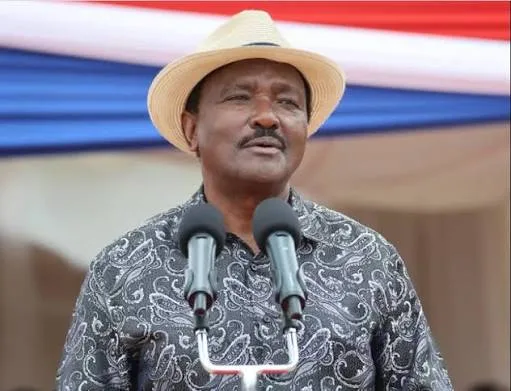
According to TIFA, other presidential hopefuls trail considerably, with Wiper Party leader Kalonzo Musyoka commanding 9 per cent, former Interior Cabinet Secretary Fred Matiang'i receiving 5 per cent and former Deputy President Rigathi Gachagua polling at 4 per cent.
Ndindi Nyoro and other candidates each recorded 1 per cent, while 15 per cent of respondents remained undecided.
The results suggest that Sifuna has emerged as a leading opposition contender, although the challenge of bringing together competing opposition interests remains a major factor in the 2027 contest.

Ruto and Sifuna Lead Presidential Popularity Rankings
The presidential findings represent a notable change from TIFA's previous surveys, which had consistently placed Ruto ahead of individual opposition contenders.
Sifuna's rise has been particularly striking, with the survey indicating that his growing support has largely come at the expense of other opposition presidential hopefuls rather than directly from Ruto's support base.
TIFA observed that the two leaders had emerged as joint frontrunners, although it cautioned that the opposition's ability to consolidate support behind one candidate would be critical.
The research firm noted that the combined support for other opposition candidates stands at 19 per cent, meaning Sifuna's potential electoral strength could be influenced by whether supporters of the other contenders eventually rally behind him.
However, TIFA cautioned against assuming that all opposition support would automatically transfer to one candidate.
Linda Mwananchi Overtakes ODM as UDA Reclaims Top Position
In another significant finding, the Sifuna-led Linda Mwananchi Movement/TEP has overtaken the Orange Democratic Movement (ODM) in national political party popularity.
The survey places the United Democratic Alliance (UDA) at the top with 25 per cent, followed by Linda Mwananchi at 17 per cent.
ODM, which previously enjoyed a stronger national following, has dropped to 10 per cent, representing a 50 per cent decline from the 20 per cent recorded in TIFA's June 2026 survey.
The Democracy for the Citizens Party (DCP), associated with Gachagua, commands 9 per cent, followed by Wiper Patriotic Front at 5 per cent and Jubilee at 4 per cent.
The latest party popularity rankings are:
- UDA – 25%
- Linda Mwananchi Movement/TEP – 17%
- ODM – 10%
- DCP – 9%
- Wiper Patriotic Front – 5%
- Jubilee – 4%
- DP – 1%
- Other – 0%
- None – 26%
- No response – 2%
The findings represent a major development for the newly established Linda Mwananchi political outfit, which has quickly positioned itself as a significant player in the country's opposition politics.
TIFA noted that the new political formation had risen to second place largely at the expense of its former political home, ODM.
However, the research firm cautioned that popularity expressed in opinion surveys does not necessarily translate into votes on election day.
It observed that building a new political party's national infrastructure and logistical reach in less than a year would present a considerable challenge.
Gachagua Blamed for Opposition Divisions in TIFA Poll
The survey also examined the persistent disagreements among opposition leaders as political formations position themselves for the 2027 General Election.
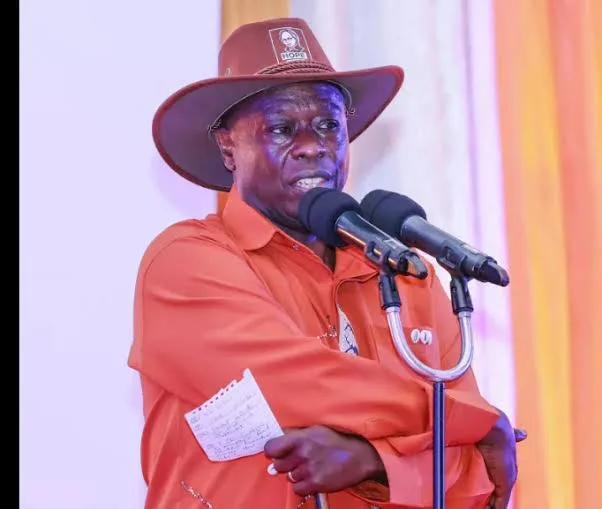
Among opposition supporters interviewed, 43 per cent identified former Deputy President Rigathi Gachagua as the person they considered mainly responsible for disagreements within the opposition.
President Ruto and the UDA government followed at 15 per cent, while Sifuna was cited by 7 per cent.
Kalonzo Musyoka received 6 per cent, with Matiang'i and Embakasi East MP Babu Owino each recording 4 per cent.
Other leaders mentioned included former President Uhuru Kenyatta, Siaya Governor James Orengo and Ndindi Nyoro.
The findings could increase pressure on opposition leaders to address their differences and establish a common strategy before the election.
Importantly, these figures reflect the perceptions of opposition supporters surveyed and should not be interpreted as proof that any individual caused the divisions.
79% of Opposition Supporters See Unity as Likely
Despite disagreements within the opposition, the TIFA survey found that most opposition supporters believe rival political formations could eventually unite ahead of the 2027 elections.
According to the findings, 57 per cent consider it very likely that leaders associated with Linda Mwananchi and the Ukombozi opposition group will unite.
Another 22 per cent consider such an arrangement somewhat likely.
Meanwhile, 8 per cent said unity was not very likely, while 7 per cent considered it not likely at all. Six per cent were unsure.
On when the opposition should announce its joint presidential candidate and running mate, 45 per cent preferred January to March 2027.
Another 35 per cent want the announcement made before the end of 2026, while 16 per cent favour April to June 2027.
The findings suggest that opposition supporters favour unity but remain divided over the timing of announcing a joint presidential ticket.
Kindiki Emerges as Ruto's Favourite Running Mate
Deputy President Kithure Kindiki has emerged as the overwhelming favourite to remain President Ruto's running mate should the Head of State seek re-election in 2027.
Among respondents who want Ruto to win the next presidential election, Kindiki commands 55 per cent support.
Homa Bay Governor Gladys Wanga follows at 12 per cent, while Cabinet Secretary Hassan Joho receives 9 per cent.
Other potential running mates include Moses Wetang'ula, Oburu Odinga and Musalia Mudavadi, who each received 4 per cent.
Wycliffe Oparanya received 2 per cent, while Anne Waiguru recorded 1 per cent.
The findings suggest strong support among Ruto's supporters for retaining Kindiki in the Deputy President's position, although the final decision will depend on the President's political calculations and coalition arrangements.
Majority of Kenyans Oppose Broad-Based Government
The survey also examined public opinion on the Broad-Based Government arrangement between President Ruto and the late former Prime Minister Raila Odinga.
TIFA established that 43 per cent of Kenyans oppose the arrangement, compared with 32 per cent who support it.
Another 15 per cent said they had no opinion, while 10 per cent indicated that they were unaware of the arrangement.
The regional breakdown reveals significant differences, with support highest in Northern Kenya at 68 per cent, followed by Central Rift at 57 per cent.
Nairobi recorded the lowest support at 13 per cent, closely followed by the Mt Kenya region at 12 per cent.
The findings point to continuing divisions over the political cooperation between UDA and sections of ODM, particularly as the country approaches the next General Election.
What the TIFA Poll Means for Kenya's 2027 Elections
The latest findings introduce a new dimension to Kenya's political contest, with Sifuna emerging as a serious contender in the presidential popularity rankings and his political formation overtaking ODM in party support.
For Ruto, the tie with Sifuna presents a challenge to his position as the incumbent and highlights the changing dynamics of opposition politics.
For ODM, the decline from 20 per cent to 10 per cent raises questions about the impact of internal disagreements and the emergence of Linda Mwananchi as a competing political force.
However, the opposition still faces the difficult task of uniting behind one presidential candidate, particularly with Kalonzo, Matiang'i and Gachagua maintaining their own political ambitions.
The survey also highlights the importance of the 15 per cent undecided vote, which could become a significant factor as political campaigns intensify.
How TIFA Conducted the November 2026 Survey
The national survey was conducted between October 26 and November 5, 2026, covering all 47 counties.
TIFA interviewed 2,036 randomly selected Kenyan adults aged 18 and above through face-to-face household interviews conducted mainly in English and Kiswahili.
The research firm reported a margin of error of plus or minus 2.16 percentage points, with larger margins for smaller sub-groups.
TIFA emphasised that the findings represent public opinion during the period of data collection and should not be interpreted as a prediction of the eventual election outcome.
With the 2027 General Election approaching, the latest findings place Sifuna firmly in the national presidential conversation while exposing the challenges facing both the ruling coalition and the fragmented opposition.


Comments
No approved comments yet.