

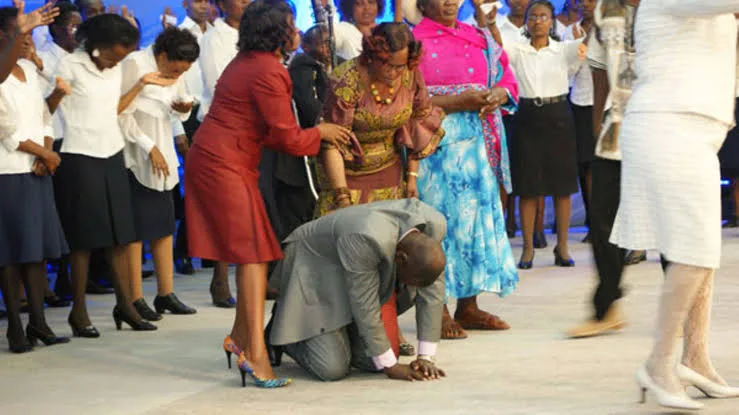
Speaking on Sunday, November 8, 2026, during an interdenominational church service at Nyamaiya Stadium in Nyamira County, the Head of State maintained that his contributions were directed towards God's work rather than individual religious leaders.
According to Tuko, the President made the remarks following an appeal by a local preacher who openly defended his church donations and encouraged him to channel contributions rejected by other congregations to churches in the region.
The preacher argued that supporting church construction should not be confused with bribery, directly addressing the controversy surrounding the President's financial contributions to religious institutions.
Tukio also reported that Ruto defended his continued support for churches, insisting that he would not require permission from anyone to contribute towards the construction of places of worship.
The exchange attracted attention because it came amid an ongoing disagreement between the President and sections of the clergy over the acceptance of donations from politicians.
Before the President addressed the matter, a preacher at the Nyamira gathering had openly challenged religious leaders opposing political donations.
Tuko reported that the preacher dismissed allegations that contributions made to churches amounted to bribery, arguing that supporting religious institutions was different from financially influencing individuals.
He went further by encouraging Ruto to redirect the millions rejected by other churches to congregations willing to receive the contributions.
The preacher's remarks attracted laughter and cheers from the congregation, with the President listening as the debate unfolded.
When he eventually responded, Ruto maintained that he would continue supporting church construction regardless of criticism.
He explained that his contributions were motivated by his religious convictions and should not be interpreted as payments to individual clergy members.
The President also questioned why some religious leaders considered themselves entitled to return donations made towards church development.
He argued that human beings should not position themselves as authorities over contributions that donors believe are intended for God.
Tukio reported that Ruto reiterated his commitment to building churches, maintaining that he would continue making contributions voluntarily.
The Star independently confirmed that the President attended the interdenominational service at Nyamaiya Stadium as he began his engagements in the Gusii region.
People Daily and KBC Digital also reported on his November 8 visit, confirming that the gathering marked the beginning of his development tour of the region.
The disagreement between Ruto and sections of the clergy is not new. It dates back to November 2024, when the Catholic Archdiocese of Nairobi rejected financial contributions made by the President and Nairobi Governor Johnson Sakaja at Soweto Catholic Church.
According to Citizen Digital, the Archdiocese reaffirmed its commitment to the Kenya Conference of Catholic Bishops' position on political donations to religious institutions.
The decision followed concerns about preserving the independence of the Church and preventing religious platforms from being used for political purposes.
The contributions included Sh600,000 from Ruto towards the church choir and Parish Missionary Council, Sh2 million towards the construction of the priest's residence and a further Sh3 million pledge. Sakaja had also contributed Sh200,000.
The Archdiocese announced that the money already received would be returned, while the additional pledge and promised parish bus would not be accepted.
The Standard and The Star also reported on the decision, highlighting the Catholic Church's position on maintaining its independence from political influence.
Since then, the issue of politicians making financial contributions during church services has continued to generate debate among religious leaders and political figures.
Ruto, however, has consistently defended his position, maintaining that supporting churches is part of his religious commitment.
During his Nyamira visit, the President also addressed development issues, outlining infrastructure projects and challenging opposition leaders to present clear alternatives to his administration's development agenda.
People Daily reported that his regional engagements included plans involving roads, digital infrastructure and sports facilities.
The latest exchange has once again brought the relationship between political leadership and religious institutions into the spotlight.
While Ruto insists that he will continue supporting church construction, sections of the clergy maintain that religious institutions must protect their independence and avoid becoming instruments of political influence.
The question now is whether the latest confrontation will change the position of religious leaders who have consistently opposed political donations or further strengthen the President's determination to continue supporting churches.
Should churches accept financial contributions from politicians, or should they reject them to protect their independence? Share your views in the comments.
Comments
No approved comments yet.