

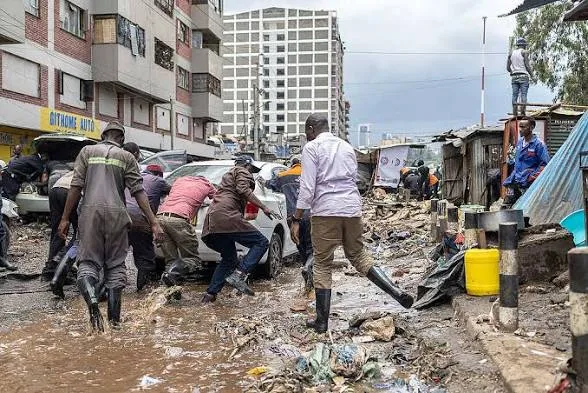
Kenya is facing renewed concerns over flooding as heavy rains continue across several regions, with meteorologists warning that increasingly saturated ground could worsen the situation in the coming days.
The warning comes as the country approaches the peak of the October-November-December short-rains season, raising fears of flash floods, damaged infrastructure and possible displacement of families.
In its report published on Tuesday, November 17, the Daily Nation revealed that continued rainfall has increased the risk of flooding as the ground loses its ability to absorb additional water.
According to David Koros, the Assistant Director of Forecasting Services at the Kenya Meteorological Service, several weather stations have already recorded significant rainfall.
Some stations in Machakos recorded more than 50 millimetres within 24 hours, while Nairobi recorded rainfall exceeding 20 millimetres.
The Kenya Meteorological Department has also warned that rainfall is expected to continue in several parts of the country between November 17 and November 23.
In its weekly forecast, the department identified Nairobi, Kiambu, Machakos, Kajiado, Nakuru, Mombasa, Kisumu and several other counties among areas expected to receive additional rainfall.
K24 Digital reported on Tuesday that 36 counties are expected to receive rainfall during the seven-day period, warning that the continued downpours could increase the possibility of flooding as the rainy season intensifies.
The Kenya Times also reported that 37 counties are expected to experience rainfall, with residents in low-lying areas and communities living near rivers facing increased risks.
The concerns are not merely theoretical.
On Monday, November 16, heavy rainfall caused flooding along the busy Nairobi-Garissa transport corridor after the Mbakini River overflowed near Matuu, leaving hundreds of travellers stranded for approximately five hours.
The Online Kenyan reported that the incident disrupted transport along the Thika-Mwingi-Garissa highway.
Meanwhile, the Kenya Red Cross reported on November 13 that more than 300 households in Wardesa, Tana River County, had been affected after a seasonal river burst its banks.
Flooding also disrupted road access in the affected region.
In another development, heavy rainfall in Turkana on November 14 reportedly destroyed more than 100 houses, adding to concerns about the impact of the ongoing rainy season.
The Kenya Meteorological Department has warned that continued rainfall could trigger flash floods, riverine flooding, waterlogging, landslides and soil erosion.
Residents have consequently been urged to avoid crossing flooded roads, bridges and swollen rivers, whether on foot or in vehicles.
The situation presents another major challenge for county governments and disaster response agencies, particularly in areas where drainage infrastructure is inadequate and communities remain exposed to flooding.
With November expected to mark the peak of the short-rains season, questions are emerging about whether authorities are adequately prepared to respond to another wave of flooding.
As heavy rains continue and flood warnings spread across the country, are Kenyan authorities prepared to prevent another humanitarian disaster?



Comments
No approved comments yet.