

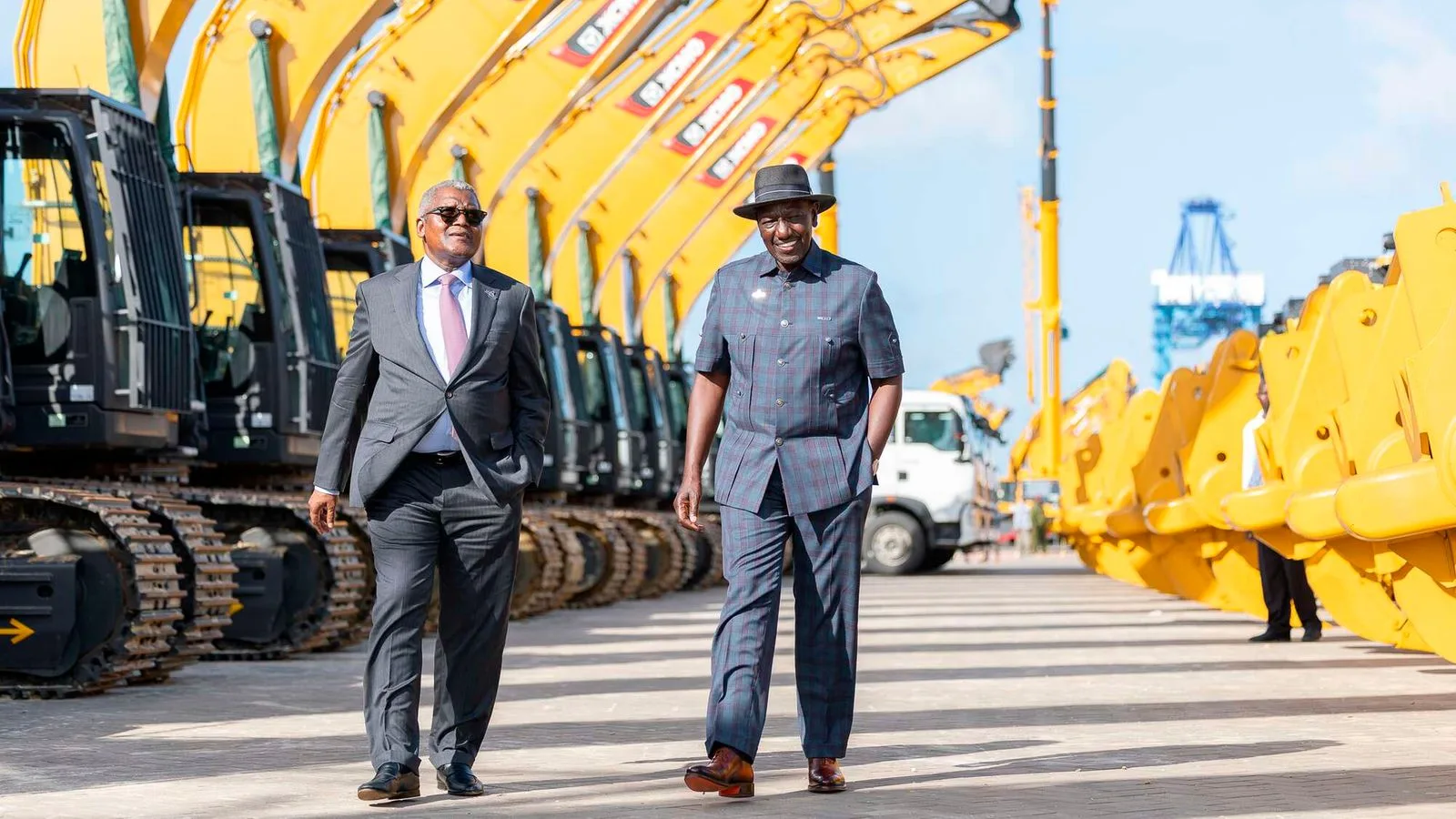
On September 30, President William Ruto joined Nigerian billionaire Aliko Dangote and other African leaders in Lamu for the groundbreaking of the proposed Sh2.2 trillion Dangote East Africa Petroleum Refinery.
According to the Ministry of Foreign Affairs, the project is designed to process up to 700,000 barrels of crude oil per day and could create up to 60,000 direct and indirect jobs. The government has presented it as a major step towards energy security, industrialisation and regional economic integration.
The numbers are impressive. But behind the ceremony and promises of jobs lies a question that Kenyans cannot afford to ignore: what exactly is Kenya investing, what will it receive in return, and how much risk will taxpayers ultimately carry?
The proposed project has been associated with two figures that have attracted public attention. People Daily reported that Kenya has been offered a 10 per cent stake valued at about Sh64.7 billion, while the entire refinery project has been estimated at about Sh2.2 trillion.
Those figures should not simply be treated as contradictory. The Sh64.7 billion refers to the proposed value of Kenya's equity stake, while Sh2.2 trillion refers to the estimated overall project cost. However, the difference makes one question unavoidable: how was Kenya's 10 per cent stake valued, and what exactly are the terms attached to it?
That question has become more important because Kenya's proposed participation is expected to involve public resources. Citizen Digital reported that President Ruto said Kenya would use assets, including land, together with the National Infrastructure Fund, to participate in the project.
The Consumers Federation of Kenya has also raised concerns about transparency. According to COFEK, it has petitioned the Public Private Partnerships Petition Committee seeking information on the project's approval, financing, ownership, land arrangements and other commitments involving public resources.
This is not the same as proving that the project is fraudulent or unlawful. It means that important details remain subject to scrutiny, and Kenyans have a legitimate interest in knowing what commitments are being made in their name.
National Treasury Cabinet Secretary John Mbadi has defended the project and dismissed criticism surrounding the land issue as “primitive politics.” Citizen Digital reported that Mbadi also rejected allegations that President William Ruto owns shares in the refinery, saying the proposed regional shareholding would be open to East African countries.
But criticism has not disappeared.
Citizen Digital reported that PPK leader Ndindi Nyoro has demanded full disclosure of the refinery's shareholders and questioned how Kenya's proposed stake will be financed. Nyoro has also raised questions about the land being used for the project and the commitments the government may make regarding the refinery's future operations.
Then there is the question of crude oil.
Reuters reported in September that the proposed refinery faces a major challenge in securing sufficient crude supplies because Kenya currently has no commercial-scale crude production. Potential supplies could come from Uganda, South Sudan and Kenya, but infrastructure and geopolitical challenges could make the refinery dependent on imported crude, particularly during its early years.
The Star reported that government advisers had estimated East African producers could eventually provide more than 600,000 barrels per day, including supplies from South Sudan, Uganda and Kenya. However, the same report noted that Kenya's Lokichar production and a potential crude pipeline to Lamu had not yet reached commercial scale.
That creates an uncomfortable question.
If the refinery is designed to process 700,000 barrels of crude every day, where will all that crude come from?
The answer may ultimately involve importing crude through Lamu Port. If that happens, Kenya could still benefit by processing crude locally and exporting refined products, but the country would not suddenly become independent of international oil markets.
Reuters has already highlighted this issue as one of the project's major challenges. The refinery may reduce dependence on imported refined petroleum products while continuing to depend heavily on imported crude oil.
That distinction matters because a refinery does not eliminate the need for oil. It changes where and how the oil is processed.
The land question is equally difficult to ignore.
Citizen Digital reported that more than 130 Lamu residents had gone to court challenging the development, arguing that families occupying and cultivating the disputed land for generations faced displacement without adequate compensation or a resettlement plan.
President Ruto subsequently assured residents that their concerns would be handled according to the law. Citizen Digital reported that the government also faced questions over the more than 7,000 acres associated with the project.
The court dispute does not automatically mean that the refinery should be abandoned. Large investments can face legitimate legal and community disputes. But it does mean that development cannot simply be measured by the size of the investment.
The real test is whether the people living where the investment is being built will receive a fair share of its benefits.
The government says the refinery will create thousands of jobs. Kenya News Agency reported that Lamu Governor Issa Timamy urged Dangote to give local youth priority for employment opportunities and highlighted the county's efforts to equip young people with technical skills.
That is the promise.
But promises are not the same as contracts, and projected jobs are not the same as jobs already created.
The refinery may eventually transform Lamu. It may attract industries, create employment, strengthen the LAPSSET corridor and reduce Kenya's dependence on imported refined petroleum products.
But it may also expose Kenya to enormous financial, commercial and environmental risks if the project's ownership, financing, crude supply, land arrangements and government commitments are not properly structured.
That is why the biggest question surrounding the Dangote refinery is not whether Kenyans should support development.
It is whether Kenyans should be expected to support a project whose most important financial and ownership details are still being questioned.
A shovel going into the ground is powerful television.
A signed agreement showing who owns what, who pays what, who carries the risk and what Kenya receives in return is even more important.
The Dangote refinery may become one of the greatest industrial investments in Kenya's history.
But before celebrating the Sh2.2 trillion figure, Kenyans deserve to know exactly what they are buying into.
Is this the beginning of Kenya's industrial transformation, or are Kenyans being asked to place too much faith in a promise whose full price has not yet been revealed?


Comments
No approved comments yet.