

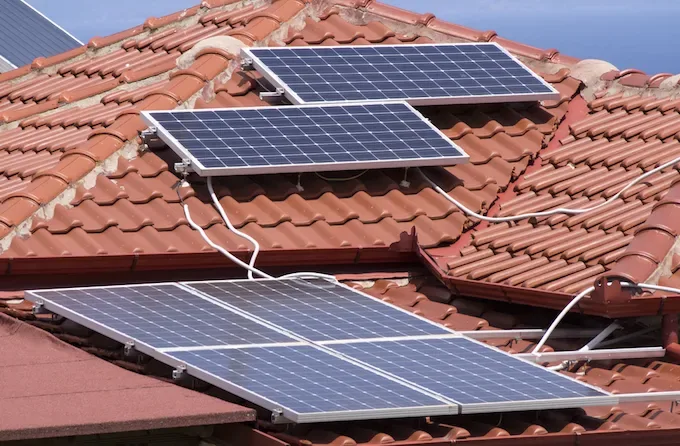
The developments come as more homes and businesses turn to solar power to reduce their dependence on the national grid.
Kenya Power is now pushing for stronger battery-storage standards for solar installations connected to the grid, arguing that uncontrolled electricity backflow can affect its infrastructure and create safety risks for workers.
At the same time, Kenya's net-metering regulations provide a formal route for eligible customers to export surplus renewable electricity to the grid.
This means having solar panels at home is not, by itself, illegal.
The key question is whether electricity is being exported into the Kenya Power network under an approved arrangement.
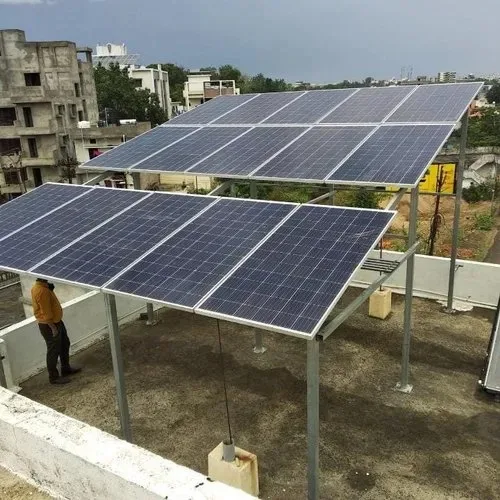
Can you send excess solar electricity to Kenya Power?
Yes, but customers need to follow the rules.
The Energy (Net-Metering) Regulations, 2024 allow eligible consumers with renewable-energy systems to enter into net-metering agreements with a licensed electricity distributor.
Under the regulations, a customer cannot operate a net-metering system without a net-metering agreement with the relevant licensee.
For qualifying customers, the arrangement allows excess electricity generated by the solar system to be exported to the grid.
The customer can then receive credits that can be used when electricity is supplied from the grid.
How much credit do you get for excess solar power?
This is one of the most important parts of Kenya's net-metering rules.
Under the 2024 regulations, a customer receives a credit equivalent to 50 per cent of each unit of electricity exported during a billing period.
For example, if an approved customer exports 100 kilowatt-hours (kWh) to the grid, the applicable credit would be equivalent to 50 kWh.
This does not mean Kenya Power pays the customer cash for all 100 units.
The system works through an electricity credit that is applied against electricity supplied to the customer under the applicable billing arrangement.
Any qualifying unused credits can be carried forward, although the regulations provide that unused credits are forfeited at the end of the licensee's financial year.
What happens if solar electricity is sent to the grid without approval?
This is where the rules become particularly important for homeowners and businesses.
Kenya has introduced a framework dealing with unauthorised electricity exports, commonly referred to as dumping.
Under the amended tariff framework, electricity injected into the Kenya Power network without the required approval or valid net-metering agreement can attract a charge based on the applicable base tariff.
The regulations therefore create a clear distinction between:
Approved export: Electricity is supplied to the grid under the required net-metering arrangement.
Unauthorised export: Electricity flows into the Kenya Power network without the required approval.
The latter can expose the customer to charges and potentially further action where the unauthorised injection causes damage or other problems.
Does this mean Kenya Power is banning rooftop solar?
No.
Kenya Power's current position is not that homeowners should stop installing solar panels.
The utility's concern is primarily with grid-connected systems that allow electricity to flow back into its network without appropriate controls and approval.
Kenya Power Chief Executive Engineer Joseph Siror has said the company has no objection to solar installations themselves, but has raised concerns about systems connected to the grid in ways that can create reverse power flows.
The utility says its distribution infrastructure was designed around electricity flowing from the network towards customers, and uncontrolled reverse flows can create technical and safety problems.
Why is Kenya Power worried about solar backflow?
Solar generation changes depending on weather and sunlight.
A home or business may generate substantial electricity when the sun is shining, but generation can fall rapidly when cloud cover arrives.
When many grid-connected solar systems respond simultaneously to changing conditions, the amount of electricity flowing through the network can change quickly.
Kenya Power says these changes can affect grid stability and put pressure on equipment that was not originally designed for reverse power flows.
The company has also raised concerns about the safety of maintenance crews.
If electricity is being generated behind the meter and fed back into the network without the utility knowing, workers could encounter an unexpected source of electricity while working on infrastructure.
Why Kenya Power wants battery-storage standards
Kenya Power is pushing for the adoption of global standards for battery storage in grid-connected variable renewable-energy systems.
The utility's argument is that adequate storage can help absorb excess solar generation and make the electricity supply more predictable.
A household with solar and a battery can, for example, store electricity generated during periods of strong sunlight and use it later instead of immediately sending the excess into the grid.
The battery can therefore play a role in reducing uncontrolled fluctuations from rooftop solar.
Kenya Power says storage requirements should be appropriate to the size of the solar installation.
What should a homeowner with solar panels do?
Homeowners should first establish how their solar system is configured.
If the system is designed only for use within the property and does not export electricity to the Kenya Power network, the situation is different from a system deliberately operating as a grid-connected generator.
Anyone intending to export excess electricity should establish whether they qualify for net metering and complete the required approval process.
The system should also be installed and maintained by appropriately qualified professionals.
EPRA is responsible for regulating Kenya's electricity sector, including licensing, technical standards, tariffs and compliance.
What is net metering?
Net metering is essentially a system that allows an eligible electricity customer who generates renewable power to send surplus electricity to the grid and receive credits for the exported energy.
The customer can subsequently use electricity from the grid when their own generation is insufficient.
Kenya's 2024 regulations provide the legal framework for these arrangements.
For systems covered by the regulations, the maximum installed capacity is generally 1 megawatt, subject to additional requirements and the customer's maximum demand.
What if you already have solar installed?
Existing solar owners should not assume that every system is automatically affected in the same way.
The important questions are:
- Is the system connected to the Kenya Power network?
- Can the system export electricity to the grid?
- Is there a valid net-metering agreement?
- Is the installation compliant with the applicable technical requirements?
- Does the system have appropriate metering and protection equipment?
A homeowner who is unsure whether their installation can export electricity should have the system checked by a qualified professional rather than assuming that excess generation is automatically allowed to flow into the grid.
Why this matters as solar use grows
Kenya's electricity system is changing.
Homes, factories, offices, farms and other businesses are increasingly capable of generating some of their own electricity.
That can reduce demand from the national grid and provide consumers with another source of power.
But once privately generated electricity begins flowing into the national network, it becomes part of a much larger electricity system that must be managed for safety, reliability and stability.
This is why battery storage, net metering, technical standards and grid connections are becoming increasingly important.
The bottom line for Kenyan solar users
You can own solar panels.
You can generate your own electricity.
You can potentially export surplus electricity to the grid under an approved net-metering arrangement.
But you should not assume that electricity can simply be fed into the Kenya Power network without approval.
The current regulatory framework provides a 50 per cent credit for electricity exported under approved net metering, while unauthorised electricity exports can attract charges under the amended tariff framework.
For homeowners considering solar, the most important issue is therefore not simply how many panels to install.
It is understanding how the panels, inverter, batteries, meter and grid connection will work together — and making sure the system complies with Kenya's electricity rules.
As rooftop solar continues to expand, Kenya Power and regulators are increasingly focused on making sure private generation can grow without compromising the safety and stability of the national grid.



Comments
No approved comments yet.