

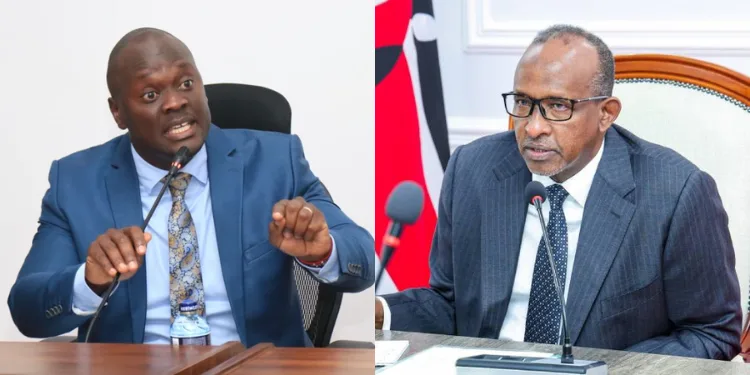
Kibagendi said the move has renewed questions he raised in 2024, before the transition from the National Hospital Insurance Fund (NHIF) to the Social Health Authority (SHA), particularly over the cost, procurement, technology, benefits and accountability surrounding the health insurance reforms.
“Those concerns were not political theatre. They were questions about cost, procurement, technology, benefits and accountability—issues that directly affect every Kenyan who contributes to the health insurance system,” Kibagendi said.
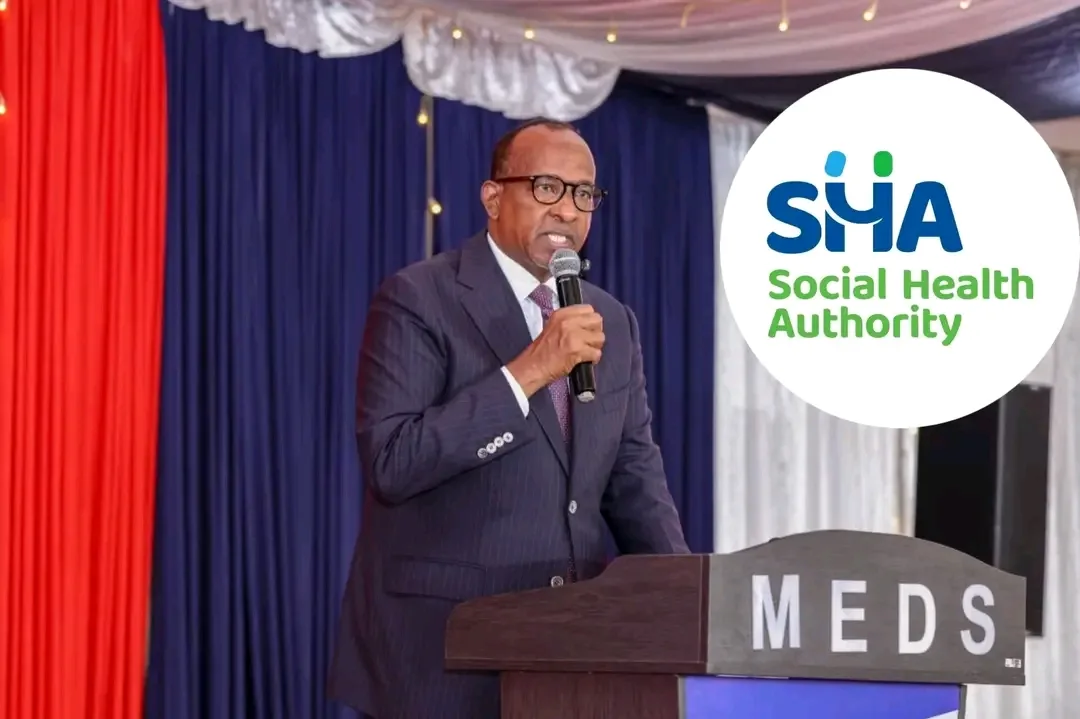
His remarks come after Health Cabinet Secretary Aden Duale directed contracted healthcare facilities to migrate from the SHA Provider Portal to the new HMIS.

Kibagendi questions SHA technology cost
Kibagendi said one of his major concerns in 2024 was the cost of the digital infrastructure supporting the new health financing system.
“The figures being discussed kept changing, from billions in the initial estimates to a contract ultimately valued at KSh104.8 billion over 10 years,” he said.
He also questioned the procurement and deployment of the technology, arguing that the Government was moving the country’s health financing system onto a new digital platform despite concerns about its readiness and capacity.
“We were being asked to place the health financing system of an entire country on a new digital architecture, yet serious questions existed about its readiness, procurement process and capacity to handle the enormous national workload,” Kibagendi said.
The MP said the early implementation of SHA was accompanied by complaints from patients and healthcare providers over registration, verification, authorisations, claims processing and system reliability.
“Patients struggled with registration and verification, hospitals experienced difficulties obtaining authorisations and processing claims, and healthcare providers across the country complained about system reliability and delays,” he said.
‘What happened to the billions?’
Kibagendi said the decision to replace the SHA Provider Portal raises questions about the resources committed to the previous system.
“Today, we are being told that the SHA provider portal is being replaced by a new Health Management Information System (HMIS), with the Government directing contracted facilities to migrate to the new platform,” he said.
“The question Kenyans should therefore ask is simple: What happened to the billions committed to the previous system?”
He called for greater transparency before the new system is fully implemented.
“And before another major system is imposed on hospitals, Kenyans deserve full transparency on its procurement, cost, ownership, contractual obligations, implementation arrangements and accountability,” he said.
MP questions NHIF to SHA transition
Kibagendi also criticised what he described as changes to the benefits available to Kenyans following the transition from NHIF to SHA.
“In my view, the transition from NHIF to SHA significantly changed and, in several areas, reduced the benefits that Kenyans had become accustomed to under NHIF,” he said.
He argued that health reforms should ultimately be measured by their impact on patients.
“The fundamental principle is straightforward: health reform must improve access to quality healthcare, not merely change the name of the institution administering it,” Kibagendi said.
Kibagendi challenges Duale on legal process
The MP also questioned the manner in which major changes to the health financing system are being introduced.
“The Social Health Authority is established by law. Its operations and the financing of healthcare under it are governed by legislation,” he said.
“Consequently, major changes to the legal and institutional framework cannot simply be introduced through roadside declarations, press conferences or informal conversations in State House.”
“Government must govern through the law,” he added.
Kibagendi called on the Ministry of Health to engage Parliament and other stakeholders where legislative changes are required.
“If the Government believes that the existing legislation needs to be amended to accommodate a new model, then let the responsible Ministry come to Parliament,” he said.
“Let the Departmental Committee on Health engage the Ministry, SHA, the Digital Health Agency, healthcare providers, professional associations and other stakeholders.”
“Let the necessary amendments be tabled, debated publicly and subjected to parliamentary scrutiny,” he added.
“That is how a constitutional democracy is supposed to work.”
‘Healthcare is not a political playground’
Kibagendi said his concerns were informed by his previous service on the National Assembly Departmental Committee on Health.
“When I served on the National Assembly Departmental Committee on Health, our Committee raised concerns about the implementation of SHA and invited the Ministry to engage with proposals developed from extensive stakeholder consultations,” he said.
He said the focus should remain on the country’s healthcare system rather than political disagreements.
“The bigger issue is Kenya’s healthcare system,” Kibagendi said.
“Healthcare is not a political playground. It is a matter of life and death.”
He called for greater accountability in the management of SHA contributions and public resources committed to healthcare.
“The money being collected through SHA contributions belongs to millions of hardworking Kenyans. It must be protected, accounted for and used to provide quality healthcare—not subjected to opaque procurement arrangements, weak systems or policy decisions made without adequate consultation and parliamentary scrutiny,” he said.
Kibagendi also called for investigations where evidence of wrongdoing exists.
“If there is evidence of theft, let the investigative and accountability institutions investigate and prosecute those responsible,” he said.
“If there are procurement irregularities, let them be independently established and acted upon.”
Kibagendi demands answers on new SHA system
The MP said Kenyans should receive clear information about both the previous system and the new HMIS.
“What Kenya needs is not another hurried technological experiment,” Kibagendi said.
“We need a transparent, accountable, lawful and patient-centred health financing system.”
He also urged the Government to work with Parliament in overseeing major changes to the health sector.
“Parliament exists to legislate, scrutinise public expenditure and hold the Executive accountable,” he said.
Kibagendi said he would continue pressing for answers on the health financing system.
“On SHA, I will continue asking the questions I asked in 2024,” he said.
“How much are we spending?”
“Who is being contracted?”
“Through what process?”
“What exactly are Kenyans receiving for their contributions?”
“Who owns the technology?”
“Who is accountable when the system fails?”
“And most importantly—who is protecting the interests of the Kenyan patient?”
“These are not political questions. They are questions of accountability,” Kibagendi said.
Do you want to be published? E-mail info@thedailywhistle.co.ke or WhatsApp 0721930260

Comments
No approved comments yet.