

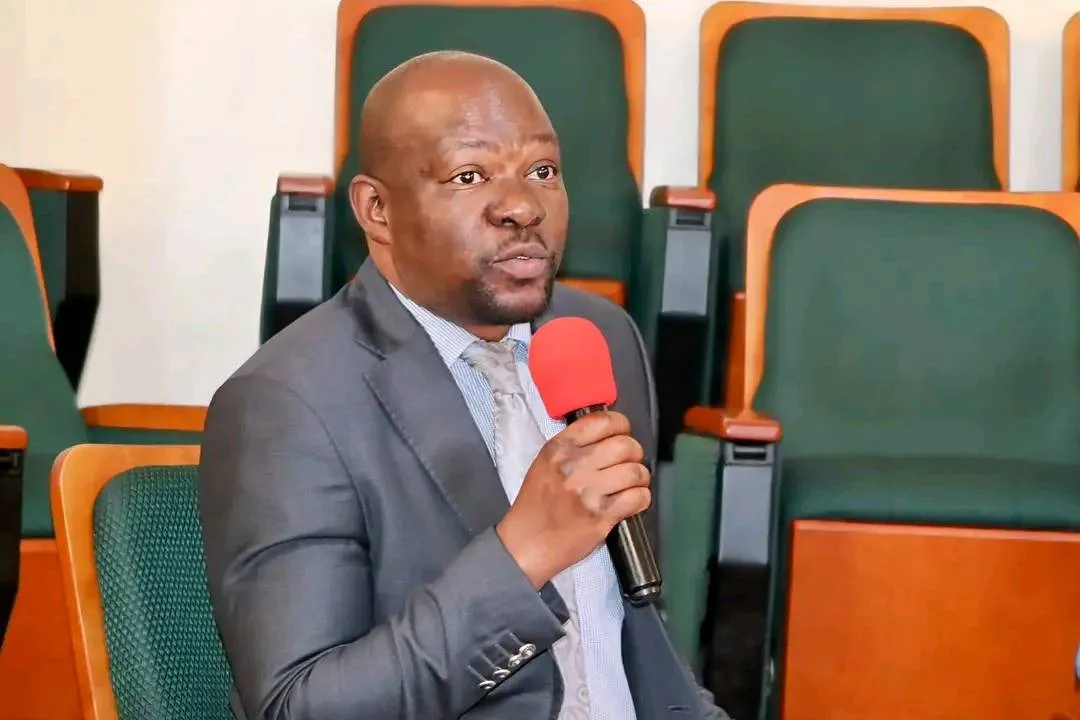
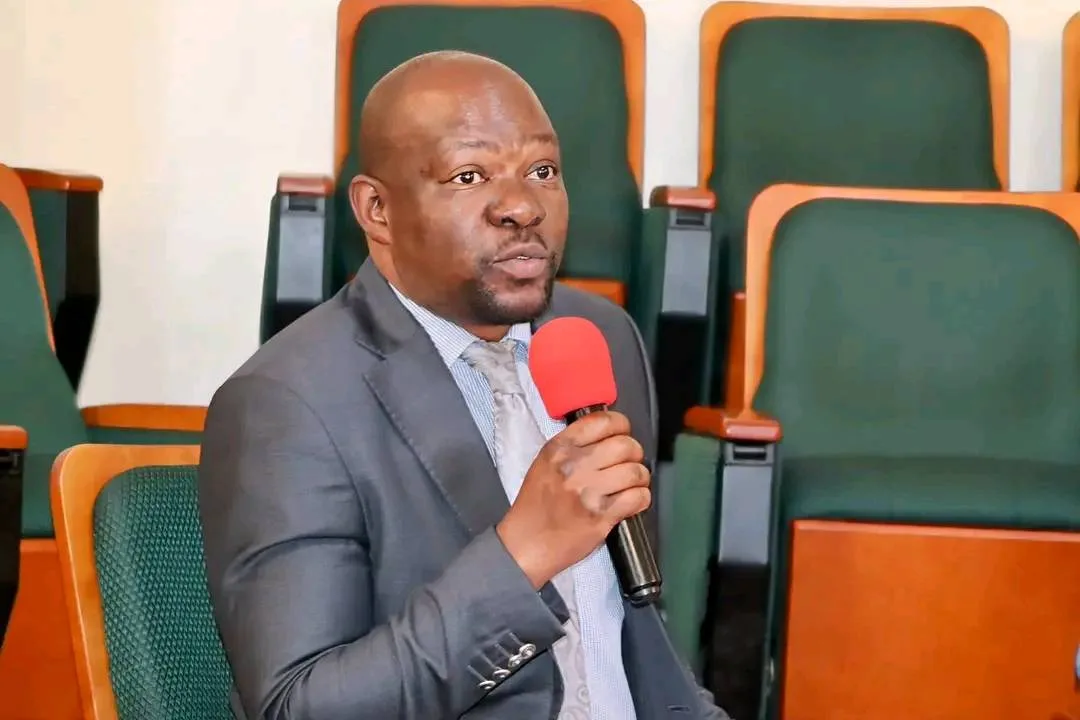
Amisi made the remarks during a local television interview in which he outlined the political agenda of the People’s Renaissance Movement (PRM), declared his support for Nairobi Senator Edwin Sifuna, criticised veteran opposition figures and hinted at his eventual exit from the Orange Democratic Movement (ODM).
The outspoken lawmaker placed the events of June 25, 2024, at the centre of his political argument, describing the date as a defining moment in Kenya’s modern political history.
“If Ruto does not go, there will be a revolution,” Amisi said.
He then made an even more direct claim about the legitimacy of the Ruto administration.
“The legitimacy of any government rule is conditional on the responsibility to protect the citizens,” he said.
“The legitimacy of William Ruto’s rule ended on 25th June 2024.”
Amisi did not explain what specific action he meant by “revolution”, but his remarks are likely to fuel debate over the political climate ahead of the 2027 General Election.
The warning comes as Amisi builds PRM as a political alternative to the established parties and movements, with the party already moving into grassroots mobilisation ahead of the 2027 polls. Recent reports indicate that PRM has been expanding its national structures and organising grassroots engagements across several counties.
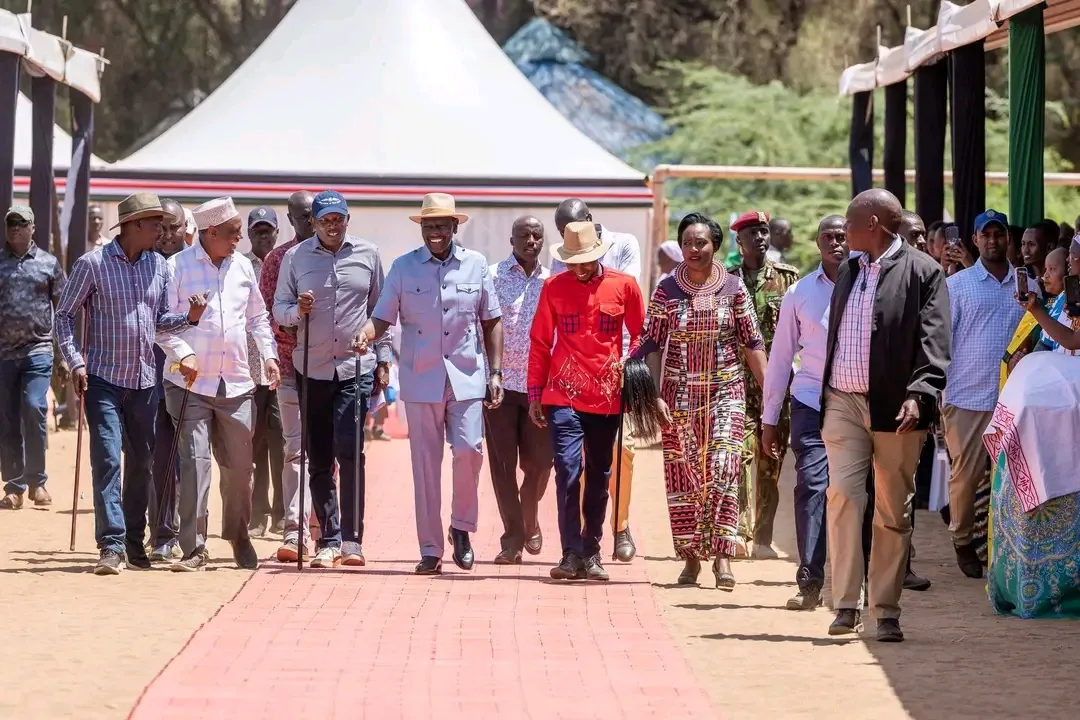
‘I have an impeachment motion against Ruto’
Amisi also claimed that he has already prepared an impeachment motion targeting President Ruto but has been unable to proceed because he lacks lawmakers willing to support it.
“I have an impeachment motion against Ruto, but nobody to sign,” Amisi said.
The claim formed part of his broader criticism of Parliament, where he admitted that MPs, himself included, had failed Kenyans.
“Kenyan MPs have failed terribly, I included,” he said.
According to Amisi, Parliament failed to adequately respond to the grievances that pushed young Kenyans onto the streets.
“We failed because we let young people die on the streets doing what Parliament is supposed to do,” he said.
He said changing the composition of Parliament would therefore be central to PRM’s strategy ahead of the next election.
“The reason why PRM was formed is to make sure that in 2027 there is a new Parliament that can impeach a president,” Amisi said.
His comments place Parliament at the heart of his political strategy, rather than focusing exclusively on who will occupy State House after the 2027 election.
Amisi backs Sifuna for 2027
Amisi also made his position on Edwin Sifuna increasingly clear, saying PRM would support politicians who embody its philosophy of political renewal.
“Any person who quacks like PRM, swims like PRM, talks like PRM, I will back him, and the party will back him,” he said.
He then identified Sifuna as one of those politicians.
“Sifuna is one of those people,” Amisi said.
Amisi claimed that he played a central role in the political movement that eventually became associated with Linda Mwananchi.
“I am the one who made Sifuna,” he said.
“I came up with the Kenya Moja Movement, which morphed into the Linda Mwananchi.”
“I am the founder of Linda Mwananchi,” he added.
His comments reinforce his previously stated view that Sifuna should be taken seriously in the 2027 presidential contest. Amisi has previously warned that leaving Sifuna off the ballot could trigger voter apathy, arguing that the senator represents a broader political idea rather than simply his individual candidacy.

Why Amisi says Sifuna represents a bigger idea
For Amisi, the political debate is not simply about finding a candidate to defeat Ruto.
He described PRM as part of a wider push for political renewal and a break from the status quo.
“The People’s Renaissance Movement ni mwamuko mpya,” Amisi said.
“It’s just a renewal, a rebirth, a fresh start from the status quo to something different, something transformative.”
He connected the movement to the events of June 25, 2024.
“It’s a time for change, a time for renewal,” he said.
“25th June 2024 was the moment of renaissance in Kenya.”
The emphasis on June 25 is significant because Amisi is presenting the date not merely as a protest milestone, but as the starting point of what he considers a new political consciousness.
‘Age is not the issue’
Despite positioning PRM as a movement for political renewal, Amisi said the party would not automatically reject older politicians.
He was specifically asked about established opposition figures including Wiper leader Kalonzo Musyoka and former Interior Cabinet Secretary Fred Matiang’i.
Amisi said the party would have to hold discussions before settling on who should receive its backing.
“We will have a long discussion because the party stands for renewal,” he said.
He insisted that PRM was not simply a youth party.
“It does not need to be a young person,” Amisi said.
But he argued that younger Kenyans had repeatedly supported established political leaders without getting the change they expected.
“The young people have trusted, believed, and supported the old guards all these years; they have been highly disappointed,” he said.
For Amisi, therefore, age alone cannot determine who should lead Kenya.
“Age is not the issue here; the issue is a new beginning, somebody who understands Kenya,” he said.
The position echoes Amisi’s earlier argument that political renewal should be based on credibility and integrity rather than simply electing younger people.
Amisi rules out Orengo
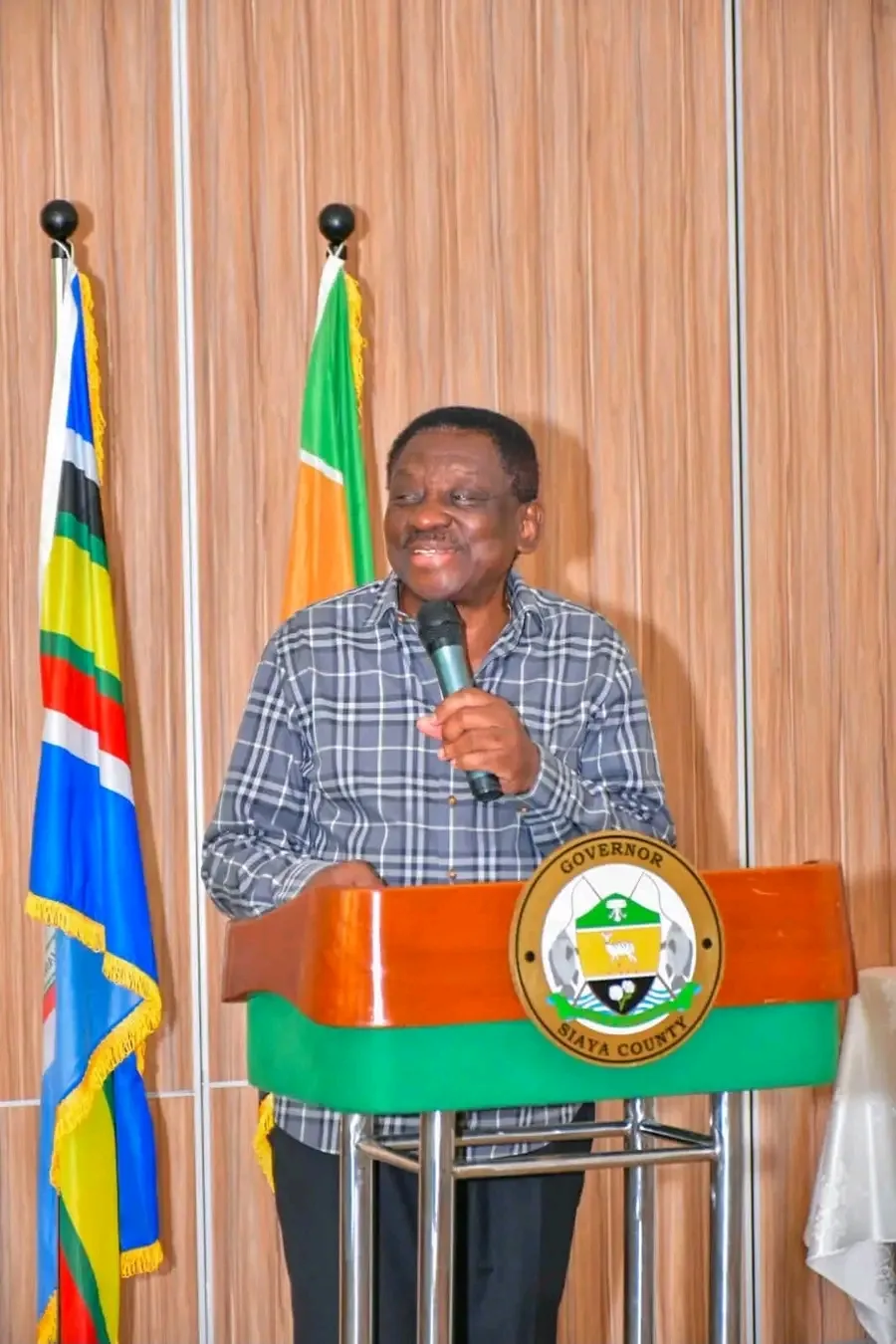
Amisi was less diplomatic when asked about Siaya Governor James Orengo.
The Saboti MP said the veteran politician should not seek the presidency as part of the political project he is championing.
“Orengo shouldn’t run,” Amisi said.
He argued that Orengo was not part of the Kenya Moja initiative that he says laid the foundation for the political movement.
“Orengo was not even part of Kenya Moja,” he said.
Amisi claimed that he established Kenya Moja at his home in Kitale.
“I formed Kenya Moja in my house in Kitale; it is in the public domain,” he said.
He further claimed that he endorsed Sifuna in Lukome, where he urged him to take a leadership role.
“In a small village called Lukome is where I endorsed Sifuna and said, lead us,” Amisi said.
He added that Orengo and Osotsi were not present during what he described as a “generational call for duty”.
Despite rejecting Orengo as a possible presidential candidate, Amisi praised the veteran politician's contribution to Kenyan politics.
“Orengo needs to be our advisor; I give him his flowers,” he said.
“He has fought his battles. We have to respect him as a nation.”
‘I didn’t quit Linda Mwananchi — I founded it’
Amisi also rejected the suggestion that he walked away from Linda Mwananchi.
“I didn’t quit Linda Mwananchi; I founded it,” he said.
He claimed that the late former Prime Minister Raila Odinga had given him permission to establish Kenya Moja.
“Before Raila died, he gave me permission to form Kenya Moja,” Amisi said.
Amisi described his relationship with Raila in deeply personal political terms.
“Ask anybody in ODM; they will tell you how close I was with Baba,” he said.
“I was his project; I would confide a lot in him, and he would do the same.”
The remarks come against the backdrop of an increasingly complicated relationship between Amisi, Linda Mwananchi and the wider opposition movement. Sifuna previously defended Amisi against claims that he had abandoned Linda Mwananchi, while Amisi has continued charting an independent political path through PRM.
Amisi confirms plans to leave ODM
Although he now serves as PRM party leader, Amisi said he remains an ODM-elected MP.
He nevertheless indicated that his eventual departure from ODM is a matter of timing.
“I am still an ODM-elected MP,” he said.
“But at the right time I will do the needful and fully transform to People’s Renaissance by resigning from ODM.”
The statement could become politically significant if Amisi formally leaves ODM and fully commits himself to PRM ahead of the 2027 election.
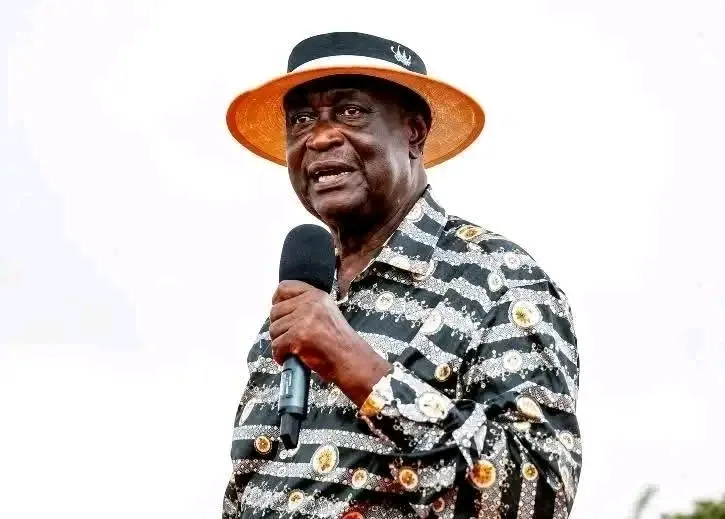
‘I am not running for president’
Despite his increasingly prominent role in PRM and his involvement in the 2027 political debate, Amisi stopped short of declaring his own presidential bid.
“Every politician is always ready for the top seat, including Caleb,” he said.
But he added:
“I am not running for president now; I have not announced.”
Amisi said he had been appointed party leader and described himself as the youngest party leader in Kenya’s multi-party era.
“I am the youngest party leader in the history of the multi-party democracy in Kenya,” he said.
He has since been at the centre of PRM’s national mobilisation efforts, with the party moving from organisational preparations towards grassroots campaigns ahead of 2027.
Amisi questions Ruto’s record in government
Amisi also questioned whether Ruto can deliver the transformation he promised Kenyans, pointing to the President's long experience in government.
Ruto served as deputy president from 2013 to 2022 and had previously held ministerial positions under former presidents Daniel arap Moi and Mwai Kibaki.
Amisi argued that Ruto had already had sufficient time in government to implement any major ideas he possessed.
“Ruto was the DP during Uhuru’s regime. Some of us believe that he ran that government fully,” he said.
“If there is any iota of an idea he had, he should have done so as DP for 10 years.”
He also questioned why Kenyans should expect dramatic changes from a politician who had served in successive administrations.
“If you never did it when you were in Moi and Kibaki’s government, there is nothing you can do to convince the country that miracles will drop like manna from heaven during your regime,” Amisi said.
The remarks are consistent with Amisi’s broader criticism of the government, which has included calls for deeper institutional reform rather than reliance on political slogans.
What PRM means for the 2027 election
Amisi's interview provides a clearer picture of the political project he is attempting to build through PRM.
The party is presenting itself as a vehicle for renewal, institutional change and a break from the political status quo, while Amisi is simultaneously positioning Sifuna as a leading figure capable of carrying that message into the 2027 presidential race.
His position on veteran politicians is more nuanced. He has not ruled out supporting established figures such as Kalonzo or Matiang’i, but insists that any candidate must represent a genuine “new beginning”.
At the same time, his criticism of Orengo shows that the battle over the opposition's presidential ticket could become increasingly contentious.
And while Amisi insists he is not currently running for president, his position as PRM party leader, his growing national mobilisation efforts and his outspoken political messaging have put him firmly in the centre of the 2027 conversation.
For President Ruto, however, Amisi's most explosive message remains his warning about what could happen if the current administration stays in power.
“If Ruto does not go, there will be a revolution,” Amisi said.
That statement, together with his claim that he already has an impeachment motion against the President, is likely to keep the Saboti MP at the centre of Kenya's increasingly heated 2027 political debate.
Do you want to be published? E-mail info@thedailywhistle.co.ke or WhatsApp 0721930260

Comments
No approved comments yet.