

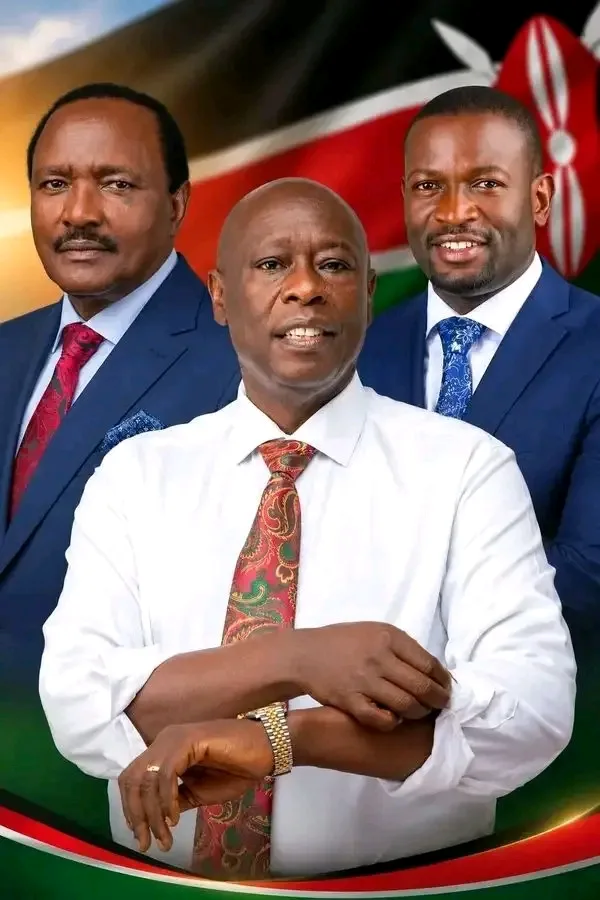
The debate is no longer limited to identifying a presidential candidate. It now involves competing political parties, different approaches to coalition-building and a growing contest between established leaders and a younger generation seeking a greater role in shaping the country's future.
Daily Nation reported on October 11 that the rebranding of Azimio la Umoja into the Ukombozi Alliance had exposed disagreements among opposition figures, including former Deputy President Rigathi Gachagua's camp and Nairobi Senator Edwin Sifuna's political movement. The report highlighted the challenge facing Wiper leader Kalonzo Musyoka as he seeks to position the alliance as a vehicle for the 2027 election.
At the heart of the disagreement is a question of political ownership. Leaders want a coalition capable of challenging the ruling administration, but they also want to protect their parties, supporters and individual presidential ambitions. That creates a difficult balancing act: a coalition must be strong enough to compete nationally without making its members feel that they are surrendering their political future to another leader.
The Star reported on October 6 that efforts to settle on a single opposition presidential candidate were facing resistance from influential allies of different contenders. Kalonzo, Gachagua, Fred Matiang'i, Martha Karua and other figures have featured in discussions about who could carry the opposition's presidential ticket.
The challenge is that defeating a sitting president requires more than assembling prominent politicians on one platform. The coalition must also agree on how its candidate will be selected, how competing interests will be managed and what policies will unite its supporters beyond the election campaign.
Sifuna's position adds another important dimension. Daily Nation reported on October 11 that the Nairobi senator was concentrating on building his political movement before entering alliance negotiations. His approach reflects the desire among some younger politicians to establish an independent support base rather than immediately accept an arrangement dominated by established leaders.
That difference could become significant if negotiations eventually force the opposition to choose between a familiar presidential contender and a candidate presented as the face of generational change. Supporters of established leaders may favour experience and existing party structures, while younger voters may demand a different style of leadership and a stronger focus on jobs, accountability and the cost of living.
The Star's September 27 report on resistance to the Ukombozi Alliance had already highlighted objections from figures associated with Gachagua and Sifuna. The report showed that disagreement over the coalition's identity was becoming an obstacle to broader negotiations.
The latest developments do not automatically mean that the opposition will split permanently. Political parties can disagree publicly and still reach a compromise when electoral interests align. However, the longer leaders compete over the structure of a coalition, the more difficult it may become to build public confidence in their ability to govern together.
Citizen Digital has also examined the dilemma facing the opposition over when to identify a presidential candidate. Naming one too early could trigger resentment among supporters of other contenders, while waiting too long could leave the coalition without a clear national message as the election approaches.
There is also a practical question of whether the popularity of individual leaders can translate into a single national vote. Supporters of different opposition figures may share dissatisfaction with the government but disagree over leadership, regional interests, economic priorities and the candidate they are willing to support.
This is why coalition negotiations will require more than public declarations of unity. Leaders will need a credible method for choosing their candidate, clear rules for sharing responsibilities and a common programme that addresses the concerns of ordinary Kenyans.
The experience of previous elections offers an important lesson: opposition unity can become a powerful electoral advantage, but only when the leaders involved agree on how to work together. A coalition built mainly around opposition to one individual may struggle to maintain cohesion once questions of leadership and political rewards emerge.
For Ruto's challengers, the immediate task is therefore to demonstrate that their differences can be managed without derailing the wider campaign. If they succeed, competing political bases could become an advantage by bringing different communities and generations into one movement. If they fail, the opposition risks entering the election with several influential leaders but no agreed strategy.
As the 2027 contest approaches, Kenyans will be watching not only who emerges as the opposition's presidential candidate, but also whether the coalition can offer a convincing alternative on governance, employment, the cost of living and public accountability.
Ultimately, the opposition's biggest test may not be finding a politician capable of challenging Ruto. It may be convincing its own leaders that a shared political future is more valuable than competing to control the same coalition.

Comments
No approved comments yet.