

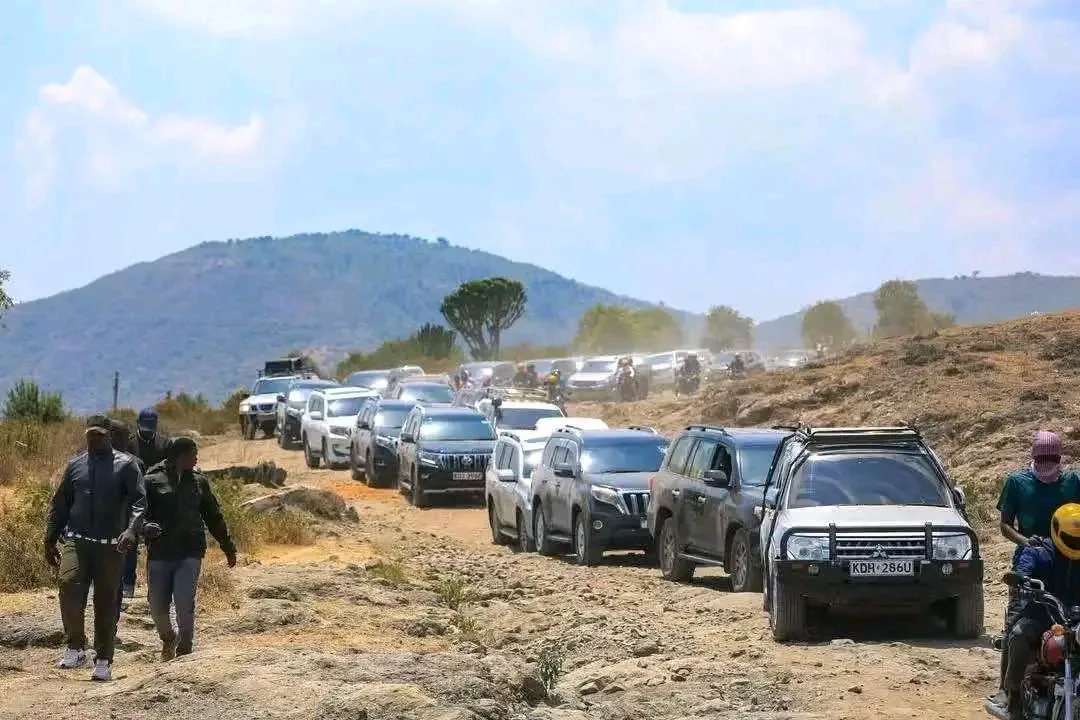
Wanga said the images and videos of rough roads in parts of Suba South had exposed a longstanding infrastructure deficit that residents have endured for generations.
“The dust on the Mbita–Sindo–Kiabuya–Sori corridor tells a story,” Wanga said.
“But it is not the story of a people who have failed. It is the story of a region that has waited far too long for the infrastructure required to unlock its potential,” she added.
Her response came after the Linda Mwananchi tour of Homa Bay on Sunday, August 16, during which poor road conditions became one of the biggest talking points.
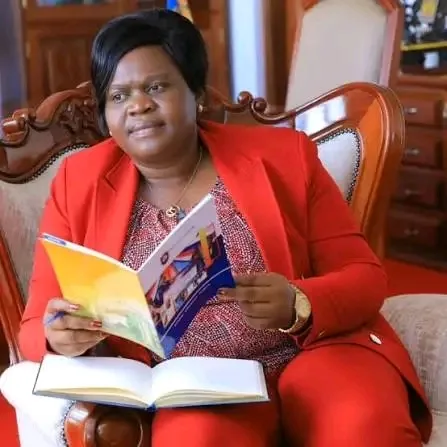
Gladys Wanga: ‘The condition of our roads is no joke’
Wanga argued that the condition of the roads should not become a source of ridicule for a community that has struggled with inadequate infrastructure for decades.
“What was billed as a tour of Homa Bay by Linda Mwananchi ended up doing something its organisers did not intend: it highlighted the very tribulations our community has been fighting to overcome,” Wanga said.
“Rough roads in parts of Suba South became a visual metaphor, and a source of ridicule, for Homa Bay's exclusion from development,” she added.
The governor said residents living along the affected roads experience the consequences of poor infrastructure every day.
“For the people who live along these roads, however, their condition is no joke; it is a daily reality that shapes access to markets and services, the cost of doing business, and the pace at which communities can develop,” Wanga said.
The road conditions became a major talking point during the Linda Mwananchi tour, with opposition figures using the images from parts of Homa Bay to question the development record of leaders in the region.
Wanga traces Homa Bay's problems to independence
The governor said Homa Bay's infrastructure challenges cannot be blamed on one administration, arguing that the problem dates back to independence.
“Homa Bay has lived with this reality for decades,” Wanga said.
“Since independence, the county, like many others across the country, has been evidence of a structural deficit that stretches from God Odiado in Siaya to Wuoth Ogik in Nyatike, shared by Turkana, Maasailand, Western Kenya, the Coast and other regions that have waited since 1963 for a fair share of the republic,” she added.
Wanga argued that successive governments failed to adequately address the infrastructure deficit.
“Those roads have their origins in independent Kenya, and their neglect spans every administration: fifteen years under Jomo Kenyatta, twenty-four under Daniel Arap Moi, ten under Mwai Kibaki, and ten more under Uhuru Kenyatta,” she said.
“It is a matter of historical record, not grievance for its own sake, that the roads Linda Mwananchi's cameras found so remarkable are the same roads generations of governments chose not to build,” Wanga added.
Mbita-Sindo-Kiabuya-Sori road becomes political flashpoint
Wanga singled out the 74-kilometre Mbita–Sindo–Kiabuya–Sori corridor as an example of the county's prolonged infrastructure challenges.
“The Mbita road itself tells that story in miniature,” she said.
According to Wanga, the road was first awarded in 2016 under the administration of former President Uhuru Kenyatta but stalled because of inadequate funding.
“First awarded in 2016 under the Uhuru Kenyatta government to Put Sarajevo, it stalled for lack of allocated funds, with only 7km of its 74km completed,” she said.
“It was re-awarded in 2020 and again saw little progress,” Wanga added.
The governor said progress had accelerated in recent years.
“In the last two years, 28km have so far been tarmacked, with works currently ongoing,” she said.
Wanga also cautioned against blaming county governments for delays involving major national trunk roads.
“It is important to note that a 74km trunk road is not something that devolution or CDF can address,” she said.
‘Devolution matters’
Despite the criticism, Wanga said devolution has played an important role in giving historically marginalised counties greater control over their development.
“However, devolution matters,” she said.
“It is devolution, championed for decades by leaders including Raila Odinga, that has begun to give counties like Homa Bay a say over their own development and a share of resources once concentrated at the centre,” she added.
Wanga said devolution had transformed the debate over historical marginalisation from an appeal for goodwill into a constitutional obligation.
“This has turned the case for correcting marginalisation from a matter of goodwill into a constitutional guarantee,” she said.
Wanga invokes Jaramogi, Mboya and Raila
The governor also invoked the political history of Nyanza while explaining what she described as the region's longstanding development struggles.
“We are convinced that these roads would have been tarmacked decades ago had Tom Mboya and Jaramogi Oginga Odinga remained in government,” Wanga said.
“Jaramogi was forced out in 1966, Mboya assassinated in 1969, both on a path toward the presidency,” she added.
Wanga also referenced former Prime Minister Raila Odinga's political legacy.
“Raila Odinga, many believe, would have delivered that infrastructure as president, but when Kenyans elected him, that mandate was denied to him by force,” she said.
“That history is why the current moment deserves to be judged on its own terms, not dismissed as political theatre,” Wanga added.
Wanga lists Ruto projects in Homa Bay
The governor said she believes there has been a significant change in the pace of infrastructure development in Homa Bay, particularly since 2024.
“There is compelling evidence that something has changed, particularly since 2024,” Wanga said.
“In four years, the Ruto administration has moved Homa Bay projects from aspiration to implementation,” she added.
Among the projects she listed were the Mbita–Sindo–Kiabuya–Sori corridor, the wider Suba South road network and several other roads across the county.
She also cited upgrades along Lala–Ruga, Nyalkinyi–Imbo, GOR Mahia Ring Road, Rangwe–Oboke, Rangwe–Ndiru, Kadel–Kanyadhiang–Kilusi–Opanga–Ramba, Kadongo–Lida, Adiedo–No. Karabok, Agolo Muok–Seka–Otati, Lwanda–Osodo–Kanyakiamo, Nyabera–Corner Koguta and Njeri–Pala.
Wanga further listed the Sindo Town road network, Homa Bay Pier, Modern Fish Market, Raila Odinga Stadium, ESP Markets, Rusinga Road and Mfangano Ring Road among projects she said demonstrate the development taking place across the county.
‘We are not embarrassed by our history’
Wanga urged Homa Bay residents not to be ashamed of the images of dusty and poorly maintained roads that emerged during the Linda Mwananchi tour.
“We are not embarrassed by that history,” she said.
“If images of rutted roads earned Homa Bay comparisons to conflict zones, we take that as a badge of honour to our marginalisation and resilience, not an insult requiring our silence,” she added.
The governor urged residents to take the criticism in stride while focusing on development.
“We appeal to our people to take this week's mockery in stride,” Wanga said.
“There is little hardship this region has not already endured since 1963,” she added.
Wanga urges Homa Bay residents to support development
Wanga said the county should not allow political sideshows to overshadow what she described as ongoing development.
“Neglect is a subject we do not shy away from,” she said.
“It is why we urge our people to look past sideshows and support an administration that has shown genuine willingness to correct the marginalisation of Nyanza and other underserved regions,” Wanga added.
The remarks come at a politically sensitive time for Homa Bay, with the Linda Mwananchi movement increasing its activities in the county and challenging the political direction of leaders allied with President William Ruto.
For Wanga, however, the road controversy is ultimately about a much bigger issue: the long-term development of Homa Bay.
“The dust is real. The historical deficit is real. But so is the transformation now underway,” she said.
“Beyond the dust lies the Homa Bay we have always deserved,” Wanga concluded.
Comments
No approved comments yet.