

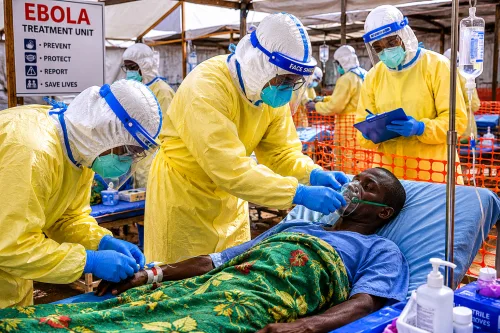
The update, issued on Sunday, October 11, offers some relief as health authorities continue tracing people who may have come into contact with the patient and strengthening surveillance to prevent further infections.
Reuters reported on Sunday that the Ministry had detected no additional cases after conducting 293 tests. Kenya confirmed its first imported case on October 6 after a Kenyan citizen who had travelled from the Democratic Republic of the Congo died in Nairobi.
According to the Ministry of Health, the 293 samples came from 289 alerts, with only the confirmed case testing positive. Authorities have urged Kenyans to remain calm while following official public health guidance.
Daily Nation reported that Health Cabinet Secretary Aden Duale had confirmed that 122 contacts linked to the patient had been listed and verified. Of these, 108 were in quarantine and being monitored daily, with none having developed symptoms at the time of the announcement. Efforts to trace the remaining contacts were continuing in collaboration with relevant partners.
The Star also reported that the government was maintaining active surveillance as contact tracing continued. Health authorities are monitoring identified contacts to help detect any possible infection early and prevent further transmission.
The patient had lived in the Democratic Republic of the Congo for seven years before travelling through Uganda and arriving in Nairobi on October 3. The Ministry of Health confirmed the imported case on October 6, after laboratory testing established that the patient had contracted the Bundibugyo strain of Ebola.
The patient died on October 5 while receiving medical care. Following the confirmation, the government intensified contact tracing and strengthened surveillance at key points of entry.
According to Citizen Digital, Kenya had screened 667,675 travellers at 26 points of entry by Sunday, including 2,345 during the preceding 24 hours. The screening exercise forms part of the government's efforts to identify suspected infections and strengthen early detection.
The Ministry of Health has also designated five laboratories to test samples, including two mobile laboratories at the Lwakhakha and Busia border points. The Ministry said samples could be referred from any county, with confirmed results available within six to 12 hours.
The government has expanded its preparations within the healthcare system. Daily Nation reported that 4,917 healthcare workers had received training in Ebola management, while 343 trained responders were on standby to support the national response.
The Ministry also reported that up to 241 isolation beds were available in five hospitals in Nairobi, Eldoret and Mombasa. These include intensive care capacity at Moi Teaching and Referral Hospital.
The World Health Organization is working with Kenyan authorities to strengthen surveillance, case investigation and contact tracing. Coordination with international partners remains important as health officials continue monitoring the situation.
The Ministry has urged anyone who suspects possible exposure to Ebola or develops concerning symptoms to seek medical attention promptly. Members of the public have also been advised to rely on official government communications rather than unverified information circulating online.
According to the Ministry's latest update, the National Taskforce, the National Public Health Emergency Operations Centre and the National Incident Management System remain active, with rapid response teams on 24-hour standby.
Kenyans seeking official guidance can call the Ministry of Health's toll-free information line on 719.
Although no additional cases had been detected as of October 11, authorities continue to monitor contacts and maintain surveillance. The government has emphasised that vigilance, timely reporting of suspected symptoms and cooperation with health teams remain essential to preventing further infections.
Comments
No approved comments yet.