

Kenyans are going to bed hungry tonight.
At least 2.7 million Kenyans are facing high levels of acute food insecurity and require urgent food and livelihood assistance, a new report released today September 15, 2026 has revealed.
The huge number reflects the cumulative effects of poor rainfall distribution, insufficient humanitarian food security assistance, among other reasons.
According to Daily Nation reporting today, the number of people facing high levels of acute food insecurity in Kenya's arid and semi-arid lands has risen by 55 per cent to 2.7 million.
The latest Integrated Food Security Phase Classification (IPC) analysis estimates that 2.7 million people across the 23 ASAL counties are currently in a crisis stage (IPC Phase 3) or above and require urgent food and livelihood assistance.
Eight counties - Baringo, Garissa, Mandera, Marsabit, Samburu, Tana River, Turkana and Wajir - are classified in the crisis stage (Phase 3).
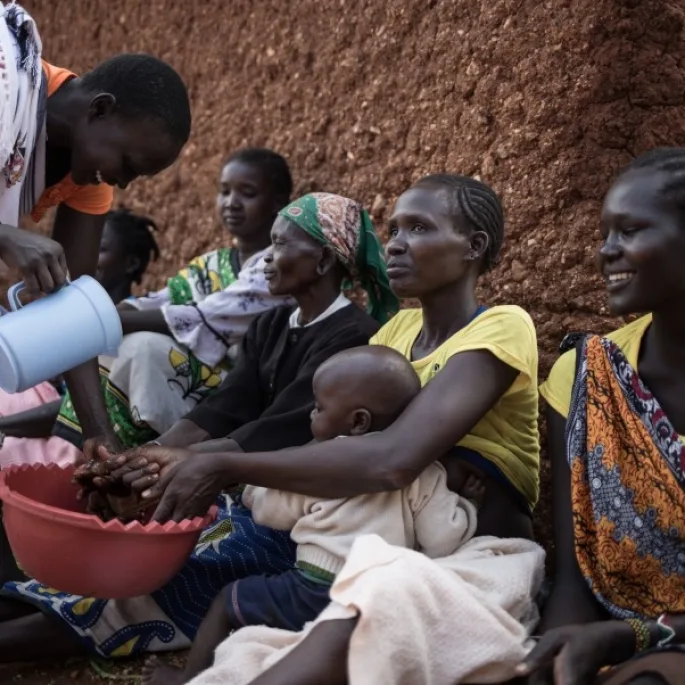
This means families in these counties cannot access enough food and are skipping meals daily, as seen in the picture where mothers in Turkana struggle to feed children.
The situation is even worse according to latest United Nations report released hours ago. At least 4.1 million people in Kenya are facing acute food insecurity, placing the country among Eastern Africa's fastest deteriorating humanitarian hotspots as climate shocks, rising prices and regional conflicts continue to worsen the crisis.
A new report by the United Nations Office for the Coordination of Humanitarian Affairs (OCHA) shows that Eastern Africa remains one of the world's most severe humanitarian hotspots, with 48.5 million people expected to require assistance in 2026.
Among the affected countries, Kenya recorded one of the largest increases in food insecurity during the second quarter of 2026 alongside South Sudan, Sudan and Tanzania.
The number marks a 52 percent increase from early 2025 when only 2.15 million people were in crisis, and exceeds the October 2025 to January 2026 projection which had estimated 2.12 million people.
Additionally, refugee settlements in Dadaab, Kakuma, and Kalobeyei face similarly dire conditions. Approximately 430,000 people — around two thirds of the population — are in IPC Phase 3 or above, and all three settlements are in Emergency Phase 4, bringing the total number of people in Kenya in Phase 3 or worse to more than 3.7 million.
This is driven by sharp reductions in humanitarian assistance, limited livelihood options, and high reliance on costly markets.
The malnutrition crisis is equally alarming. Nearly 810,900 children aged 6 to 59 months who are acutely malnourished and require treatment throughout 2026. Of these, 500,000 cases which is 62 percent are in the ASAL counties.
Mandera, North Horr/Chalbi in Marsabit, and Turkana South and East are already classified in Extremely Critical Malnutrition Phase 5, where at least one in three children is acutely malnourished, alongside widespread outbreaks of dysentery, cholera, acute watery diarrhoea, and measles, driving excess mortality.
An additional 116,800 pregnant and breastfeeding women also need nutritional support.
"That these thresholds are being crossed now at the outset of the lean season signals that conditions in Kenya's arid and semi-arid land counties are already deeply serious," said Getrude Misango, CARE Kenya's country director. "When communities have no time to recover between one drought and the next, the cumulative damage is severe."
Across Kenya's northern and north-eastern counties, families are watching their livestock perish, children are growing weaker, and critical water sources are running dry.
According to FEWS NET, nearly four million Kenyans will need humanitarian food assistance between June this year and January, with demand peaking during the September-October lean season.
Refugees and communities in the pastoral counties of Mandera, Garissa, Wajir, Marsabit, and Turkana are the most at risk.
Water scarcity is also intensifying, particularly in northern and eastern Kenya, where many water points are now near-dry or in alert status. Families are travelling longer distances for water, while livestock migrations in search of pasture are increasing, raising the risk of conflict in hotspot counties such as Turkana, Marsabit, Samburu, Baringo and Tana River.
Government assessments indicate that affected communities will require sustained food, nutrition, water, health and livestock support through at least March to May 2026.
Climate forecasts suggest continued below-normal rainfall into early 2026, driven by La Niña and a negative Indian Ocean Dipole. As a result, up to 3.5 million people could need food assistance by May 2026.
The IPC calls for expanded food distributions and targeted cash transfers for vulnerable households, alongside strengthened social protection programmes.
For the 400,000 already at emergency hunger levels, where food gaps are large and lives are at immediate risk, this support is not optional, it is life-saving.
Is your county among the 8 in crisis? Should Ruto declare hunger a national disaster? Comment your county name below.



Comments
No approved comments yet.