

Elsewhere, the arrest of a Bungoma teacher over an alleged Sh300,000 bribe linked to Teachers Service Commission jobs has raised fresh concerns about job seekers being exploited, while former Democratic Republic of Congo President Joseph Kabila's new coalition with M23-linked rebels has heightened tensions in the Great Lakes region.
The morning's headlines also feature developments in Kenya's Ebola surveillance, economic growth, public-sector accountability and the political future of the opposition.
Here is a comprehensive roundup of the major stories Kenyans should follow today.
1. Ruto, Uhuru and Opposition Leaders Could Meet at Raila's Anniversary
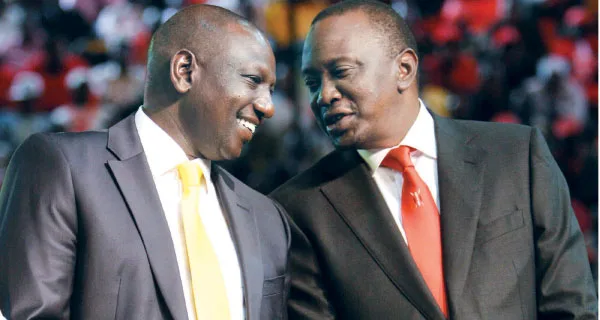
President William Ruto, former President Uhuru Kenyatta and several opposition figures are expected to attend the first anniversary of Raila Odinga's death in Bondo, Siaya County, on Thursday, October 15.
The gathering could bring together political leaders whose relationships have become increasingly strained as the country approaches the 2027 General Election.
According to The Star, the Odinga family has invited leaders from across the political divide, including Ruto, Uhuru, Nairobi Senator Edwin Sifuna and Embakasi East MP Babu Owino.
The event is expected to take place at Migwena cultural and sports ground, with preparations underway to accommodate mourners and invited guests.
Siaya Governor James Orengo has urged Kenyans to maintain peace, insisting that the anniversary should focus on Raila's life and political legacy rather than ordinary political competition.
However, the gathering comes at a politically sensitive moment, with Ruto and Uhuru publicly exchanging accusations and opposition leaders attempting to build a united challenge ahead of the next election.
Wiper leader Kalonzo Musyoka has indicated that he will not attend the official commemoration, arguing that Raila's legacy should not be exploited for political purposes.
The anniversary could therefore become an important moment for observing Kenya's shifting political relationships, although attendance alone should not be interpreted as evidence of a new political alliance.
2. Ruto Renews Attack on Uhuru as 2027 Rivalry Intensifies
The political dispute between President Ruto and his predecessor has returned to the centre of the national conversation.
The Standard reported fresh remarks by Ruto telling Uhuru to give him a break, as the President accused his former political ally of betraying an arrangement under which each would serve for 10 years.
The renewed confrontation highlights the breakdown of the relationship between the two leaders, who worked together in the Jubilee administration before Uhuru later backed Raila in the 2022 presidential election.
Their dispute is unfolding as political camps position themselves for the 2027 contest.
For Ruto, the confrontation provides an opportunity to defend his political record and rally supporters around his account of the breakdown in their relationship.
For Uhuru, the dispute places renewed attention on his influence within the opposition and his possible role in shaping the next presidential contest.
The central question is whether the rivalry will remain a personal political dispute or translate into a broader contest over economic policy, government performance and the country's future leadership.
3. Bungoma Teacher Arrested Over Alleged Sh300,000 TSC Jobs Bribe
The Ethics and Anti-Corruption Commission has arrested a teacher in Bungoma County over allegations that she demanded money from three unemployed teachers by claiming she could help them secure jobs at the Teachers Service Commission.
According to the Daily Nation and the Kenya Broadcasting Corporation, the suspect was arrested on October 12 following preliminary investigations into complaints that she had demanded Sh100,000 from each of the three job seekers.
The alleged payments totalled Sh300,000, with investigators indicating that Sh150,000 had reportedly been paid through M-Pesa.
The suspect, a teacher at Friends School Kamusinga, allegedly claimed to have connections within the TSC and other government offices that could facilitate recruitment.
She was booked at Bungoma Police Station as investigations continued.
The allegations highlight the vulnerability of unemployed teachers and other job seekers who may be targeted by individuals promising access to public-sector employment.
The case also serves as a reminder that recruitment opportunities should be verified through official channels and that requests for unofficial payments should be reported to the relevant authorities.
The allegations remain subject to investigation and any subsequent court proceedings.
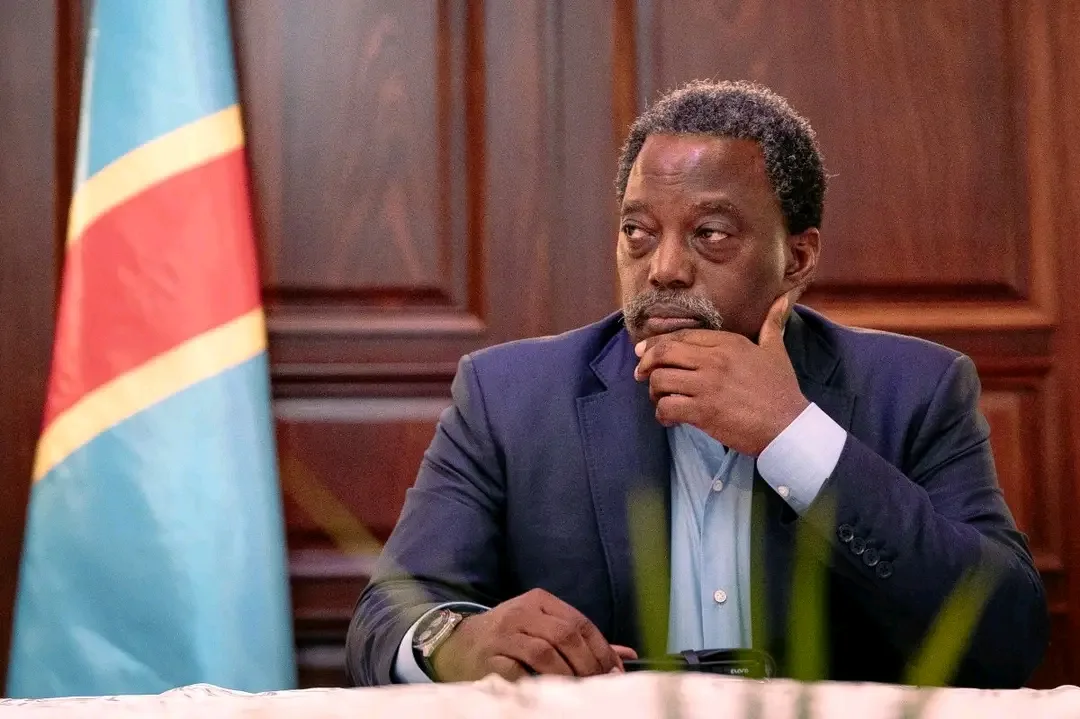
4. Kabila Forms New Coalition With M23 Rebels in DR Congo
Former Congolese President Joseph Kabila has launched a new political and military coalition that includes M23 rebels fighting the government of President Félix Tshisekedi.
The coalition, known as the Front for the Refoundation of the Nation, was announced in Goma, a city in eastern DR Congo that M23 captured during its advance last year.
According to the Associated Press, the coalition brings together groups opposed to Tshisekedi's government, with Corneille Nangaa, a former leader of the Congo River Alliance, serving as one of its vice presidents.
Coalition representatives said the movement intended to restore governance and coordinate resistance against what they described as tyranny, including through the use of force.
The announcement has raised concerns about the future of peace negotiations aimed at ending the long-running conflict in eastern Congo.
The Congolese government, the United States and United Nations experts have accused Rwanda of supporting M23, allegations Rwanda has disputed.
Kabila, who led DR Congo from 2001 to 2019, has denied accusations of supporting rebellion and has described legal proceedings against him as politically motivated.
For Kenya and the wider East African region, further instability could complicate diplomatic efforts, threaten cross-border trade and deepen an already severe humanitarian crisis.
However, the direct economic and security consequences for Kenya will depend on how the conflict develops and how regional governments respond.
5. Laikipia Rules Out Two Suspected Ebola Cases
Health authorities in Laikipia County have confirmed that two suspected Ebola cases tested negative, easing concerns that had emerged after reports of a possible case in Nanyuki.
Capital FM reported that county health officials activated precautionary measures after a patient presented with symptoms resembling Ebola virus disease.
Samples were collected and sent for laboratory testing, which ruled out Ebola.
The clarification followed public concern after the patient died while receiving treatment at Nanyuki Teaching and Referral Hospital.
The negative results mean the suspected cases should not be reported as confirmed Ebola infections.
Kenya nevertheless remains on alert following the first confirmed imported Ebola case reported earlier in October involving a traveller from the Democratic Republic of Congo.
Reuters reported on October 11 that the Ministry of Health had detected no additional cases after conducting 293 tests.
Authorities have continued surveillance and monitoring measures as part of efforts to prevent further transmission.
Residents are advised to rely on official health updates and avoid circulating unverified claims about suspected infections.
6. Kenya's GDP Growth Reportedly Reaches 5.3 Per Cent
Economic growth has also featured in the morning's national headlines, with The Standard reporting that Prime Cabinet Secretary Musalia Mudavadi said Kenya's GDP growth had reached 5.3 per cent.
The figure provides an indication of the government's assessment of economic performance, but the precise reporting period and the underlying statistical release should be checked before the figure is used for detailed economic comparisons.
GDP growth does not necessarily mean every household is experiencing improved living standards.
For ordinary Kenyans, the impact of economic expansion depends on whether it translates into jobs, higher incomes, affordable goods and services, and opportunities for businesses.
The key question is whether the reported growth can be sustained and whether its benefits will reach households facing pressure from living costs and other expenses.
7. Construction Sector Attracts Attention as Firms Eye Sh3.4 Trillion Pipeline
The Standard has reported that local firms are targeting a construction pipeline valued at Sh3.4 trillion as the sector records growth of 6.8 per cent.
The reported development points to the potential scale of construction-related opportunities in Kenya, including infrastructure, commercial property and other building projects.
However, the pipeline's value should not be confused with money already spent or contracts already awarded.
The practical impact will depend on how projects are financed, how quickly they move into implementation and whether local companies can secure work.
For businesses and workers, a growing construction sector could create opportunities in engineering, transport, materials supply, skilled labour and related services.
Investors will also be watching the availability of financing, project approvals and the overall business environment.
8. EACC Reports Sh7 Million Payment in NLC-Linked Investigation
The Ethics and Anti-Corruption Commission has also featured in reporting concerning an alleged Sh7 million payment involving a National Land Commission finance official.
The Standard reported that the commission had admitted receiving the money in a deal linked to the official.
The matter raises questions about the circumstances surrounding the payment and the role of the parties involved.
The details of the transaction, including its legal basis and the status of any investigation, require careful examination before conclusions can be drawn.
The National Land Commission plays an important role in land administration and related public functions, making accountability in transactions involving its officials a matter of public interest.
Any allegations of wrongdoing must be assessed on the basis of verified evidence and the findings of the relevant authorities.
9. University Lecturers Reject Government Offer as Classes Face Uncertainty
The Standard has reported that university lecturers rejected a government offer, with the dispute threatening to prolong uncertainty over learning.
The disagreement highlights the continuing challenges surrounding negotiations between public universities and their employees.
Lecturers' disputes can affect students through interrupted teaching schedules, delayed academic calendars and uncertainty over examinations and graduation dates.
Students and parents will be watching for signs of progress in negotiations and any official communication from universities about the status of classes.
The outcome will depend on whether the government and lecturers' representatives can reach an agreement on the issues under discussion.
Students should rely on official university notices for institution-specific updates rather than assume that all campuses have the same arrangements.
10. ODM Eyes Busia Seats as Party Leadership Defends Its Position
The Standard has reported that ODM chairperson Gladys Wanga said the party remained firm as it pursued all elective seats in Busia County.
The statement comes amid wider political realignments ahead of the 2027 General Election, with parties seeking to consolidate their regional support and negotiate their positions within potential coalitions.
Busia is an important political battleground in western Kenya, where competition among parties and individual candidates could influence the wider electoral landscape.
ODM's strategy will depend on its ability to retain support, select competitive candidates and respond to changing political alliances.
The party's ambitions also unfold against the background of disagreements over its relationship with the government and the direction of the broader opposition.
The coming months will provide a clearer picture of how these political calculations translate into candidate selection and campaign strategy.
What to Watch Today
Wednesday's news agenda is dominated by political positioning, public accountability and regional security.
The most immediate event to watch is the preparation for Raila Odinga's first death anniversary in Bondo on Thursday, where the presence of leaders from opposing political camps could attract considerable attention.
The dispute between Ruto and Uhuru will remain an important political storyline as the two leaders shape their positions ahead of 2027.
The Bungoma TSC jobs bribery case is another significant development because it touches on the vulnerability of unemployed teachers and the integrity of public recruitment.
Meanwhile, Kabila's coalition with M23 could complicate peace efforts in eastern DR Congo, while Kenya's health authorities continue to monitor Ebola risks following the negative results in Laikipia.
For households and businesses, economic growth figures and construction-sector opportunities will also be worth monitoring, alongside developments in public-sector employment and university negotiations.
As the day progresses, official statements and independently verified updates will be important in establishing which of these stories develop further.

Comments
No approved comments yet.