

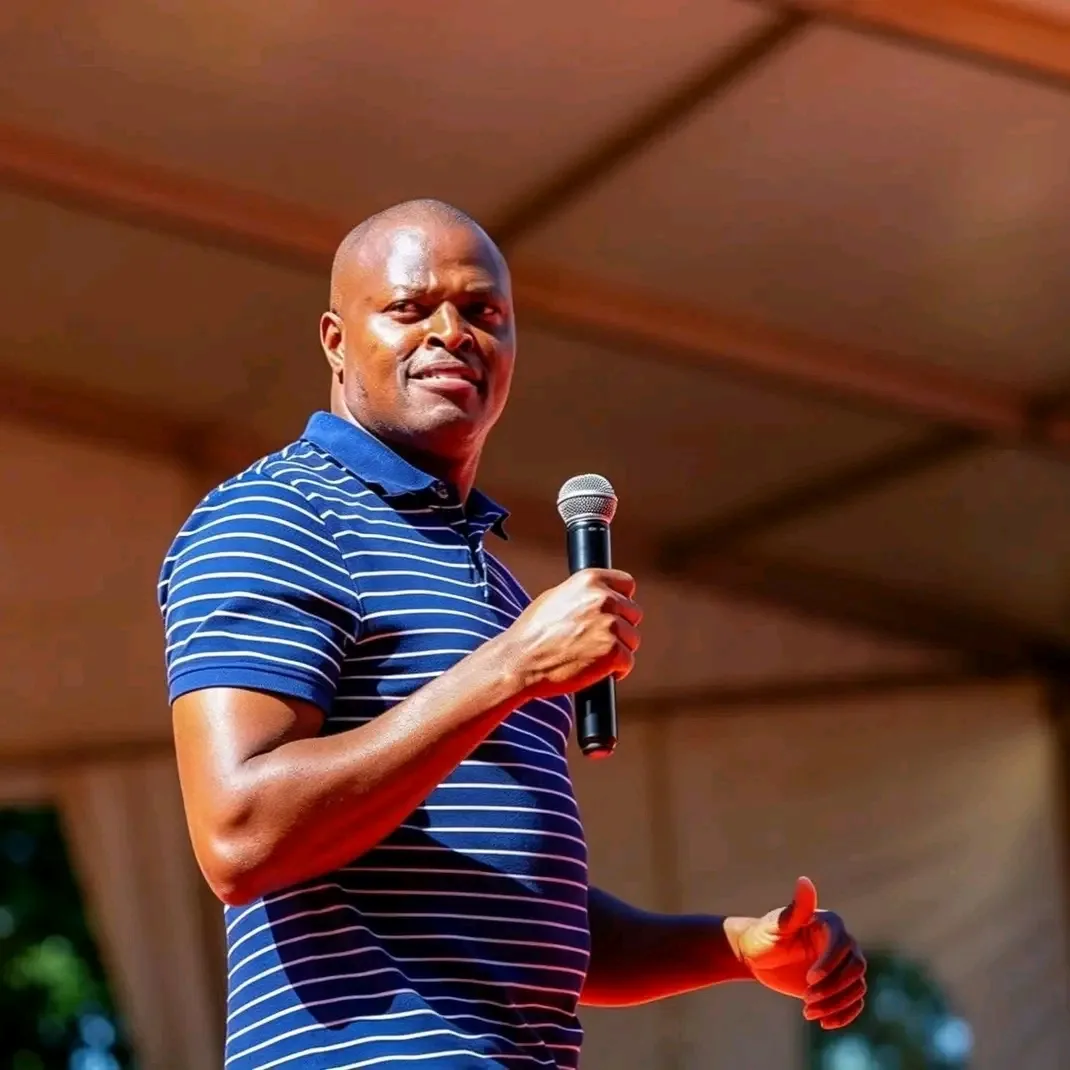
Kiharu Member of Parliament Ndindi Nyoro has alleged that President William Ruto and Nigerian billionaire Aliko Dangote are pursuing a plan to secure majority control of Kenya Pipeline Company (KPC), potentially increasing the investor's stake to 75% through additional share purchases and a proposed rights issue.
In a statement outlining what he described as the next phase of the transaction, Nyoro claimed the recent sale of 4.5 billion KPC shares, representing 24.76% of the company, was part of a broader strategy that could significantly reduce government ownership of the strategic energy infrastructure firm.
The MP alleged that the plan would involve further sales by public institutions, followed by a rights issue in which the government and other existing shareholders could decline to purchase additional shares.
His claims come after Dangote confirmed on October 21 that he had acquired approximately a quarter of KPC for about KSh42.5 billion, strengthening his business interests in Kenya's petroleum sector.
However, while the acquisition has been confirmed, the alleged plan to increase the stake to 75%, the claimed presidential instructions and the proposed arrangements for a future rights issue have not been independently established.
Nyoro Claims Ruto Directed Public Institutions to Sell KPC Shares
Nyoro alleged that President Ruto instructed chief executives of public institutions holding KPC shares to sell their holdings to a private investor.
He claimed the process involved public institutions, including the National Social Security Fund (NSSF) and the Public Service Superannuation Scheme (PSSS), among others.
According to the legislator, the sale followed an earlier phase in which public institutions acquired substantial KPC shares during the company's initial public offering.
“Pensioners lost money for President William Ruto to make money,” Nyoro alleged.
The MP argued that the transaction could have exposed pension funds to financial losses while benefiting the investor acquiring their shares.
However, the share sale price alone does not establish the alleged losses. Determining the financial impact on each institution would require an examination of its acquisition costs, sale proceeds, transaction expenses and any dividends received.
The government has defended the transfer of the shares as evidence of growing investor confidence in Kenya's capital markets and an effort to mobilise private capital for strategic infrastructure.
Dangote's Alleged Target Is 51% to 75% of KPC
Nyoro claimed that the ultimate objective of the transaction was to secure majority ownership of Kenya Pipeline Company.
“The end plan is to take over the majority shares in KPC,” he said, alleging that the investor's target was 51% under less favourable circumstances and approximately 75% if other parties cooperated.
Under the scenario outlined by the MP, public institutions could be persuaded or compelled to sell their remaining holdings to the same private investor.
Nyoro did not provide documentary evidence in his statement establishing that these future transactions had been agreed upon.
Dangote's confirmed 24.76% stake makes him a major shareholder in KPC, but it does not by itself establish that a further takeover has been approved or arranged.
The final ownership structure would depend on future share purchases, the company's capital structure and any additional transactions permitted under applicable laws and regulations.
Rights Issue Could Change KPC Shareholding, Nyoro Says
The MP identified a proposed rights issue as a key part of what he described as the takeover strategy.
A rights issue allows a company to raise additional capital by offering new shares to existing shareholders, usually in proportion to their current holdings. If some shareholders decline to participate while others buy the available shares, their respective ownership percentages can change.
Nyoro alleged that the government would decline to exercise its rights, citing a lack of funds, potentially allowing Dangote or an associated investor to acquire additional shares.
“The Government of Kenya will decline to take the rights due to ‘unavailability of Funds’,” he claimed.
He further alleged that NSSF could also decline to participate if it retained its remaining stake and that efforts could be made to persuade Uganda not to take up its allocation.
According to Nyoro, the decisions of the government and Uganda would determine how far the investor could increase its ownership.
He projected that the investor could end up controlling between 51% and 58% of KPC if Uganda resisted the proposed arrangement, while cooperation from other shareholders could push the stake towards 75%.
These percentages represent scenarios advanced by Nyoro, not confirmed outcomes of an announced rights issue. No verified terms establishing such an offer, its proposed allocation or the government's intended participation have been provided in his statement.
Government Stake Could Fall Below 20%, MP Warns
Nyoro warned that the alleged arrangement could leave the Kenyan government with slightly less than 20% of Kenya Pipeline Company.
He also argued that NSSF could face dilution if it retained its shares but declined to participate in a future capital-raising exercise.
Uganda, which holds a substantial stake in KPC, could also face dilution if it failed to exercise its rights, according to the MP's projections.
The actual impact would depend on the number of new shares issued, the participation of existing shareholders and the terms of any approved capital-raising exercise.
KPC is a strategic component of Kenya's energy infrastructure, transporting petroleum products from the coast to inland terminals and supporting regional distribution.
A major shift in its ownership could therefore have implications for public investment, corporate governance and the government's influence over the country's petroleum transportation network.
Nyoro Demands Disclosure of Dangote Company's Shareholders
Beyond the share sale, Nyoro has called for greater transparency over the ownership of Dangote's business interests connected to the investment.
“The shareholding register of Dangote East Africa Petroleum Refinery must be made public,” he said.
The MP also questioned the confidentiality surrounding the investment agreement, arguing that Kenyans should be able to scrutinise the terms governing the deal.
He alleged that potential conflicts of interest could arise if government officials responsible for negotiating the transaction also had private financial interests connected to the investment.
“The problem here is that the same team that should be looking at the welfare of Kenyans as elected leaders of Government are also on the other side of the table as Shareholders,” Nyoro claimed.
The allegations raise questions about disclosure, accountability and the protection of public interests. However, the MP's statement did not provide independently verified evidence establishing that President Ruto personally holds shares in the investor or would benefit financially from the acquisition.
The precise ownership structure of the acquiring entity and the terms of the investment agreement require documentary verification.
What Dangote's KPC Acquisition Means for Kenya
Dangote's acquisition comes as he expands his investment footprint in East Africa's energy sector.
On September 30, Ruto and Dangote broke ground on a planned oil refinery in Lamu County, a project intended to expand regional petroleum processing capacity.
The pipeline stake gives Dangote a significant position in a company central to the transportation of petroleum products across Kenya and into regional markets.
The investment could strengthen the integration of his energy interests, although the implications will depend on the commercial arrangements, regulatory safeguards and future investment decisions.
For Nyoro, the central concern is whether the KPC transaction and any subsequent changes in ownership will protect the interests of Kenyan taxpayers and pensioners.
The government has defended the share transfer as a way to attract private investment into strategic infrastructure. Nyoro, however, wants the ownership arrangements and investment agreement made public.
The government, KPC, the affected public institutions and the investor would need to respond to the MP's specific allegations to clarify whether any further share sales or rights issue are planned.
Until such evidence emerges, the alleged 75% takeover should be treated as a claim made by Nyoro rather than a confirmed transaction.
“We are African and Africa is our Business,” the MP concluded.


Comments
No approved comments yet.