

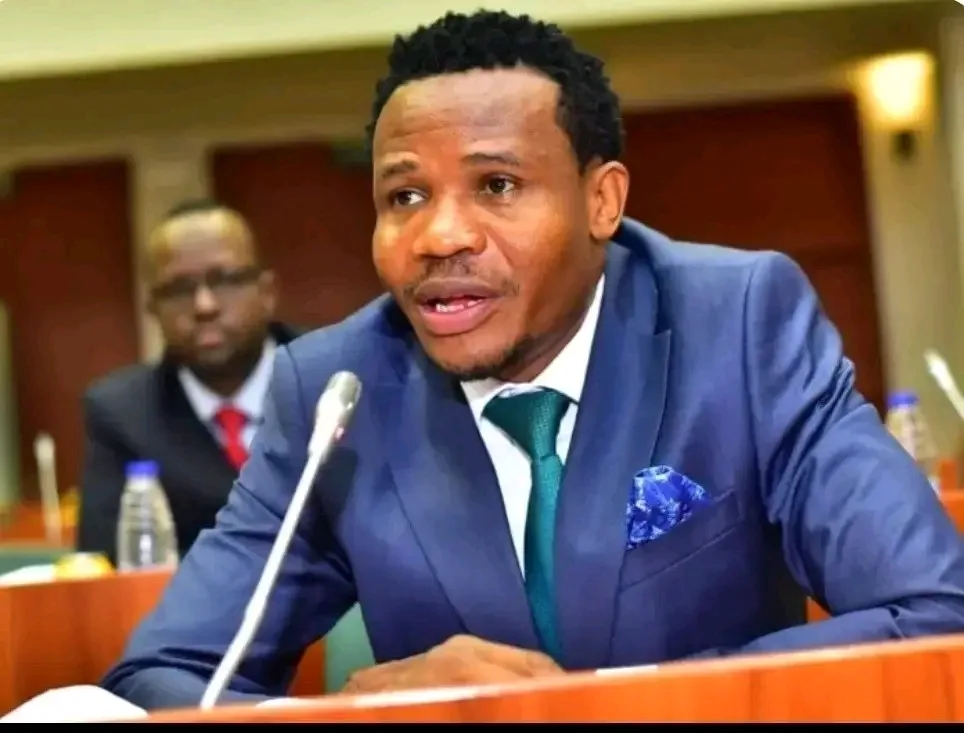
Salasya's disclosure comes as he seeks to position youth employment, digital entrepreneurship and the creative economy at the centre of his political agenda ahead of the 2027 polls.
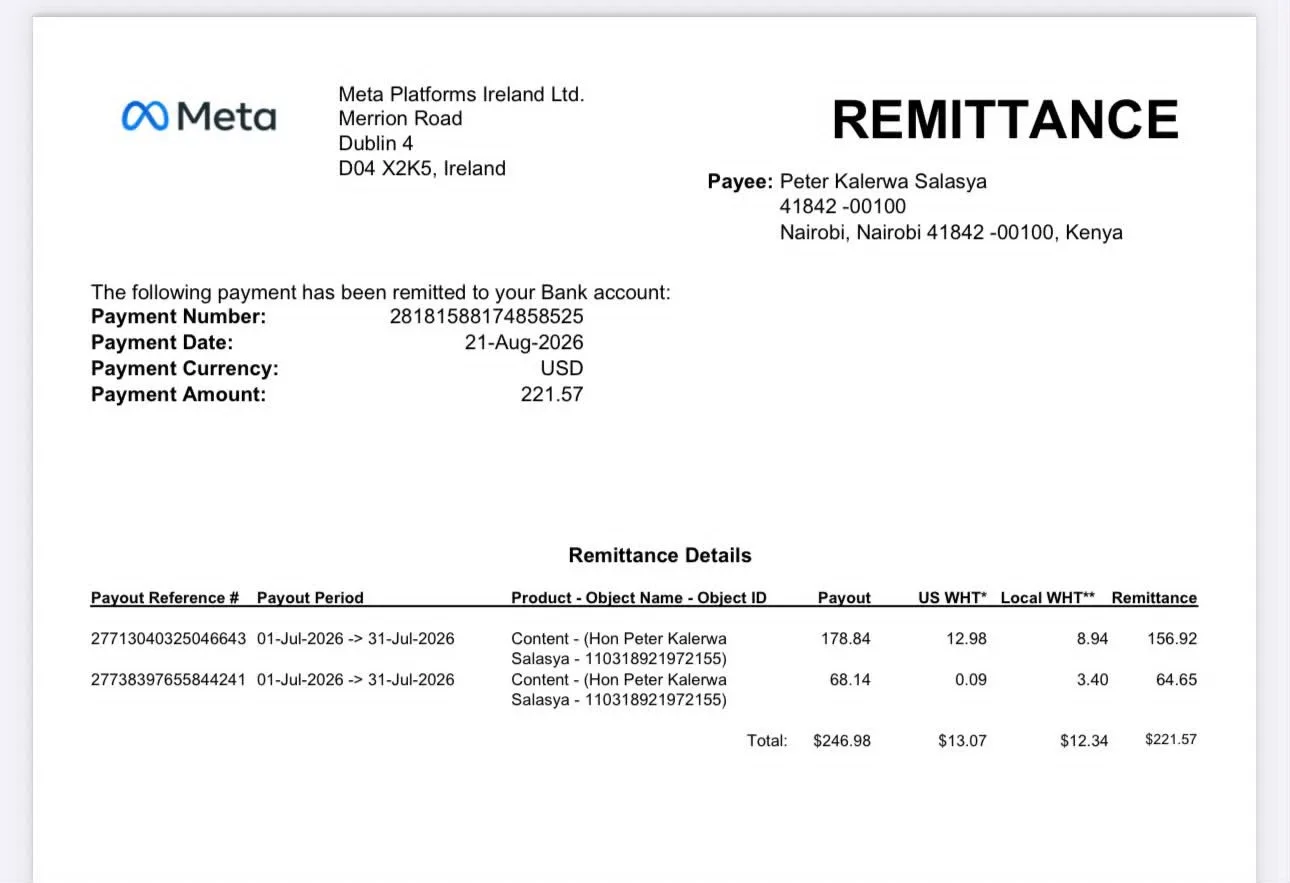
A Meta Platforms Ireland Ltd. remittance statement shared by the legislator shows that his content generated $246.98 in gross earnings for the period between July 1 and July 31, 2026.
After deductions amounting to $25.41, Salasya received a net payment of $221.57.
The statement shows that Meta deducted $13.07 in US withholding tax and $12.34 in local withholding tax.
The payment was remitted on August 21, 2026.
The disclosure gives a glimpse into the income that can be generated from digital content while simultaneously highlighting the taxation issue that Salasya says he wants to address if his political camp forms the next government.
Salasya: ‘We Will Make Content Creation ZERO TAX’
Reacting to the challenges facing young Kenyans earning money online, Salasya said a government formed by his political side would place the youth agenda at the heart of its economic programme.
“Tukichukua power next year, the youth agenda will be our priority,” Salasya said.
He argued that young people using digital platforms to earn a living should not be suffocated by what he described as unnecessary taxation.
“No young Kenyan making a living through content creation and online work should be suffocated by unnecessary taxes,” he said.
Then came his most striking proposal:
“We will make content creation ZERO TAX.”
The proposal would mark a significant shift in the way digital content and online income are treated if it were adopted as government policy.
For Salasya, the issue is bigger than taxation. He wants Kenya to use its growing digital economy as a vehicle for creating jobs for young people.
From Meta Earnings to a 2027 Political Agenda
Salasya's own Meta remittance statement puts his proposal into perspective.
His July content payouts amounted to $246.98 before deductions, with the final amount deposited standing at $221.57.
The MP is now arguing that instead of placing additional financial burdens on digital creators, the government should create an environment that encourages more young Kenyans to enter the industry.
“And we will not stop there,” he said.
Salasya wants a future government to aggressively pursue international technology companies, investors and digital platforms and encourage them to establish operations in Kenya.
“We will actively approach international companies, investors and global digital platforms with one clear message: come to Kenya, create jobs for our young people, invest in our creative economy, and enjoy serious tax incentives,” he said.
‘Come to Kenya and Create Jobs’
According to Salasya, Kenya should compete for global investment by offering incentives to companies willing to create employment and invest in the country's technology and creative sectors.
“A government that understands the future must invest in the digital economy, content creators, technology and the talents of our youth,” he said.
The MP's proposal places the digital economy at the centre of his broader argument that Kenya needs to rethink how it creates opportunities for its rapidly growing youthful population.
He said his political camp would focus on employment rather than simply making promises to young voters.
“Our government, where I will serve as an advisor, will have one major mission: create jobs and economic opportunities for young Kenyans,” Salasya said.
Salasya Attacks Affordable Housing Programme
The Mumias East MP also used the opportunity to criticise the government's Affordable Housing agenda, arguing that young Kenyans need jobs and income-generating opportunities more urgently.
“We cannot continue giving our youth promises while their future is being taken away from them,” he said.
In a direct message to the youth, Salasya added:
“Wachana na hizi empty promises za Affordable Housing. Give the youth jobs. Give them opportunities. Give them a government that believes in their talent.”
His comments put the Affordable Housing programme at the centre of a wider political argument over whether the government's economic priorities are adequately addressing youth unemployment.
What Would a ZERO-TAX Creator Economy Mean?
Salasya's proposal raises a potentially major policy question ahead of the 2027 election: should Kenya tax income generated by digital content in the same way it taxes other forms of economic activity, or should the sector receive special incentives to encourage growth?
The MP is clearly advocating for the latter.
However, turning the proposal into government policy would require legislation, a definition of what qualifies as content-creation income and a framework for determining who would benefit from the exemption.
His proposal also goes beyond Kenyan creators.
By offering incentives to international digital platforms and investors, Salasya says Kenya could transform the creative economy into a major source of employment.
‘2027 Must Be About Jobs’
With the 2027 General Election approaching, Salasya is increasingly framing his political message around economic empowerment.
Rather than focusing solely on political personalities and alliances, he wants the election to become a referendum on jobs, opportunities and the future of Kenya's youth.
“2027 must be about jobs, opportunity and the economic empowerment of young Kenyans,” Salasya said.
His Meta payment disclosure has consequently become more than a revelation about his personal digital earnings.
It provides the backdrop for a broader political promise: a Salasya-backed government would seek to remove taxes from content creation, attract global digital investment and make youth employment the centrepiece of its economic agenda.
For Kenya's millions of young people trying to turn social media, technology and creative talent into sustainable livelihoods, that could become one of the more closely watched economic proposals of the 2027 campaign.
Do you want to be published? E-mail info@thedailywhistle.co.ke or WhatsApp 0721930260


Comments
No approved comments yet.