

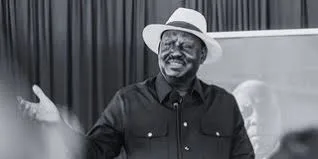
One year after the death of former Prime Minister Raila Amolo Odinga, the question confronting Kenya’s political class is no longer simply how to honour one of the country’s most influential political figures. It is who can carry forward his political legacy and turn his influence into electoral support.
The first anniversary of Raila’s death, commemorated on October 15, 2026, at Migwena Cultural Grounds in Bondo, Siaya County, brought that question into sharp focus.
The gathering was intended to celebrate Raila’s life and remember his contribution to Kenya’s political development. However, competing political interests and divisions over the future of the Orange Democratic Movement (ODM) also emerged, reflecting the challenges facing a movement that operated for decades under his leadership.
With the August 2027 General Election approaching, the struggle over Raila’s legacy is becoming an important part of the contest for political influence, particularly within ODM and the broader opposition.
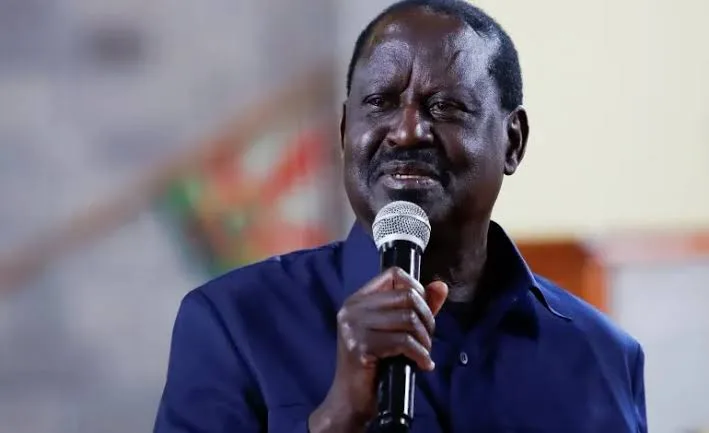
Raila Odinga’s death leaves a political vacuum
Raila died on October 15, 2025, after decades at the centre of Kenya’s political life.
His career included opposition politics, imprisonment during the struggle for multiparty democracy, participation in successive political coalitions and service as Prime Minister in the Grand Coalition Government formed after the disputed 2007 presidential election.
For many Kenyans, his political identity was closely associated with constitutional reform, electoral accountability and demands for democratic change.
He also built ODM into a major national political force, drawing support from different communities and political constituencies.
His influence extended beyond party leadership. Raila was often a central figure in opposition coalition negotiations, able to bring together politicians whose interests and ambitions did not always align.
His absence has therefore created a challenge that goes beyond choosing a new leader. The party must maintain its national support, manage competing ambitions and determine its relationship with a government it once opposed.
The events in Bondo demonstrated how difficult that transition could become.
ODM faces a defining choice over Ruto’s re-election
One of the most consequential questions facing ODM is its relationship with President William Ruto.
Following the 2024 Gen Z protests, Raila and Ruto entered a political arrangement that led to cooperation between ODM and the Kenya Kwanza administration. The arrangement helped reshape the political landscape, but it also generated disagreements within ODM over the party’s direction.
Some leaders have defended cooperation with the President, arguing that engagement with the government can deliver development and political gains for their supporters.
Others have questioned whether the arrangement is consistent with the opposition principles that helped build ODM.
The disagreement matters because the 2027 election will require political parties to make clear decisions about alliances, candidates and their policy positions.
At Raila’s anniversary, Homa Bay Governor and ODM national chairperson Gladys Wanga called for unity and urged the party to protect its strength and national standing.
But the gathering also provided a platform for leaders advocating a more confrontational approach towards Ruto’s administration.
According to Daily Nation’s October 16 report on the anniversary, Siaya Governor James Orengo, Nairobi Senator Edwin Sifuna, Embakasi East MP Babu Owino and Wiper leader Kalonzo Musyoka argued that Raila’s legacy should be honoured by pursuing the political path they associated with him, including seeking to remove Ruto from power in 2027.
Sifuna captured the argument in remarks reported by the newspaper: “Politics is persuasion, not dictatorship. Baba taught us to put citizens first whenever we make decisions.”
The statement reflects the broader disagreement over whether Raila’s legacy should be defined primarily by his willingness to negotiate political arrangements or by the opposition role he played for much of his career.
For voters, the decisive issue may be whether the competing camps can demonstrate how their choices will improve living standards, create opportunities for young people and strengthen public accountability.
Edwin Sifuna and the search for a new opposition direction
Edwin Sifuna has emerged as one of the prominent voices challenging ODM’s cooperation with Ruto’s administration.
The Nairobi senator’s position places him within a wider debate over whether opposition politics should be rebuilt around a new political movement or organised through negotiations among existing parties.
His association with the Linda Mwananchi political initiative has also made him a significant figure in discussions about the future of opposition mobilisation.
However, public prominence does not automatically translate into an electoral coalition capable of winning a national contest.
Sifuna and other opposition figures would need to build organisational structures, agree on a common political programme and demonstrate that their support extends beyond rallies and online engagement.
They would also have to address a familiar problem in Kenyan opposition politics: how to unite leaders with presidential ambitions without allowing competition for positions to weaken their collective campaign.
Raila spent much of his career navigating precisely these tensions.
His ability to negotiate alliances was one of the sources of his political influence. Reproducing that ability may prove more difficult for leaders who lack his established networks and decades of political experience.
Ruto’s relationship with ODM could shape the 2027 contest
For President Ruto, the question is whether cooperation with ODM can translate into lasting political support in the next election.
Raila’s relationship with the President altered the traditional opposition-government divide and created new opportunities for political cooperation. Yet the divisions exposed at the anniversary show that the arrangement does not necessarily command universal support among ODM leaders or their followers.
The President’s political strategy will depend partly on whether he can maintain relationships with influential figures in the party while persuading voters that his administration has delivered tangible results.
Economic conditions will also matter.
The cost of living, employment opportunities, public debt, taxation and access to essential services are likely to feature prominently in the next election campaign. Political alliances may attract attention, but voters will ultimately judge leaders on their records, promises and credibility.
ODM’s internal debate could therefore have implications beyond the party itself. If its leaders remain divided over whether to cooperate with Ruto or challenge him, the disagreement could reshape the wider opposition and influence the balance of power in 2027.
Raila’s family also enters the political conversation
The anniversary also brought the political ambitions of members of the Odinga family into public focus.
Raila’s daughter, Winnie Odinga, announced her intention to contest the Nairobi Senate seat, while Raila Odinga Junior appealed for support for his bid to represent Kibra in the National Assembly.
According to Daily Nation, Winnie said her decision was intended to create space for young people in leadership.
“Let it not be a rumour that as Edwin Sifuna seeks other offices, I will contest the Nairobi Senate seat. I am going with young people,” she said, as reported by the newspaper.
Raila Junior also invoked his father’s values while addressing supporters.
“Baba loved everyone and Kibra. I also do,” he said, adding that his father had taught him to stand for what was right and defend the weak.
The announcements add another dimension to the debate over Raila’s political legacy. His family retains a powerful connection to his history and public identity, but electoral success will depend on voters’ choices rather than family association alone.
The wider question is whether the next generation can translate that connection into a political programme that addresses contemporary challenges.
Who can inherit Raila Odinga’s political legacy?
Raila’s legacy is unlikely to pass neatly from one individual to another.
His influence rested on a combination of personal loyalty, political experience, organisational networks and a long history of engagement with Kenya’s democratic struggles.
Different leaders may inherit parts of that legacy. Some may emphasise constitutionalism and accountability, others national unity and political negotiation, while younger politicians may focus on employment, economic opportunity and generational change.
The challenge will be to turn those different interpretations into a coherent political offer.
For ODM, the immediate task is to determine whether the party can maintain unity while accommodating competing views about its relationship with the government.
For Sifuna, Orengo, Babu Owino and other opposition figures, the test is whether their calls for political change can produce a credible, organised alternative.
For Ruto, the challenge is whether his administration can retain support amid criticism from leaders who believe the country needs a different political direction.
None of these questions can be settled by a memorial gathering alone.
The 2027 election will be the real test
Raila Odinga’s first anniversary has shown that his political influence remains central to Kenya’s national conversation, even in his absence.
But remembrance and electoral support are not the same thing. The politicians invoking his name must now demonstrate how they intend to translate his legacy into policies, institutions and leadership that respond to the concerns of ordinary Kenyans.
ODM must decide what kind of party it wants to be without its founding political figure at the centre of every major negotiation. The opposition must show that it can unite around more than opposition to the President. And the government must prove that its record can withstand scrutiny from voters preparing to make another consequential choice.
As Kenya moves towards the August 2027 General Election, the question is no longer simply who will claim to be Raila’s political heir.
It is who can convince Kenyans that they have a credible plan for the country’s future.
That, ultimately, will be the most important test of Raila Odinga’s enduring political legacy.
Comments
No approved comments yet.