

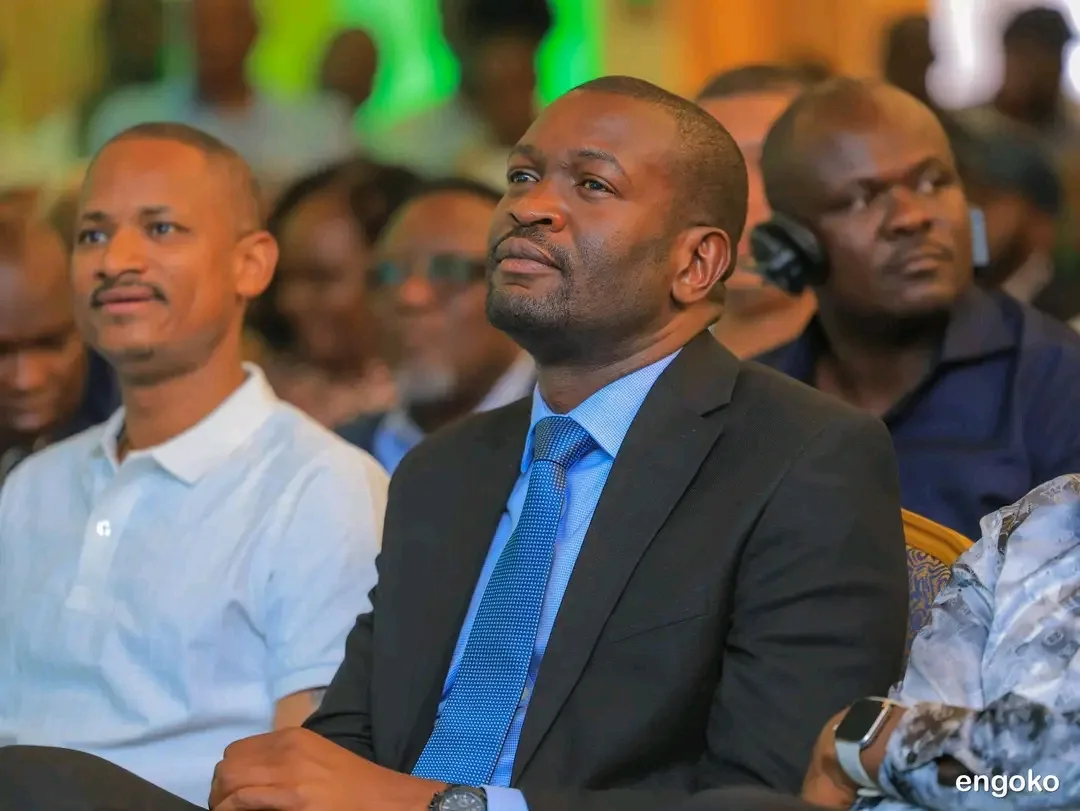
Sifuna was formally unveiled as the party leader during a launch in Nairobi on Sunday, October 4, 2026, as he moves to establish a formal political structure for his presidential ambitions.
The development comes after months of uncertainty over the political vehicle that Sifuna and his allies would use in the 2027 election.
Unlike the impression created by some initial reports describing TEP as Sifuna’s “new party”, the party itself is not new. Official records from the Office of the Registrar of Political Parties (ORPP) show that The Equitable Party was registered on March 25, 2022, under certificate serial number 0100.
What is new is Sifuna’s takeover and restructuring of the party as his political vehicle for the 2027 presidential contest.

Sifuna takes over The Equitable Party
The party's previous leadership agreed to restructure its officials to accommodate Sifuna and his political allies.
At the launch, the outgoing leadership confirmed that Sifuna would take over as party leader and seek the presidency on the TEP ticket.
The move gives Sifuna an existing registered party through which he can organise his political campaign, rather than waiting to establish an entirely new party.
It also comes at a critical point in preparations for the 2027 election, with political parties facing statutory and electoral deadlines ahead of the polls.
The Equitable Party was registered in 2022
TEP was officially registered more than four years before Sifuna's takeover.
The ORPP lists March 25, 2022 as the date the party's registration certificate was issued.
The party is formally known as The Equitable Party and uses the abbreviation TEP. Its official postal address is P.O. Box 7149-00200, Nairobi, while its registered headquarters are listed on Mtito Andei Road, off Lenana Road, Nairobi.
This history is significant because it means Sifuna's political team has adopted an existing legal party rather than creating TEP from scratch.
What are The Equitable Party's official colours?
The official colours of TEP are:
- Gold
- Emerald
The colours are contained in the ORPP's official register of fully registered political parties.
They form part of the party's registered identity and therefore should not be confused with colours that may be used specifically for Sifuna's campaign branding.
What is TEP's symbol?
The party's official symbol is a weighing scale.
The ORPP's record identifies the party's emblem as a weighing-scale symbol accompanied by the party's name and slogan.
The weighing scale provides the most recognisable visual identity associated with TEP.
What is The Equitable Party's slogan?
TEP's registered slogan is:
“Tusawazishe.”
The slogan is officially recorded by the ORPP alongside the party's name, abbreviation, colours and symbol.
The party's branding therefore centres on the idea of equity and balance, reflected in both its name and weighing-scale symbol.
Who led TEP before Sifuna?
Before Sifuna's takeover, the party had its own leadership structure.
Gilbert Marava was associated with the party's previous leadership and played a central role in the handover and restructuring that brought Sifuna into the party.
The current arrangement is expected to see Sifuna assume the top leadership position while the existing officials and incoming members are incorporated into a restructured party hierarchy.
The exact final composition of the national officials is expected to become clearer as the restructuring process proceeds.
Leaders at Sifuna's launch
The unveiling attracted several prominent political figures.
Among those reported at the event were Siaya Governor James Orengo and Trans Nzoia Governor George Natembeya.
Also present were senators Godfrey Osotsi, Richard Onyonka and Boni Khalwale.
Members of Parliament reported at the launch included Babu Owino, Caroli Omondi, Patrick Makau, Antony Kibagendi, Jack Wamboka and Majimbo Kalasinga.
Former Tharaka Nithi Governor Kawira Mwangaza was also reported to have attended.
However, attendance at the launch should not automatically be interpreted as confirmation that every politician present has joined TEP or formally endorsed Sifuna's presidential bid.
How TEP connects to Linda Mwananchi
Sifuna's decision to use TEP comes after an extended search for a political vehicle for the Linda Mwananchi movement.
In September, several possible options were being discussed, including the United Democratic Party (UDP).
The UDP option encountered complications after the ORPP rejected proposed changes to its name and branding, citing similarities with The Ukombozi Alliance.
At the same time, Sifuna's Linda Mwananchi Movement was pursuing recognition of its name. The Political Parties Disputes Tribunal subsequently cleared the way for the name to be reserved, although reservation of a name does not by itself amount to full registration as a political party.
The adoption of TEP provides Sifuna with an already registered political party as he prepares for the next stage of his political campaign.
Why the party matters to Sifuna's 2027 plans
The takeover gives Sifuna a formal party structure through which he can organise supporters, develop party structures and pursue his presidential bid.
It also allows the Linda Mwananchi political mobilisation to have an established registered party vehicle while broader opposition coalition discussions continue.
The political landscape remains fluid, however, with several opposition leaders and parties exploring their own vehicles and possible coalition arrangements ahead of the 2027 General Election.
The Eastleigh Voice had previously reported that Sifuna's allies were considering possible cooperation with parties including the Democracy for Citizens Party (DCP) and KANU as they worked on their 2027 strategy.
TEP's stated political objectives
The Equitable Party's registered identity is built around equity, as reflected in its name, slogan and weighing-scale symbol.
Its stated political objectives include advancing equality, social justice and broader participation in decision-making.
The party has also previously presented itself as advocating greater access to economic and social opportunities.
With Sifuna now at the helm, however, the immediate political focus is expected to shift towards building the party's national structures and preparing for the 2027 election.
What happens next?
The next major step will be the restructuring of TEP's leadership and party organs to accommodate Sifuna and his political allies.
The party will also have to strengthen its grassroots structures as the 2027 electoral calendar moves closer.
For Sifuna, the move provides a formal political platform after months of uncertainty surrounding the party he would use to pursue the presidency.
For TEP, it represents a major change in leadership and political direction more than four years after the party was first registered.
Key facts about The Equitable Party
| Detail | Information |
|---|---|
| Official name | The Equitable Party |
| Abbreviation | TEP |
| Registered | March 25, 2022 |
| Certificate serial number | 0100 |
| Official colours | Gold and emerald |
| Symbol | Weighing scale |
| Slogan | “Tusawazishe” |
| Headquarters | Mtito Andei Road, off Lenana Road, Nairobi |
| Current political leader | Edwin Sifuna |
| 2027 presidential candidate | Edwin Sifuna |
The ORPP records confirm the party's registration details, colours, symbol, slogan and headquarters.
The Equitable Party is therefore not a newly created political party. It is an existing registered party that Edwin Sifuna has now adopted and taken over as his political vehicle ahead of the 2027 General Election.
More details on the party's final leadership structure, membership and campaign strategy are expected to emerge as Sifuna and his allies reorganise the party.
Do you want to be published? E-mail info@thedailywhistle.co.ke or WhatsApp 0721930260




Comments
No approved comments yet.