

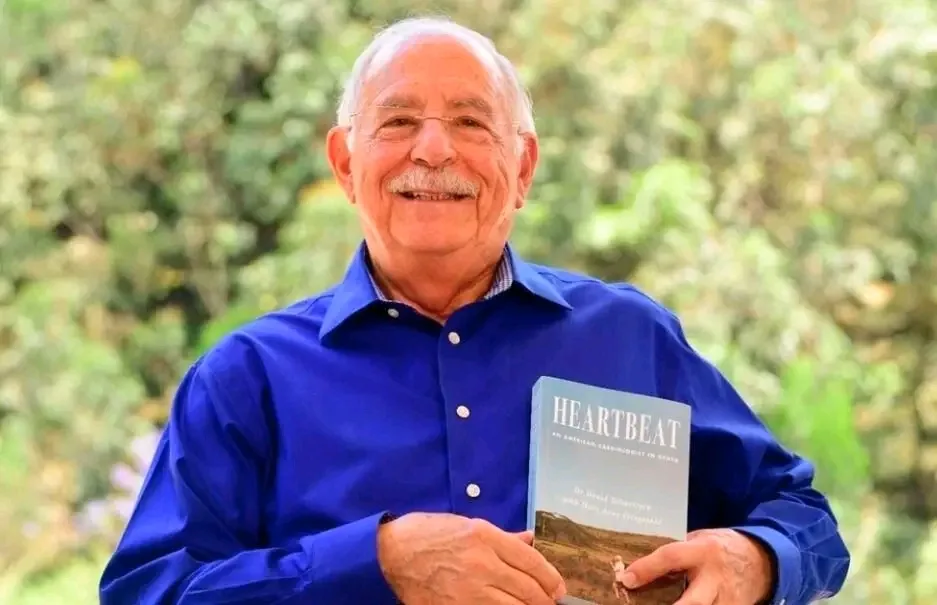
Silverstein, who served as the personal physician of Kenya’s second President Daniel arap Moi for more than four decades, died on Sunday, September 13, 2026, aged 82.
His death was confirmed by his family, with the Moi family also mourning the doctor who cared for the former President for decades.
But beyond being known as Moi’s personal doctor, Silverstein lived an extraordinary life and left a major mark on Kenya’s medical profession.
Here are some things many Kenyans may not know about the late cardiologist.
1. He first met Moi in 1977
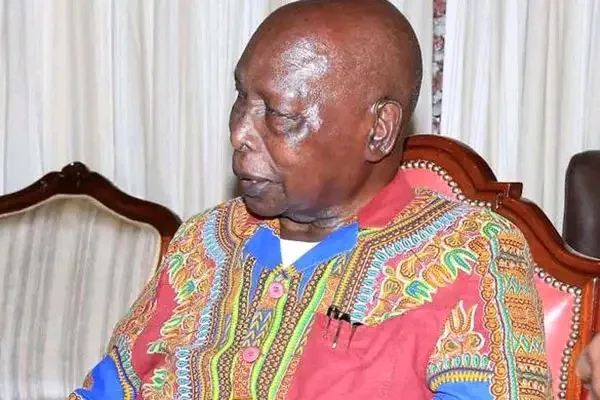
Silverstein's relationship with Moi began long before he became President's personal physician.
The two first met in 1977 when Moi was serving as Vice President and Silverstein was working at Kenyatta National Hospital.
Silverstein was 33 at the time, while Moi was 60.
What started as a medical consultation eventually developed into a relationship that lasted more than four decades.
2. He was much more than Moi’s doctor
Silverstein's relationship with Moi went beyond the traditional doctor-patient relationship.
The physician recalled that their conversations were not always about medicine.
The two discussed religion, the Old Testament, international politics and developments in medicine.
Silverstein also recalled that he and Moi would sometimes pray together before their discussions.
Their relationship continued even after Moi retired from the presidency in 2002.
3. He treated Nelson Mandela
One of the most remarkable chapters of Silverstein's career involved former South African President Nelson Mandela.
When Mandela visited Kenya in July 1990, he fell ill and was taken to The Nairobi Hospital.
Silverstein, who was then Moi's personal physician, attended to Mandela.
Mandela's illness and treatment became part of the remarkable medical history surrounding his visit to Kenya.
4. Charles Njonjo was also his patient
Silverstein also treated former Attorney General Charles Njonjo.
This meant that his medical practice brought him into close contact with some of the most influential political figures in Kenya's history.
His connection with Njonjo went beyond medicine, with the two families becoming close.
5. He helped pioneer cardiac care in Kenya
Although many Kenyans knew him primarily because of his association with Moi, Silverstein's medical contribution was much broader.
He was one of the pioneers of cardiology in Kenya and worked at Kenyatta National Hospital, where he was involved in cardiac catheterisation services.
He later headed the hospital's cardiology unit and served as chief cardiothoracic physician for the Government of Kenya.
His contribution helped shape the development of specialised cardiac treatment in Kenya.
6. His career in Kenya lasted more than five decades
Silverstein built most of his professional life in Kenya.
What began as a career that brought him into contact with the country's political leadership eventually became a more than 50-year association with the country's medical profession.
He became one of Kenya's best-known cardiologists and continued practising medicine long after his association with Moi became widely known.
7. His relationship with Moi became a window into the former President’s private life
Because Silverstein spent decades caring for Moi, he occasionally offered rare insights into the former President away from political rallies, State House ceremonies and official functions.
In 2020, shortly after Moi's death, Silverstein recalled aspects of their long relationship, giving Kenyans an unusual glimpse into the former President's private side.
One of the most notable revelations was how much their conversations extended beyond medicine.
Silverstein's recollections showed a different side of Moi, including discussions about faith, politics and world affairs.
8. He wrote about his extraordinary career
Silverstein later documented parts of his life and his experiences as an American cardiologist practising in Kenya.
His book, Heartbeat: An American Cardiologist in Kenya, provides an account of his medical career and his extraordinary relationship with Moi.
The book offers a rare perspective on a period when a foreign-born doctor became deeply embedded in Kenya's medical and political history.
9. He remained closely associated with the Moi family
Even after Moi left office, Silverstein remained close to the former President and his family.
Following his death, KANU National Chairman Gideon Moi described him as a compassionate physician whose care went beyond the traditional doctor-patient relationship.
Gideon said Silverstein's attention to detail, empathy and commitment to Moi's wellbeing left a lasting impression on the family.
10. His legacy goes beyond politics
Perhaps the biggest thing to remember about Silverstein is that his legacy was not simply about being the doctor of a former President.
He was a cardiologist who helped develop specialised heart care in Kenya, treated prominent figures including Mandela and Njonjo, trained and worked with medical professionals and spent more than five decades building his career in the country.
His extraordinary access to Kenya's political elite made him a fascinating figure in the country's history.
But his contribution to medicine ensured that his name will also remain part of Kenya's medical history.
Dr David Silverstein's death therefore marks the end of an extraordinary chapter — one that connected medicine, politics and some of the most influential personalities of modern African history.
Do you want to be published? E-mail info@thedailywhistle.co.ke or WhatsApp 0721930260
Comments
No approved comments yet.