

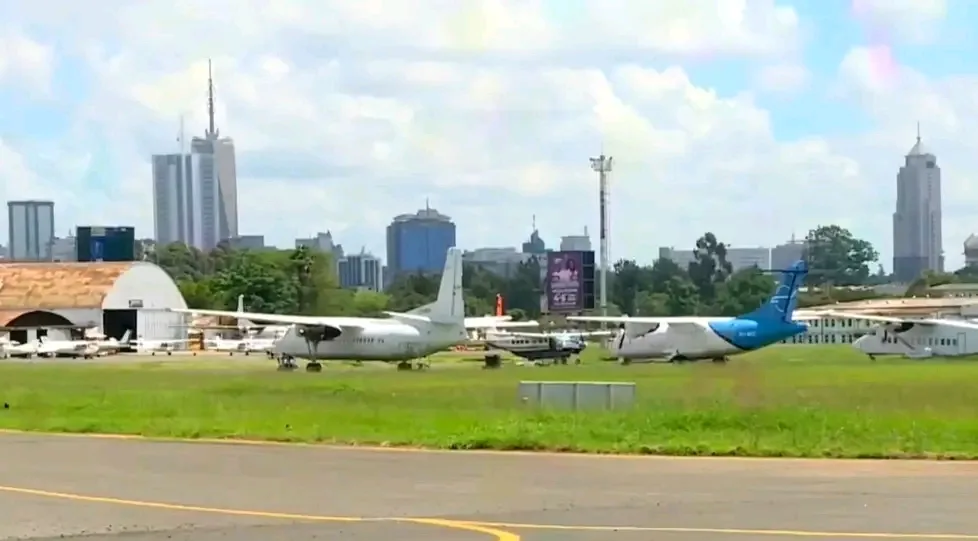
The abandoned aircraft are adding pressure to an airport that has recorded a sharp rise in aircraft movements, while the Kenya Airports Authority (KAA) struggles to dispose of planes that have been left behind by private operators, flying schools, companies and individuals.
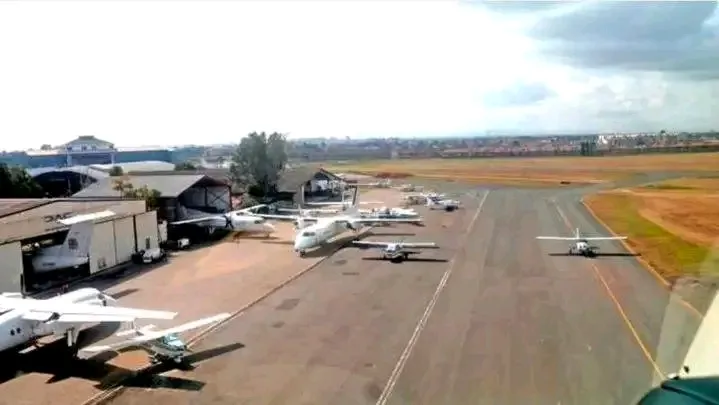
Gathungu’s audit found that the grounded aircraft were occupying parking areas meant for operational planes, with some failing to generate parking revenue for KAA.
The finding highlights a problem that has persisted for years: Wilson Airport is handling more aircraft while valuable parking space remains occupied by planes that are no longer flying.
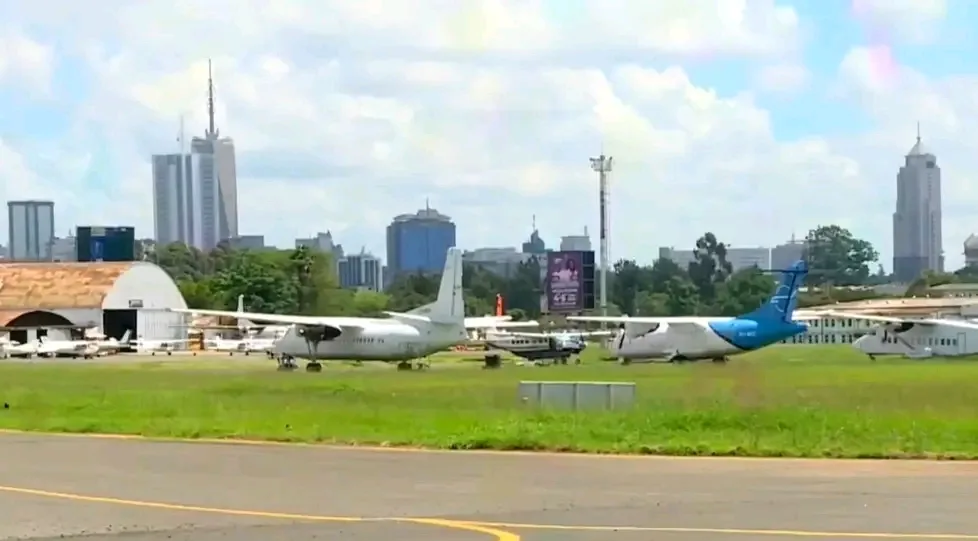
Why are 90 aircraft abandoned at Wilson Airport?
The aircraft at the centre of the crisis have different ownership and operational histories.
KAA says some are no longer airworthy, while others have owners who are unable or unwilling to remove them. There are also aircraft whose owners cannot be traced.
The authority has repeatedly attempted to dispose of the planes through public auctions, but the process has not cleared the backlog quickly enough.
KAA says only about five abandoned aircraft have been successfully auctioned since 2024, when Wilson had about 70 grounded planes.
“It’s a continuous process and more are added with time. We have auctioned some and we’re continuing to seek ways to dispose of the remaining ones,” a KAA spokesperson said.
The latest audit, however, puts the number of grounded aircraft at Wilson at 90.
KAA has not disclosed how many of the 90 aircraft were included in its 2024 auction list and how many are newly grounded.
That leaves an important question: are new abandoned aircraft being added faster than KAA can clear the existing backlog?
What happened to the aircraft KAA planned to auction?
The current crisis follows a major disposal attempt launched by KAA in 2024.
In January that year, the authority announced plans to auction 92 abandoned aircraft and aircraft components held at four airports.
Wilson Airport had the largest share, with 70 aircraft, followed by 11 at Jomo Kenyatta International Airport, seven at Lokichoggio Airport and four at Malindi Airport.
KAA directed owners to claim their aircraft and clear outstanding charges within 30 days, warning that those that remained uncollected would be sold through public auction.
The aircraft belonged to a mix of airlines, aviation companies, flying schools, institutions and private individuals.
The 2024 exercise was expected to help free airport space and recover accumulated parking and other charges.
But the latest audit shows that the disposal challenge remains unresolved.
Why can't KAA simply remove the aircraft?
Removing an abandoned aircraft is more complicated than clearing an ordinary vehicle from a parking lot.
KAA has to establish ownership and follow the applicable legal and disposal procedures before an aircraft can be sold or scrapped.
The process becomes more difficult where an owner cannot be traced or where the aircraft has accumulated substantial parking charges.
Some of the aircraft are also no longer airworthy, meaning their value may be limited to their components or scrap.
KAA is therefore considering selling some of the unusable aircraft as scrap metal.
The authority says grounded aircraft generally attract parking charges, but some owners are no longer able to meet those costs. Where such aircraft are no longer usable, KAA says scrap disposal could provide an alternative.
Wilson Airport is handling more aircraft
The parking problem is becoming more serious because Wilson's aviation activity has increased significantly.
The airport handled 83,855 aircraft movements in the year to June 2025, compared with 65,512 in the year to June 2021.
That represents a 28 per cent increase in four years.
The growth means operational aircraft are competing for limited parking space with grounded planes.
Wilson is an important hub for scheduled and charter flights, tourism operations, medical evacuation services and flight training.
As activity increases, parking positions become increasingly important to airlines and other aviation operators.
Some aircraft have been moved from Wilson
The congestion has already forced KAA to look beyond Wilson for additional aircraft parking space.
According to the authority, some aircraft have been diverted to Orly Airpark in Olooloitikosh near Kiserian as Wilson struggles to accommodate demand.
This illustrates the practical consequences of the abandoned aircraft problem.
The issue is no longer simply about old planes sitting unused on the airport apron. Their presence can affect where operational aircraft are parked and how efficiently the airport can accommodate growing traffic.
KAA is losing potential revenue
The abandoned aircraft are also creating a financial problem for KAA.
The Auditor-General found that some grounded aircraft were not paying parking fees, meaning the authority was losing revenue while the planes continued occupying airport space.
This creates a double challenge.
KAA has to accommodate aircraft that occupy valuable space while potentially missing out on revenue that could be generated from operational planes using the same parking facilities.
The problem is particularly significant at an airport where aircraft movements have increased substantially.
The crisis comes amid wider Wilson Airport challenges
The abandoned aircraft are only one of several challenges identified at Wilson Airport.
A parliamentary committee has previously raised concerns over the airport's operational capacity, including inadequate screening equipment, insufficient parking space and other infrastructure shortcomings. The committee also highlighted apron congestion caused by grounded aircraft and its impact on operational efficiency and revenue.
The airport has also faced scrutiny over developments around its flight paths and the condition of its infrastructure.
The combination of rising aircraft activity, limited parking and grounded planes therefore places additional pressure on an already busy aviation facility.
What happens next?
KAA now faces the difficult task of clearing the 90 grounded aircraft while dealing with ownership, legal and financial complications.
Public auctions have not solved the problem on their own. The authority may have to use different approaches depending on the condition and ownership of each aircraft.
Planes with identifiable owners could require a different approach from aircraft whose owners cannot be traced.
Aircraft that are beyond economical repair may ultimately have to be dismantled or sold as scrap.
The immediate priority, however, is to free parking space for aircraft that are actively operating from Wilson.
A growing capacity problem
The Wilson Airport aircraft crisis ultimately goes beyond abandoned planes.
It is a question of airport capacity, revenue and operational efficiency.
Wilson is handling significantly more aircraft movements than it did four years ago, yet 90 grounded aircraft are occupying space that could otherwise support active aviation operations.
The increase from the 70 aircraft identified for disposal at Wilson in 2024 to 90 in the latest audit also shows why KAA needs a sustainable solution.
However, the available information does not establish how many of the current 90 aircraft are remnants of the 2024 list and how many were grounded later.
For KAA, the challenge is therefore twofold: clear the existing backlog and prevent abandoned aircraft from becoming a recurring problem.
Until that happens, Wilson Airport will continue facing the unusual problem of having valuable aviation space occupied by aircraft that may never fly again.
Do you want to be published? E-mail info@thedailywhistle.co.ke or WhatsApp 0721930260



Comments
No approved comments yet.