

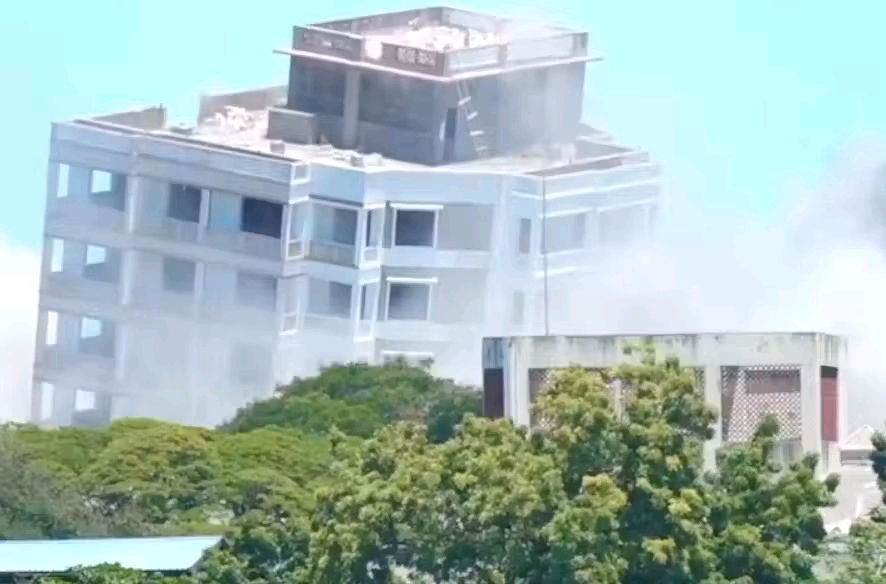
In a dramatic yet carefully coordinated operation on Wednesday afternoon, the Kenya Defence Forces (KDF) executed a successful controlled demolition of a condemned 11-storey building in Mombasa’s Majengo area. The risky structure, which had loomed over the neighborhood like a ticking time bomb, was reduced to rubble in seconds — but only after nearly five hours of meticulous planning by military engineers and explosives experts.
The building, long an eyesore and a source of anxiety for nearby residents, had been flagged by the National Construction Authority (NCA) and county engineers after large cracks appeared across several floors. Some of its columns had visibly buckled, and a recent downpour is believed to have worsened its already fragile foundation.
Read: Mudavadi Affirms Timely Reconstitution of IEBC Ahead of 2027 Elections
“We’ve been living under the shadow of death,” said Fatuma Ali, a shopkeeper who operates just two streets away from the site. “We feared it would collapse on us like the ones we see on TV. I can finally breathe.”
KDF’s elite Explosive Ordnance Disposal (EOD) team took charge of the demolition, using shape charges placed in precise configurations throughout the structure. The goal was to bring the building down vertically — what experts call a “pancake collapse” — to minimize damage to surrounding property. Nearby buildings were evacuated and power lines temporarily disconnected as part of the safety protocol.
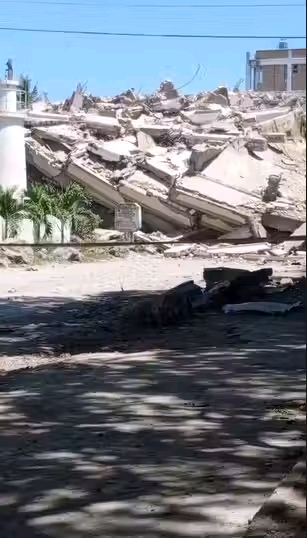
By 3:00 PM, all systems were go. With a sharp countdown, the charges were detonated, sending a shockwave through the air and a giant plume of dust skyward. Within seconds, the high-rise folded into itself and collapsed into a controlled heap. No injuries or secondary damage were reported.
Mombasa Governor Abdulswamad Shariff Nassir, who arrived at the scene shortly after the demolition, commended the operation and pledged continued enforcement of safety laws. “This is what happens when buildings go up without proper approvals or when regulations are ignored,” he said. “Mombasa will no longer be a playground for rogue developers.”
The governor revealed that the demolished building was part of a list of 27 flagged for immediate action by the county’s multi-agency taskforce on unsafe housing. The taskforce, formed in late 2024 following the collapse of a wall in Likoni that claimed eight lives, has been working to audit high-rise structures and issue stop orders where necessary.
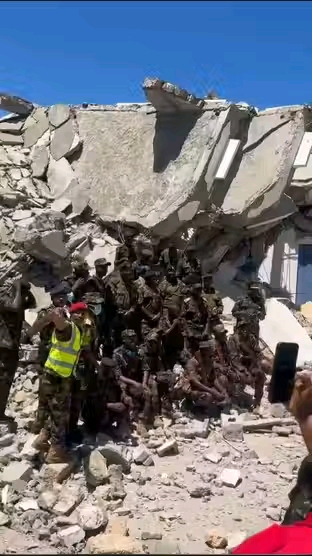
The KDF’s involvement was requested after county engineers declared the building too dangerous to dismantle manually. “This wasn’t just a demolition — it was a public safety mission,” said Colonel James Mwenda, who oversaw the operation. “We train for conflict zones, but protecting civilians at home is just as critical.”
Residents have since called on the county to publish a list of all condemned buildings and take swifter action. Many expressed frustration that despite obvious signs of structural weakness, developers are rarely held accountable. “They build with profit in mind, not people,” said Abdi Noor, a local youth leader.
As dusk settled over Majengo, cleanup crews began clearing debris while security teams maintained a perimeter. The space where the 11-storey stood is now bare — a stark reminder of the cost of negligence, and a call to action for better urban planning in one of Kenya’s most historic cities.
Do you want to be published? Email info@thedailywhistle.co.ke or Whatsapp 0721 930 260



Comments
No approved comments yet.