
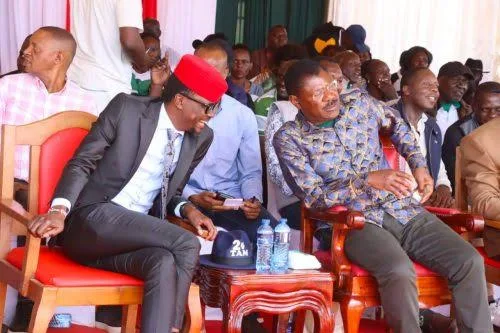
Barasa, who is seeking to succeed Governor Kenneth Lusaka, said his differences with Wetang’ula stem from their competing visions for Bungoma, despite their shared support for President William Ruto and the Broad-Based Government at the national level.
In a strongly worded statement, the lawmaker said he had decided to break ranks with Wetang’ula following what he described as careful reflection and wide consultations.
“After careful reflection and wide consultation, I have decided to withdraw my political support from the current political direction of Rt. Hon. Moses Wetang'ula, EGH in Bungoma County, and to align myself with the popular view that he retires from Bungoma politics after more than three decades at the helm, with little to ride home about apart from his close family associates,” Barasa said.
The Kimilili MP maintained that his decision was not driven by personal animosity but by the need to protect his political interests and promote a different leadership approach in Bungoma.
“This decision is not precipitated by disrespect or personal animosity. It is a principled act of political realignment, undertaken to safeguard the unity, stability, and long-term political trajectory of our people,” he stated.
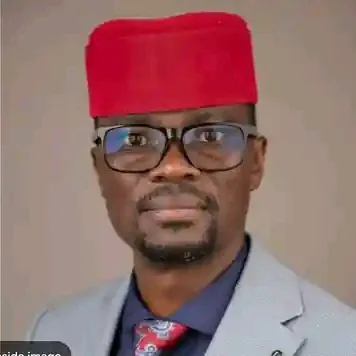
Didmus Barasa Accuses Wetang’ula of Divided Loyalties
Barasa accused Wetang’ula of facing a conflict of interest over his alleged political relationship with his brother, Westlands MP Tim Wanyonyi, who is also associated with the contest for Bungoma governor.
The Kimilili legislator argued that Wetang’ula’s position alongside President Ruto at the national level was inconsistent with what he described as the Speaker’s alleged political links to his brother and the opposition formation associated with him.
“I fully appreciate that his relationship with his brother transcends the realm of politics. Blood is thicker than water. Familial solidarity takes precedence, and that is both human and understandable,” Barasa said.
However, he argued that personal relationships should not compromise political consistency.
“However, leadership demands ideological coherence and strategic clarity,” he stated.
“The growing perception that Rt. Hon. Wetang'ula is tacitly supporting his brother, Hon. Tim Wanyonyi, and the opposition formation to which he is aligned, while publicly standing with the President at the national level, constitutes a serious conflict of interest and a case of dual political allegiance.”
Barasa further claimed that some FORD-Kenya leaders, including Members of County Assemblies, were displaying divided loyalties.
“One cannot simultaneously serve two antagonistic political vectors,” he said.
He argued that the party's participation in the Broad-Based Government should be reflected in its grassroots political activities in Bungoma.
“It is logically untenable for a party firmly anchored in the Broad-Based Government to maintain deep structural roots in our opponents' political enclave,” Barasa said.
The MP warned that remaining politically associated with the arrangement could weaken his own gubernatorial campaign.
“Any continued close political association with this arrangement risks eroding my political base from within and channelling political goodwill to a formation that does not share my vision,” he stated.
The allegations concerning Wetang’ula’s political loyalties and his brother’s influence were made by Barasa and could not be independently verified from his statement.
‘Bungoma Is Not a Monarchy,’ Barasa Says
The Kimilili MP also challenged what he described as Wetang’ula’s influence over political endorsements and candidate selection, arguing that voters should determine who leads Bungoma.
Barasa claimed that Tim Wanyonyi controlled FORD-Kenya’s grassroots infrastructure in the region with the Speaker’s backing, creating a political arrangement that made it difficult for Wetang’ula to work with him.
“The empirical reality in Bungoma must be articulated with honesty and respect: his brother constitute a singular political entity. He controls the FORD-Kenya grassroots infrastructure, and he operates with his brother's explicit blessings,” he said.
“In such a configuration, the Party Leader is structurally conflicted. He cannot meaningfully associate with me while his party machinery remains embedded with his brother.”
Barasa maintained that his disagreement with Wetang’ula was primarily about Bungoma’s leadership and development priorities rather than their shared national political direction.
“Rt. Hon. Moses Wetang'ula and I share the same horizon in President William Ruto. At the national level, our destination is convergent. But in Bungoma, our political philosophy and local vision are divergent,” he said.
He added that the two leaders differed on governance, development priorities and the type of leadership needed to improve residents’ lives.
“We concur on the national trajectory of Kenya, but we diverge on the governance paradigm for Bungoma, on the methodology of preparing Bungoma for the future, and on the developmental framework required to emancipate our people from poverty,” Barasa stated.
The MP accused Wetang’ula of supporting candidates he personally favoured at the expense of other aspirants.
“While I believe in electing leaders who will in turn leave an indelible mark on the lives of the people, he believes in electing ‘esimbo yemukongo’ — loosely translated to mean one he chooses to personally protect,” he said.
Barasa argued that such an approach undermined merit and democratic competition.
“Bungoma is not a Monarchy. It is a democracy premised on merit, competition, and the sovereign will of the people, not hereditary succession,” he declared.
Didmus Barasa Claims Wetang’ula Reprimanded Him Over Tim Wanyonyi
Barasa further alleged that Wetang’ula had reprimanded him for criticising Tim Wanyonyi, claiming the Speaker interpreted his political engagements with his brother as personal attacks on the family.
The Kimilili MP insisted that his criticism was directed at a political competitor rather than at a family member of the National Assembly Speaker.
“He frowns and reprimands me whenever I subject his brother, who is my political competitor, to legitimate political scrutiny and democratic contestation,” Barasa said.
He declared that the differences had made a political separation necessary.
“We must part ways — not because the national vision divided us, but because the local vision did. Not out of bitterness, but out of principle, doctrinal consistency, and clarity of purpose,” he stated.
Barasa’s remarks underscore the tensions surrounding the Bungoma gubernatorial succession, where political alliances and competing ambitions are expected to shape the contest ahead of the 2027 elections.
Barasa Questions Wetang’ula’s Handling of 30 Per Cent Share
The Kimilili MP also criticised Wetang’ula’s handling of what he described as a 30 per cent allocation under a memorandum of understanding (MOU), alleging that the arrangement disproportionately benefited members of the Speaker’s family.
“While he was the custodian of the 30% in line with the MOU he signed, he appropriated and distributed it predominantly to his close family members, and the remainder to other parts of the country under the disguise that his party was national,” Barasa claimed.
“Philosophically, I hold the view that this was grossly mismanaged.”
Barasa did not provide details of the agreement, identify the alleged beneficiaries or present supporting documentation in the statement.
The claims therefore remain allegations requiring further verification and a response from Wetang’ula.
Didmus Barasa Backs Ruto as He Prepares for 2027 Bungoma Governor Race
Despite his decision to withdraw political support from Wetang’ula in Bungoma, Barasa reaffirmed his commitment to President Ruto and the Broad-Based Government.
“I remain firmly and unequivocally committed to H.E. President William Ruto and the Broad-Based Government agenda,” he said.
The MP also announced plans to consolidate the United Democratic Alliance (UDA), which he identified as the political vehicle he intends to use in his bid for the Bungoma governorship.
Barasa said his separation from Wetang’ula would allow him to campaign more freely against his political rivals.
“Today, I sleep a free man — liberated to campaign in a manner that affords me a competitive advantage,” he declared.
He said he would focus on building grassroots structures, strengthening political alliances and mobilising residents who share his vision for the county.
“Henceforth, I will concentrate on consolidating the United Democratic Alliance (UDA), the political vehicle I will deploy in my bid to be elected Governor of Bungoma next year, on constructing robust grassroots systems, and on forging strategic alliances with wananchi and like-minded local political parties that share our vision,” Barasa stated.
He also invited FORD-Kenya members who share his political philosophy to work with him, indicating that his realignment was not necessarily a rejection of every member of the party.
Barasa said his broader objective was to challenge what he described as hereditary leadership and promote a system in which voters determine who occupies elective positions.
The declaration adds another dimension to the political contest to succeed Governor Kenneth Lusaka, who is serving his second term, as aspirants position themselves ahead of the 2027 General Election.
Barasa’s decision to publicly break with Wetang’ula could test political loyalties within Bungoma, particularly among leaders who support President Ruto nationally but differ over who should lead the county.
Wetang’ula’s response to Barasa’s allegations was not included in the statement.
Comments
No approved comments yet.