

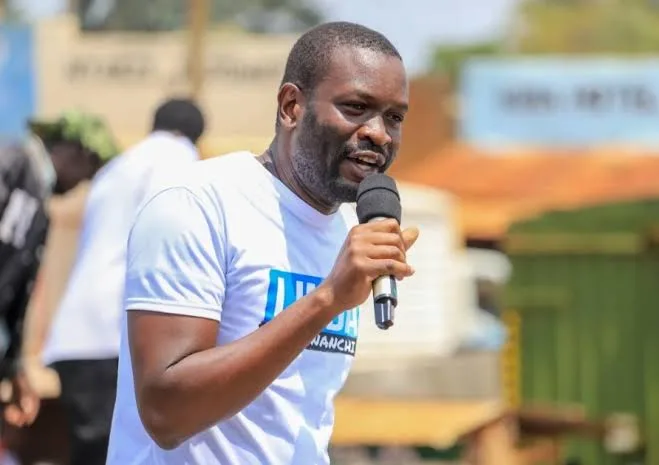
The controversy emerged after Nyoro made remarks about how political leaders should present themselves before voters, comments that many Kenyans interpreted as an indirect criticism of Sifuna's trademark T-shirts, jeans and sneakers.
According to Tuko.co.ke, Nyoro explained during a training session for political aspirants organised by his People's Party of Kenya (PPK) that a leader's appearance communicates something about their personality and the people they represent.
Tuko.co.ke further reported that the Kiharu MP said he had never attended a public meeting in his constituency wearing jeans or a round-neck T-shirt, explaining that he considers the expectations of his voters when choosing what to wear.
He also observed that the way a leader speaks, dresses and maintains personal appearance can influence how the public perceives them.
His remarks attracted widespread discussion because Sifuna has consistently defended his casual dressing style despite criticism from some political opponents.
However, Nyoro has now moved to clarify his position, dismissing suggestions that his comments were specifically directed at the Nairobi Senator.
As reported by People Daily, Nyoro urged Kenyans in a statement shared on X on Tuesday, November 17, to listen to his entire speech rather than interpreting selected remarks as attacks against other politicians.
He maintained that his focus was preparing aspiring leaders for public service and not engaging in unnecessary political exchanges.
The exchange comes after Sifuna recently defended his dressing style, declaring that he had no intention of abandoning his signature T-shirts as he pursues his political ambitions.
According to People Daily, speaking during the burial of former Deputy President Rigathi Gachagua's sister on November 14, Sifuna said young Kenyans had encouraged him to maintain his usual appearance.
People Daily also reported that Sifuna questioned why some politicians were more concerned about what he wears than the issues affecting ordinary citizens.
Meanwhile, Citizen Digital has reported on Sifuna's growing political profile as he positions himself for a possible opposition presidential ticket in 2027.
The Star has also covered Sifuna's rising national profile, including his political engagements as he builds his image ahead of the next General Election.
Beyond the dressing debate, the contrasting political approaches of Sifuna and Nyoro are attracting attention as both leaders build their political identities ahead of the next General Election.
With Sifuna increasingly associated with youth-oriented politics and Nyoro presenting himself as a leader focused on discipline, economic ideas and political organisation, their approaches offer voters two different pictures of emerging leadership.
The bigger question is whether Kenyans will judge their leaders by appearance, political messaging or their ability to offer practical solutions to the country's challenges.
What do you think: Should a politician's dressing influence how voters judge their leadership, or should performance and ideas matter more?
Comments
No approved comments yet.