

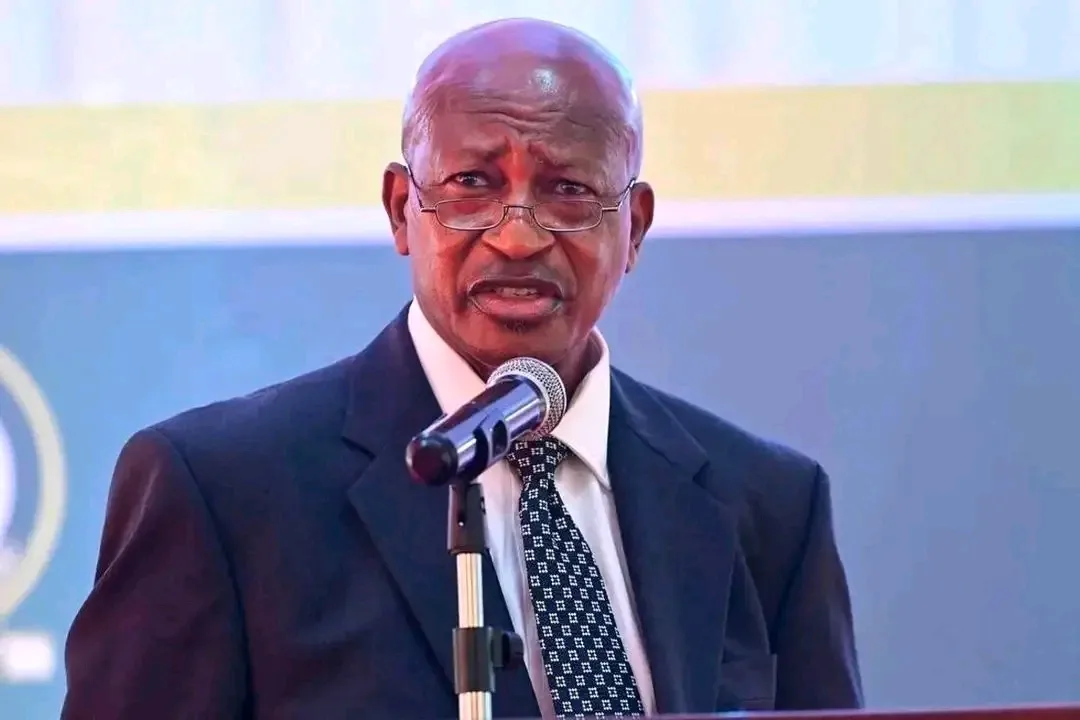
Kariuki's death was confirmed by his family and Chief Justice Martha Koome on Tuesday, November 3, 2026.
His passing marks the end of a career that saw him rise from a practising lawyer to become President of the Court of Appeal before being appointed Kenya's seventh Attorney General.
Although many Kenyans remember him for serving as the government's chief legal adviser under former President Uhuru Kenyatta, Kariuki had spent decades building his reputation within the country's legal institutions before taking up the influential position at Sheria House.
His professional journey also placed him at the centre of some of Kenya's most significant legal and constitutional debates.
Born Into a Prominent Anglican Family
Paul Kihara Kariuki was born on May 11, 1954, in Kiambu County.
He was the youngest son of the late Bishop Obadiah Kariuki, one of the pioneering African bishops in the Anglican Church of Kenya, and Lillian Wairimu, whose family was associated with the prominent Koinange family.
His father's story was itself remarkable.
Bishop Obadiah Kariuki rose from humble beginnings to become one of the influential African church leaders of his generation. He played a significant role in the growth of the Anglican Church in Central Kenya and was involved in expanding church institutions across the region.
Growing up in this family placed Paul Kihara within a background of religious leadership, education and public service.
He attended Nairobi School before proceeding to the University of Nairobi, where he graduated with a Bachelor of Laws degree in 1977.
He later obtained a Postgraduate Diploma in Law from the Kenya School of Law.
From Private Legal Practice to the Judiciary
After graduating in 1977, Kariuki began his legal career at Hamilton, Harrison and Mathews, one of Kenya's established law firms.
He initially worked as a legal assistant before becoming a partner in 1981.
In 1986, he helped establish Ndung'u Njoroge and Kwach Advocates alongside other legal professionals, including former Court of Appeal judge Richard Otieno Kwach.
He remained in private legal practice until 2000, when he moved into public service as Principal and Chief Executive Officer of the Kenya School of Law.
His transition into the Judiciary came in October 2003, when he was appointed a High Court judge by former President Mwai Kibaki.
During his judicial career, Kariuki also served in leadership positions within the Judiciary, including heading the newly established Judicial Training Institute in 2009.
The institute played an important role in professional development and training for judicial officers.
In 2013, he became President of the Court of Appeal, a position he held until his appointment as Attorney General in 2018.
His election to the position made him the first judge to be elected by his colleagues as President of the Court of Appeal under the 2010 Constitution.
How Paul Kihara Kariuki Became Kenya's Attorney General
Kariuki's biggest public appointment came in February 2018 when President Uhuru Kenyatta nominated him to become Kenya's Attorney General.
He was subsequently approved and sworn into office in April 2018, succeeding Professor Githu Muigai, who had resigned.
As Attorney General, Kariuki became the government's principal legal adviser and was responsible for advising the national government on legal matters, representing the State in court proceedings and overseeing important legal functions.
His appointment came at a politically significant period following the disputed 2017 presidential election and the subsequent political rapprochement between Uhuru Kenyatta and opposition leader Raila Odinga.
His four-and-a-half-year tenure would later coincide with some of Kenya's most consequential constitutional disputes.
The BBI Battle and Disagreement Over Judges' Appointments
One of the defining legal developments during Kariuki's tenure was the Building Bridges Initiative (BBI), which sought constitutional changes following the March 2018 handshake between Uhuru Kenyatta and Raila Odinga.
The proposed constitutional amendments faced legal challenges that eventually reached the Supreme Court.
The courts ultimately declared the BBI process unconstitutional, delivering a major setback to the political initiative.
Another significant issue during Kariuki's tenure was the disagreement between the Executive and the Judiciary over the appointment of judges recommended by the Judicial Service Commission.
Former President Uhuru Kenyatta declined to appoint 41 judges recommended by the JSC, triggering a prolonged dispute over judicial independence and constitutional obligations.
The disagreement strained relations between the Judiciary and the Executive, despite expectations that Kariuki's background as a former senior judge would help strengthen cooperation between the two institutions.
These developments formed part of the complicated legacy of his time as Attorney General.
The Numbers Behind His Tenure at Sheria House
When Kariuki left office in October 2022, he highlighted several achievements recorded during his time as the country's chief legal adviser.
In his end-of-tenure account, he disclosed that the Office of the Attorney General had concluded 4,541 cases involving the national government.
He also reported that his office had issued 3,119 legal opinions to ministries, departments and government agencies.
The figures offered an indication of the scale of legal work handled by the State Law Office during his leadership.
His departure followed the election of President William Ruto in August 2022 and the subsequent formation of a new administration.
He handed over the office to Justin Muturi, who took over as Attorney General in October 2022.
His Legacy in Kenya's Legal System
Beyond his political and government appointments, Kariuki's contribution to Kenya's legal institutions extended to judicial administration, professional training and the development of the Court of Appeal.
The Office of the Attorney General previously credited him with contributing to institutional reforms, including work on the Court of Appeal Bill and the court's strategic plan.
He also maintained professional associations with several legal organisations, including the Law Society of Kenya, the Commonwealth Lawyers Association and the International Bar Association.
His career brought him into contact with different administrations and generations of legal professionals, from his early years in private practice to his final years in public service.
His record, particularly his time as Attorney General, will continue to attract discussion among legal practitioners and observers of Kenya's constitutional history.
As tributes emerge following his death, attention will turn to the family he leaves behind and the legacy of a man who occupied some of the most influential positions in Kenya's legal establishment.
Further details concerning his cause of death, funeral arrangements and burial plans had not been made public at the time of publication.

Comments
No approved comments yet.