
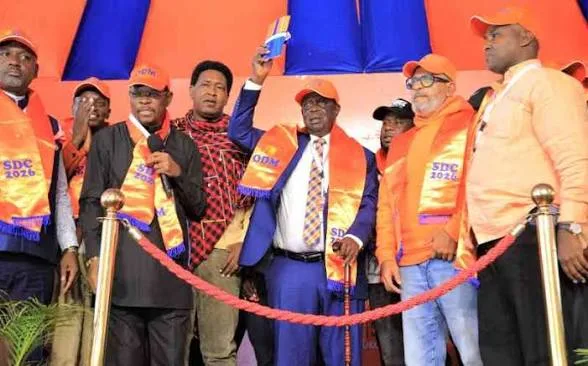
President William Ruto is facing fresh political pressure from the Orange Democratic Movement (ODM) as the party pushes for a formal power-sharing agreement ahead of the 2027 General Election.
The disagreement centres on ODM's expected role in the next government and whether the party should support Ruto's re-election bid without first securing a clear political agreement.
The issue has gained attention following a meeting between Ruto and ODM leader Oburu Oginga at State House in Nairobi on Tuesday, November 17, 2026. The two leaders discussed the future of cooperation between their political formations as preparations for the next election gather momentum.
However, the discussions have exposed differences within ODM over how the party should approach its relationship with the ruling United Democratic Alliance (UDA).
On Wednesday, November 18, Sifa FM reported on the continuing negotiations between the two sides, highlighting the questions surrounding a possible formal coalition agreement.
National Assembly Minority Leader Junet Mohamed has emerged as one of the leading voices demanding clear terms before ODM commits itself to supporting Ruto in the next election.
Junet maintains that ODM must negotiate its political interests instead of offering unconditional support to the ruling party. He believes the party should have a meaningful role in determining the composition of the next government.
His position reflects growing concerns among some ODM leaders that the party could lose its bargaining power if it supports Ruto without securing an agreement.
Citizen Digital reported on November 17 that ODM leaders, including national chairperson Gladys Wanga and Deputy Party Leader Simba Arati, were also pushing for a structured political arrangement with UDA.
The leaders want the proposed partnership to establish clear responsibilities and the political benefits expected by both sides.
Another sensitive issue is the possibility of ODM influencing the selection of Ruto's running mate in 2027. Such an arrangement could become a major point of discussion if the two parties eventually agree to a formal coalition.
However, not everyone within ODM supports making political cooperation conditional on a power-sharing agreement.
Some leaders believe the party should continue working with the government without creating unnecessary disagreements over positions.
Interior Principal Secretary Raymond Omollo has also advocated unconditional support for Ruto, arguing that the administration's development record should be considered when making political decisions.
These differing positions have placed Oburu in a difficult position as he attempts to maintain unity within the party while negotiating with the President.
The situation is particularly important because ODM remains an influential political formation with established support networks across several parts of the country.
For Ruto, securing the party's support could strengthen his position ahead of the 2027 presidential election. However, accommodating ODM's demands could create disagreements with politicians within his own political camp who also expect influential positions in the next administration.
Deputy President Kithure Kindiki's position could also become part of the political calculations if discussions eventually extend to the presidential ticket.
The developments come against the backdrop of the broad-based government arrangement established between Ruto and the late former Prime Minister Raila Odinga in March 2025.
Although that arrangement brought together leaders who had previously competed against each other, the question of how the two political formations will cooperate during the 2027 election remains unresolved.
Reporting by The Star on November 17 highlighted the discussions between Ruto and Oburu, while The Mt Kenya Times published further coverage of ODM's demands on November 18.
The negotiations could therefore become an important test of whether the two parties can maintain their working relationship while protecting their separate political interests.
For ordinary Kenyans, however, the bigger concern is whether the political negotiations will translate into meaningful improvements in employment, healthcare, education and the cost of living.
As the 2027 election approaches, the relationship between ODM and UDA could become one of the most important factors shaping the country's political direction.
Will Ruto accept ODM's demands for a formal power-sharing agreement, or could the disagreements eventually push the two political formations in different directions before the 2027 elections?
Comments
No approved comments yet.