
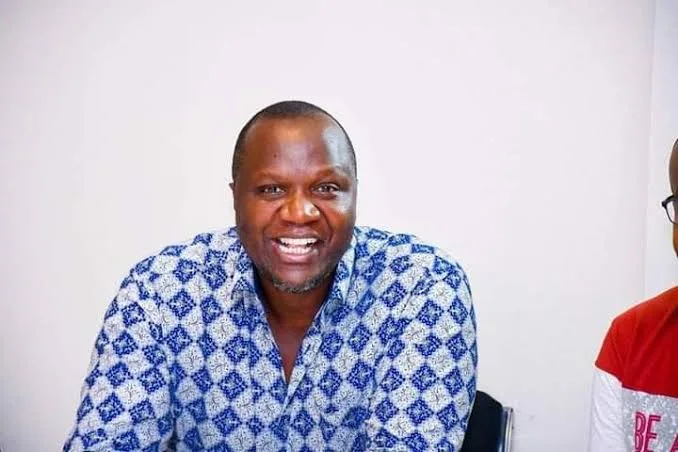
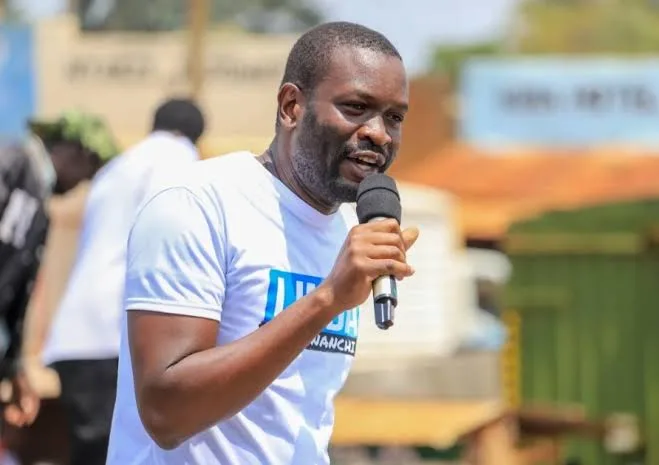
Otieno, who described himself as Wanjigi’s designated running mate, said Safina intends to place economic liberation, access to essential services and equal opportunities at the centre of its campaign.
Speaking about the party’s priorities, he argued that the next election should be about addressing the economic challenges facing ordinary Kenyans rather than political personalities and personal attacks.
According to Otieno, Safina’s proposals include free education, free healthcare, the abolition of the 16 per cent Value Added Tax (VAT) and a review of public debt.
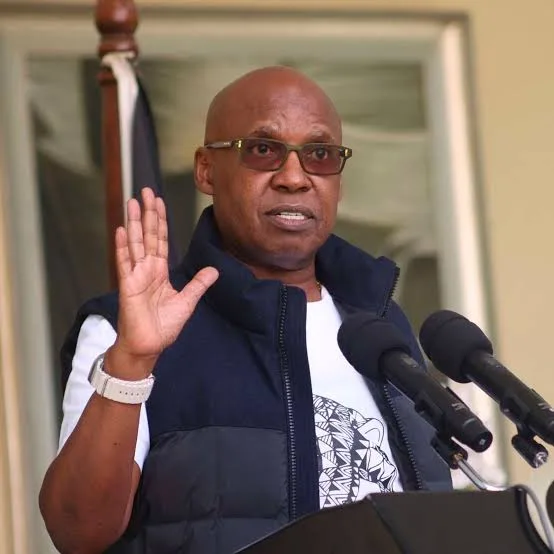
Safina wants to stop paying what it calls illegal debt
One of the party’s central proposals is to review Kenya’s public debt, with Otieno arguing that the country should not continue servicing loans that were allegedly acquired outside the law.
He claimed that Kenya spends approximately KSh2.4 trillion on debt servicing, against revenue collections of about KSh2.6 trillion in the previous financial year.
Otieno argued that some of the loans were acquired illegally and alleged that money borrowed in the country's name ended up in private accounts abroad.
He maintained that Kenyans should not be forced to repay debts that were not lawfully acquired.
“Why should Kenyans be forced to pay odious debt?” he posed, arguing that the country must establish the legality of its borrowing before committing citizens to repayment.
The proposal would mark a major shift in Kenya’s approach to public borrowing and debt repayment. However, the legal basis for determining which loans would qualify as odious debt was not fully explained in his remarks.
Safina promises free education from debt savings
Otieno said money saved from reviewing debt payments would be redirected towards essential public services, beginning with education.
He proposed allocating KSh400 billion to finance primary, secondary and Technical and Vocational Education and Training (TVET) institutions.
Under the proposal, parents would no longer be required to meet additional education costs, with the government taking responsibility for financing learners' education.
The Safina deputy leader argued that education should not remain a financial burden for families, particularly those struggling with the rising cost of living.
He presented the proposal as part of a broader economic plan aimed at ensuring that every Kenyan child has an opportunity to access quality education regardless of their family's financial circumstances.
Wanjigi’s government would provide free healthcare
Healthcare is another major pillar of the proposed Safina agenda.
Otieno said the party would allocate KSh200 billion towards financing the country's healthcare system, allowing Kenyans to access treatment without paying out of pocket.
He suggested that citizens would only need their national identification cards to receive medical services.
The proposal, he argued, would ease the financial burden on households that often struggle to pay hospital bills and access treatment.
However, he did not provide a detailed breakdown of how the proposed funding would cover the full cost of healthcare services across the country.
Safina proposes abolishing 16 per cent VAT
The party also wants to abolish the 16 per cent Value Added Tax, which Otieno described as a burden on ordinary Kenyans.
He argued that taxation affects people across all income groups, including newborn children, because VAT is charged on many goods and services consumed by households.
“Even a child who is born today is paying VAT,” he said.
Otieno maintained that removing VAT, alongside providing free education and healthcare, would leave more money in the pockets of Kenyans.
He estimated that the combined proposals could return approximately KSh900 billion to citizens, although he did not provide a detailed breakdown of how the figure was calculated.
Otieno says 2027 election should be about the economy, not personalities
Beyond the party's economic proposals, Otieno challenged political leaders to move away from campaigns centred on personalities and focus instead on the country's underlying problems.
He argued that removing President William Ruto from office would not automatically solve Kenya's economic challenges if the next administration failed to address the structural issues affecting citizens.
“Ruto is going, but the problems of Kenya are bigger than Ruto,” he said.
Otieno pointed to unemployment among young people and the number of children who failed to report to Junior Secondary School (JSS) as examples of challenges that require long-term solutions.
He questioned the value of replacing one group of political leaders with another without presenting practical plans to improve the economy and public services.
Invoking the familiar political phrase, “It's the economy, stupid,” he said the election should be about what candidates intend to do to improve people's lives.
Willis Otieno identifies himself as Wanjigi’s running mate
Otieno also sought to present Safina as a party that is organised and ready for the next General Election.
He said the party had a clear leadership structure, with Jimmy Wanjigi as party leader and himself serving as deputy party leader.
He further described himself as Wanjigi’s designated running mate, signalling the political partnership the party intends to take into the 2027 presidential race.
Otieno maintained that Safina was united and had no internal wrangles that could derail its preparations for the election.
He said the party was focused on building a political movement capable of presenting an alternative to Kenyans.
Why Otieno says fighting corruption should not be a campaign promise
On corruption, Otieno argued that political candidates should not present the fight against graft as a special campaign promise because it is already a constitutional and legal obligation.
He cited institutions such as the Ethics and Anti-Corruption Commission (EACC), the Office of the Director of Public Prosecutions (DPP), the Office of the Controller of Budget and the Office of the Auditor-General as part of the existing framework for promoting accountability.
According to him, the responsibility of a president is to respect the Constitution, appoint people of integrity and ensure public institutions carry out their mandates.
He questioned why politicians should campaign on promises to fight corruption when public officers are already required by law to uphold integrity and accountability.
For Otieno, the bigger question facing presidential candidates is how they intend to improve the economy, create jobs and make essential services affordable.
Safina positions itself ahead of the 2027 election
Otieno's remarks offer an early picture of the economic platform Safina intends to advance as Kenya moves towards the 2027 General Election.
The proposals place public debt, taxation, education, healthcare and economic opportunity at the centre of the party's political pitch.
However, questions remain about how the party would finance the proposed programmes, establish which debts qualify as illegal and implement the promised tax changes without disrupting government revenue.
The proposals are also likely to face scrutiny over whether the projected savings would be sufficient to fund the commitments.
With Wanjigi positioning himself for another presidential contest, Safina will need to translate its proposals into a detailed and costed manifesto capable of convincing voters that its economic promises can be delivered.
For now, Otieno's message is that the 2027 election should go beyond the question of who replaces Ruto and focus on what the next government will do differently for Kenyans.
Comments
No approved comments yet.