

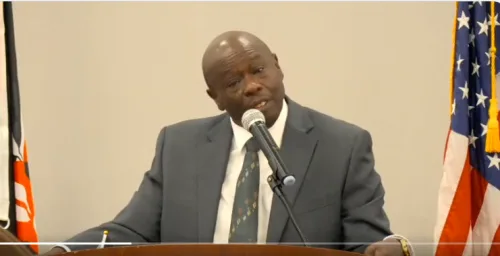
The position places the timing of the opposition's presidential announcement at the centre of political discussions, with several leaders seeking to challenge President William Ruto while maintaining their own ambitions.
The Star reported on October 5 that Gachagua had pledged to make whatever sacrifices were necessary to ensure that the opposition fields one presidential candidate against Ruto. Gachagua, who leads the Democracy for the Citizens Party (DCP), said individual ambitions should not stand in the way of a common candidate.
The declaration is significant because Gachagua has also expressed his intention to run for president. His latest position therefore raises a question for the opposition: how will its leaders agree on one candidate without creating divisions among their supporters?
People Daily reported on October 5 that Gachagua made the pledge while addressing a church service in Springfield, Massachusetts, in the United States. He maintained that he was willing to put his own presidential ambition aside if that became necessary to secure a united opposition ticket.
Gachagua's remarks come as opposition parties continue discussing how to coordinate their campaigns ahead of the August 2027 election. The challenge is not simply agreeing to support one candidate, but also establishing a selection process that participating parties and their supporters will accept.
According to Citizen Digital's October 2 report, Gachagua had accused President Ruto of attempting to disrupt opposition unity. Speaking during an engagement with clergy in Boston, the DCP leader maintained that the opposition would continue pursuing a single candidate. The allegations about government interference remain Gachagua's claims and should not be treated as independently established facts.
The debate over unity has also exposed concerns about whether all the opposition's presidential aspirants will honour a collective decision. The Standard reported on September 27 that Gachagua had challenged his colleagues to publicly commit to supporting whoever emerges as the coalition's flagbearer, even if they fail to secure the nomination themselves.
That demand goes to the heart of the opposition's challenge. A coalition may agree in principle to field one candidate, but the arrangement will depend on whether its leaders can persuade their supporters to accept a nominee other than their preferred choice.
People Daily reported on September 29 that Gachagua, Wiper leader Kalonzo Musyoka, Nairobi Senator Edwin Sifuna and Jubilee deputy party leader Fred Matiang'i had tasked Gatanga MP Edward Muriu with preparing a draft coalition formula. Muriu said the leaders had committed themselves to working towards a single presidential candidate.
The reported initiative provides a possible framework for negotiations, although the existence of a draft formula does not by itself mean that the leaders have reached a final agreement on the presidential ticket.
Daily Nation reported on October 5 that suspicions about alleged political infiltration had become another source of tension within opposition ranks. Gachagua and other opposition figures have raised concerns about individuals they suspect of undermining their unity, illustrating the trust issues confronting the coalition. Such allegations require evidence and should be distinguished from confirmed political developments.
The question of when to announce the candidate has also remained unsettled. People Daily reported in August that Gachagua wanted opposition leaders to concentrate on mobilisation before finalising their choice, arguing that building support across the country was a more difficult task than selecting a candidate once negotiations were ready.
The timing matters because the opposition must coordinate political outreach, develop a shared agenda and determine how participating parties will work together before the election campaign gathers pace. Naming a candidate too early could intensify rivalry, while delaying the decision for too long could leave voters uncertain about the coalition's direction.
For Gachagua, the public commitment to accept a joint candidate places the emphasis on collective action rather than an individual claim to the presidential ticket. However, his own ambition and those of other opposition leaders mean that the eventual selection process will be closely watched.
The immediate test for the opposition is whether its leaders can turn their public declarations into an agreed formula that addresses competing ambitions, party interests and the distribution of political responsibilities.
With the 2027 election approaching, the central question remains whether the coalition can maintain unity through the difficult process of choosing one candidate—and whether every aspirant will honour the outcome once that decision is made.
Comments
No approved comments yet.