

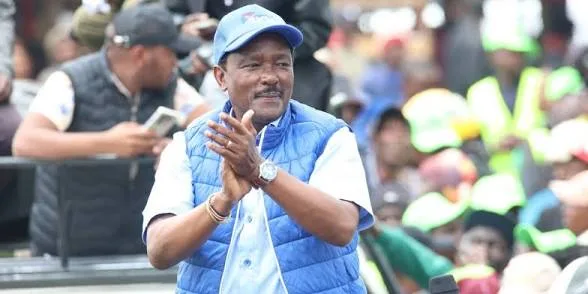
The possibility of a split has emerged after Wiper leaders from the Coast region reportedly declared that they would support their party leader, Kalonzo Musyoka, for the presidency, even if he had to pursue an independent political path.
According to Daily Nation in its Tuesday, November 3, 2026 report, the Coast leaders expressed dissatisfaction with the possibility of Kalonzo being offered a deputy presidential position instead of the opposition's presidential ticket. They maintained that their party leader deserved an opportunity to contest for the country's top seat.
The position has raised fresh questions about the future of the opposition arrangement, particularly as several political heavyweights position themselves for leadership ahead of the next election.
A report by The Standard on November 3, 2026, also highlighted the growing disagreement, with Wiper members in Mombasa endorsing Kalonzo as their preferred presidential candidate and threatening to pursue an independent political path if their demands were not considered.
If Wiper eventually withdraws, the consequences could extend beyond the relationship between Kalonzo and the remaining opposition principals.
One immediate shockwave would be the loss of an important coalition partner. Kalonzo has remained a central figure in opposition politics and commands a significant political following in Ukambani. His departure would require the remaining leaders to reconsider their political arrangements and mobilisation strategies.
The opposition would also face fresh uncertainty over its presidential candidate. With Kalonzo outside the coalition, the remaining political leaders would have to negotiate who should carry their presidential ticket.
Former Deputy President Rigathi Gachagua, former Interior Cabinet Secretary Fred Matiang'i, Nairobi Senator Edwin Sifuna and other opposition figures have featured in discussions surrounding the coalition's leadership.
However, disagreements over leadership and regional representation could remain a challenge even if Wiper leaves.
A report published by The Star on November 2, 2026, examined the disagreements surrounding Gachagua's proposed three-bloc alliance involving political interests from Mt Kenya, Western Kenya and Ukambani.
The discussions have exposed different approaches to building a united political formation, with leaders having to balance regional interests against the need for a common national political agenda.
Another possible shockwave would be the emergence of competing presidential campaigns.
If Kalonzo decides to contest independently, he could face the presidential candidate selected by the remaining opposition partners. This would create separate campaigns among political leaders who have previously expressed an interest in working together against President William Ruto.
Citizen Digital reported on October 20, 2026, that Kalonzo, Gachagua and Sifuna had emerged as potential opposition presidential flag bearers following political consultations at Wamunyoro.
The report highlighted the challenge of settling on one candidate without creating disagreements among the coalition's influential political players.
Wiper's possible departure could also force the remaining opposition leaders to rethink their regional mobilisation strategy.
Kalonzo's political base in Ukambani has been an important consideration in opposition coalition-building efforts. Without Wiper, the remaining parties would have to reconsider how to maintain political cooperation and representation in the region.
Capital FM reported on November 3, 2026, that Gachagua had held discussions with former Kitui Governor Charity Ngilu at his Wamunyoro residence as consultations over possible political cooperation continued.
The meeting demonstrated that political engagements among opposition figures were still ongoing as they explored possible arrangements ahead of 2027.
The fifth possible shockwave would be a change in the political calculations of President William Ruto's opponents.
A divided opposition could face additional coordination challenges, particularly when organising joint campaigns, negotiating political agreements and presenting a common presidential candidate.
However, the actual consequences would depend on whether the remaining opposition parties manage to maintain their cooperation and how Kalonzo chooses to position Wiper if negotiations collapse.
Despite the growing disagreements, Wiper's withdrawal should not be treated as an accomplished decision. The party's leaders have continued to emphasise the importance of opposition unity while insisting that Kalonzo's presidential ambitions must be taken seriously.
The coming months will therefore be important in determining whether the opposition principals can agree on a common presidential candidate and a political arrangement that accommodates their competing interests.
As the August 2027 General Election approaches, one major question remains: Can the united opposition maintain its political strength if Kalonzo Musyoka and Wiper decide to walk away?

Comments
No approved comments yet.