

The incident has triggered accusations from opposition politicians, with some linking the violence to growing political competition in the Nyanza region ahead of the 2027 General Election.
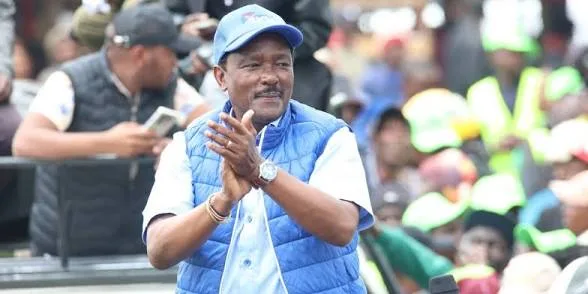
Kalonzo, who leads the Wiper Patriotic Front, was visiting Migori on Thursday, November 5, alongside several opposition figures as part of his efforts to expand his political support ahead of the next presidential election.
However, the political engagements were disrupted after suspected goons reportedly attacked the opposition convoy, throwing stones at vehicles and damaging several cars.
Citizen Digital reported on November 5 that Kalonzo and other opposition leaders encountered violence during their political activities in Migori, with police officers also deploying tear gas as tensions escalated.
The former Vice President condemned the incident, questioning why police officers used tear gas against people attending what he described as a peaceful political gathering.
Daily Nation also reported on November 5 that the attack disrupted Kalonzo's political tour, which was aimed at strengthening his influence in Nyanza, a region traditionally associated with the late Raila Odinga.
The publication reported that Kalonzo had invoked Raila's political legacy during his engagements, presenting himself as a leader committed to continuing the former Prime Minister's political journey.
The incident has since generated political reactions, with members of the opposition accusing the government of allowing political intolerance to undermine democratic participation.
On Friday, November 6, the Edwin Sifuna-led Linda Mwananchi movement accused President Ruto's administration of fuelling political intolerance following the attack.
In a statement reported by Citizen Digital, the movement claimed that the incident was part of a wider attempt to intimidate opposition leaders and restrict their political activities in Nyanza.
The group demanded investigations into the attack and called on security agencies to identify and prosecute those responsible.
Capital FM also reported on November 6 that Linda Mwananchi had accused the broad-based government of attempting to establish political dominance in the region through intimidation.
However, the accusations remain claims by the opposition movement, and no evidence establishing that President Ruto or his administration organised the attack had been presented in the reports.
The Star also reported on Friday that Linda Mwananchi had condemned the incident, warning that political violence could undermine democratic competition ahead of the next general election.
Meanwhile, the political contest in Nyanza has continued to attract attention as different political formations seek to consolidate their influence.
Eastleigh Voice reported on November 6 that Kalonzo had vowed to challenge Ruto's political influence in Nyanza, declaring that the region would not automatically support the President's re-election bid.
However, the Luo Council of Elders separately dismissed claims that they had planned to meet Kalonzo during his political tour, with their leader, Odungi Randa, demanding evidence of the alleged invitation.
The developments illustrate the competing political interests emerging in a region that has historically played an important role in national elections.
Ruto's political allies have also been working to expand the administration's support base in Nyanza, with several regional politicians increasingly associating themselves with the Kenya Kwanza administration.
Daily Nation reported that some elected leaders from the region had been gravitating towards the government as political realignments ahead of 2027 continue.
For Ruto, the latest developments come at a time when opposition leaders are intensifying efforts to build a political coalition capable of challenging his administration.
The President has repeatedly challenged his opponents to present alternative policies instead of relying on political slogans and calls for his removal.
Citizen Digital reported in October that Ruto had urged opposition leaders to abandon their Must Go slogans and explain what they would offer Kenyans if elected.
The President has maintained that the next election should be determined by development records, economic policies and the ability of political leaders to deliver on their promises.
With political mobilisation increasing across the country, the Migori incident has added another dimension to the debate over political tolerance, freedom of assembly and the safety of opposition leaders.
The question now is whether the authorities will establish who was responsible for the attack and whether political leaders across the divide will commit themselves to peaceful campaigns as the country approaches the 2027 General Election.
Comments
No approved comments yet.