

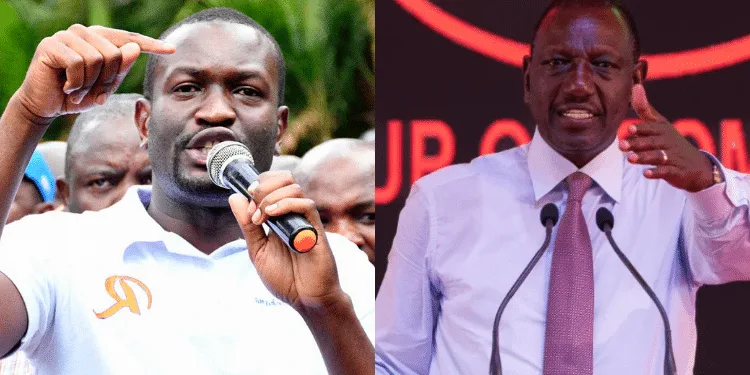
The exchange comes amid growing disagreements over government accountability, development priorities and the performance of leaders seeking public office.
According to Citizen Digital, Sifuna issued the challenge on Saturday, October 17, during a requiem mass at Sipala Primary School in Mihuu Ward, Webuye East Constituency, Bungoma County. The service was held in honour of the daughter of area MCA Violet Namaemba Makhanu.
Sifuna was responding to Ruto's earlier accusations that he was an extortionist who harassed governors during Senate committee appearances. The senator challenged the President to allow Kenyans to compare their respective records before deciding who deserved their support in the next election.
During his address, Sifuna accused the President of corruption, stealing land and money, and failing to fulfil promises made to Kenyans. He also referred to Ruto's past case before the International Criminal Court (ICC) as part of his criticism.
These were political allegations made by Sifuna and should not be mistaken for established findings of wrongdoing.
Sifuna also criticised the government's handling of Nzoia Sugar Company and Pan Paper Mills, raising questions about the future of the enterprises and the interests of the communities that depend on them.
The senator's remarks added to the political debate over public accountability and the government's responsibility to explain its decisions to Kenyans.
On Sunday, October 18, Ruto responded to his critics during a church service in Kapsabet, Nandi County.
According to People Daily, the President defended his development agenda, arguing that freedom and democracy should translate into tangible improvements in people's lives.
Ruto maintained that voters should assess leaders based on their development plans, manifestos and performance. His response placed economic progress at the centre of the debate as political leaders began positioning themselves ahead of the next election.
The President has defended his administration's programmes in housing, healthcare and infrastructure as part of its economic agenda. Opposition leaders, however, have questioned aspects of government policy, public spending and the impact of some programmes on ordinary Kenyans.
The disagreement between Ruto and Sifuna reflects competing approaches to the country's political future. While the President has emphasised development and the continuation of his administration's programmes, Sifuna has focused on accountability and scrutiny of government decisions.
The exchange also comes as opposition figures seek to strengthen their political alliances ahead of the 2027 General Election. Sifuna and his allies face the challenge of turning their criticism of the government into a credible alternative that addresses the concerns of voters across the country.
Ruto, meanwhile, must defend his administration's record and demonstrate that its policies have delivered meaningful improvements in people's lives.
As the election approaches, the debate is likely to focus increasingly on economic management, employment, healthcare, the cost of living and accountability in public office.
Ultimately, voters will have to decide which leaders have presented the most convincing records and the clearest plans for addressing the country's challenges.
As Kenya approaches the 2027 General Election, should voters judge Ruto and Sifuna by their development records, their commitment to accountability, or their ability to address the everyday challenges facing ordinary citizens?


Comments
No approved comments yet.