


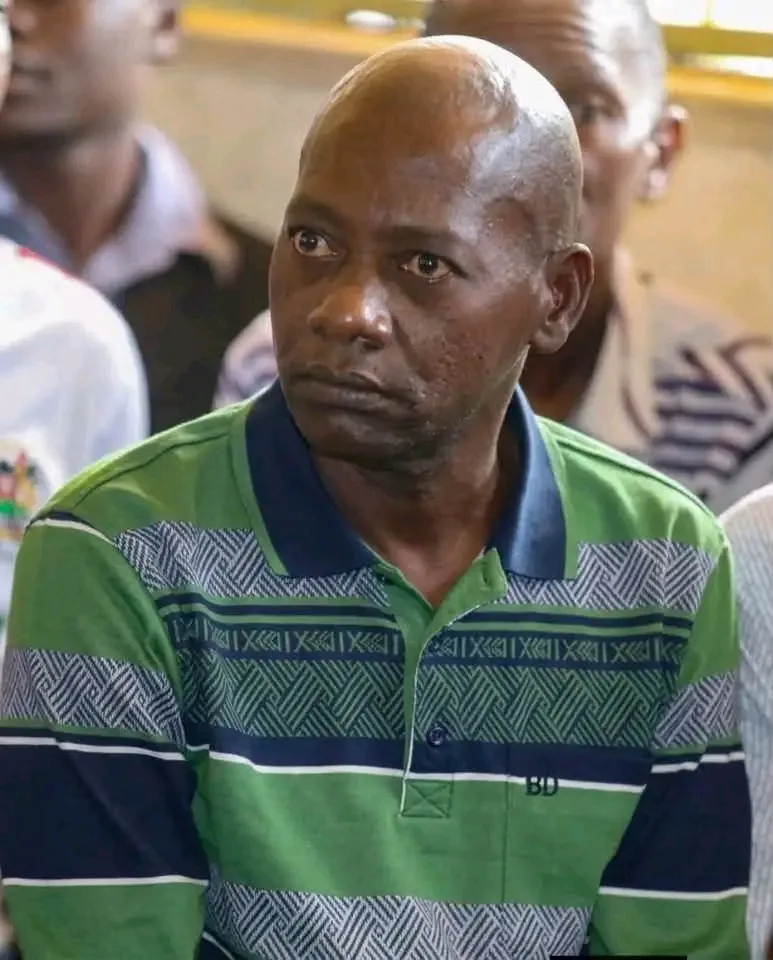
The sentence was delivered by High Court Judge Diana Kavedza Mochache at the Mombasa High Court on Friday, November 6, 2026, following Mackenzie's conviction on 191 counts of murder.
The court ordered two separate 100-year prison terms to run consecutively, bringing his total sentence to 200 years.
Mackenzie received a 100-year sentence for the murders of 190 children and another 100 years for the murder of one adult.
The killings occurred in Shakahola Forest, Kilifi County, between January 2021 and September 2023, involving followers of Mackenzie's Good News International Church.
Why Paul Mackenzie Was Sentenced to 200 Years
In its sentencing decision, the court held Mackenzie primarily responsible for the deaths, citing his position as the leader of the religious group and his role in directing followers to undertake extreme fasting.
The court found that followers were encouraged to starve themselves to death in the belief that doing so would enable them to meet Jesus and enter heaven.
The prosecution presented evidence showing that the practice was organised and enforced, with children targeted first before the fasting extended to young people, women and men.
Investigations and evidence presented during the trial also established that followers who resisted the instructions were subjected to intimidation, beatings, restraint and confinement.
The court found that the deaths were not simply the result of voluntary religious fasting but formed part of an organised system of indoctrination and coercion.
Why the Court Did Not Impose the Death Penalty
Before sentencing, the Office of the Director of Public Prosecutions (ODPP) had urged the court to impose the death penalty on Mackenzie, arguing that the scale and brutality of the killings warranted the harshest punishment.
However, Justice Kavedza opted for a lengthy prison sentence instead.
In explaining the decision, the judge observed that executing individuals who believed death would lead them to heaven could undermine the intended deterrent effect of capital punishment.
The court also considered the importance of keeping the convicts alive to allow for possible rehabilitation and to preserve an opportunity for them to provide information about victims whose remains have not been found.
The 200-year sentence therefore reflected the court's approach to punishment, accountability and the need to prevent similar atrocities.
Mackenzie Was Convicted Alongside 28 Others
Mackenzie's sentencing followed a judgment delivered on October 19, 2026, in which he and 28 co-accused were found guilty of all 191 murder counts.
The prosecution presented extensive evidence during the trial, including witness testimony, forensic examinations, medical reports and other evidence linking the accused persons to the deaths.
The court found that Mackenzie occupied a central leadership position in the group, while the other accused persons played different roles in facilitating or enforcing the deadly practices.
The co-accused were also sentenced according to their respective levels of responsibility, with prison terms ranging from 10 to 160 years.
How the Shakahola Massacre Was Discovered
The Shakahola tragedy came to national attention in April 2023 after investigations led authorities to mass graves in Shakahola Forest, in Kilifi County.
Police and investigators subsequently uncovered hundreds of bodies buried in shallow graves across the forest.
The wider investigation revealed a disturbing pattern of religious indoctrination in which followers were allegedly persuaded to abandon basic necessities, including food, in pursuit of what they believed was a path to heaven.
The 191 victims in Mackenzie's murder trial included 190 children and one adult. They were among the victims whose deaths were investigated in connection with the Shakahola tragedy.
The discovery of the mass graves triggered national outrage and raised serious questions about the regulation of religious institutions, the protection of children and the responsibility of authorities to intervene when warning signs of religious extremism emerge.
Mackenzie's Defence Signals Appeal
Following the sentencing, Mackenzie's defence indicated that it would challenge the decision through an appeal.
The sentence marks a significant development in the long-running Shakahola case, which exposed the devastating consequences of religious manipulation and the exploitation of vulnerable followers.
For families who lost their loved ones, the ruling represents a major milestone in the pursuit of justice, although questions surrounding other victims and the wider investigation remain.

Comments
No approved comments yet.