
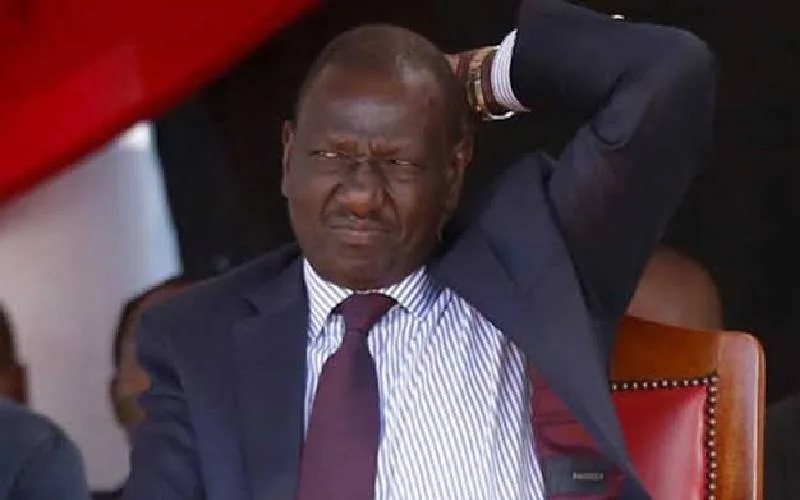
President William Ruto's administration is facing renewed pressure to release a controversial International Monetary Fund (IMF) report examining corruption and governance weaknesses in Kenya.
The pressure comes from a coalition of civil society organisations demanding that the government make the findings public and present the report before Parliament.
The organisations issued their demands on Friday, November 6, 2026, through the Okoa Uchumi Campaign, accusing the government of withholding an important document despite receiving its final version in June.
According to Kenyans.co.ke, the campaign wants the government to immediately publish the IMF Governance and Anti-Corruption Diagnostic Report and provide a clear plan for implementing its recommendations.
The Star also reported the development on Friday, November 6, noting that the organisations want Parliament and ordinary Kenyans to scrutinise the findings.
The campaign includes Amnesty International Kenya, Transparency International Kenya, the Kenya Human Rights Commission, the Institute for Social Accountability and the Africa Centre for Open Governance.
In their joint statement, the organisations argued that the report should not remain confidential because its preparation involved public consultations and the use of taxpayers' money.
They have made three major demands: immediate publication of the final report, formal presentation before Parliament and a clear government roadmap with timelines for implementing its recommendations.
People Daily reported that the government requested the IMF assessment in September 2024 following the Gen Z protests, which placed corruption, accountability and public resource management at the centre of national debate.
According to the campaign, the IMF first submitted the assessment to the government in December 2025 before completing a review process and delivering the final version in June 2026.
The matter has also attracted parliamentary attention.
On Wednesday, November 4, Tetu MP Geoffrey Wandeto sought an explanation from the Departmental Committee on Finance and National Planning regarding the status of the report.
According to the civil society organisations, Parliament expects a response within two weeks.
However, the government has yet to announce a specific date for releasing the document.
Treasury Principal Secretary Chris Kiptoo reportedly indicated at the launch of the latest World Bank Kenya Economic Update that the government would make the IMF report public.
His remarks have increased expectations that the document could eventually be released.
The controversy comes at a time when the World Bank has issued fresh warnings about corruption and governance challenges affecting Kenya's economy.
On Wednesday, November 4, the World Bank launched its 34th Kenya Economic Update, highlighting the economic consequences of corruption and weaknesses in public administration.
Reuters reported that the institution estimates corruption and collusion cost Kenya approximately 2 per cent of its Gross Domestic Product annually through increased fiscal deficits.
The World Bank also found that 39 per cent of businesses identify corruption as a major obstacle to doing business in Kenya.
Medium-sized enterprises face particular challenges, with 48 per cent reporting that they have to offer gifts to get things done.
The institution further warned that addressing governance weaknesses could increase Kenya's GDP by up to 20 per cent by 2035.
It also estimated that ambitious reforms could support approximately 7.7 million additional and better-quality jobs.
These findings have renewed attention on the IMF assessment, which examines governance weaknesses and corruption vulnerabilities affecting the management of public resources.
The IMF had earlier confirmed that it shared a draft governance assessment with the Kenyan government and was awaiting feedback. The Fund indicated that publication depended on the government's consent.
The assessment covers important areas of public administration, including public financial management, government procurement, taxation, revenue collection, market regulation and the rule of law.
Meanwhile, Kenya's previous $3.6 billion IMF-supported programme ended in April 2025, adding to the wider debate surrounding the country's relationship with the international lender.
For the Okoa Uchumi Campaign, releasing the report would be an important step towards improving transparency and strengthening accountability in the management of public resources.
The latest demands now place the government under pressure to explain why the final assessment has not been made available to the public.
Kenyans are waiting to see whether the Ruto administration will release the document and allow Parliament to examine its findings.
Do you think the government should immediately release the IMF corruption report, or should it be allowed more time to review the findings? Share your views in the comments section.
Comments
No approved comments yet.