

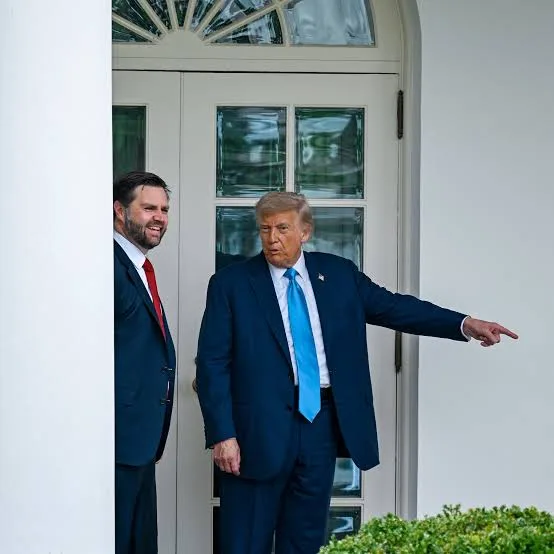
The November 3 midterm elections handed Democrats control of both the House of Representatives and the Senate, ending Republican control of Congress and setting up a potentially difficult final two years of Trump's presidency.
The results have intensified scrutiny of Trump's decision to launch military operations against Iran, particularly as the conflict has contributed to rising fuel prices and concerns about the cost of living in the United States.
However, Trump has shown little willingness to abandon his hardline approach towards Tehran.
Speaking to reporters on Thursday, November 5, the president indicated that Washington remained prepared to continue military operations if necessary.
"If we have to do the rest of the Iran thing, we're very much locked in," Trump said, according to the Associated Press.
The remarks came as the president faced growing questions about whether he would authorise renewed large-scale strikes against Iran or pursue a diplomatic settlement.
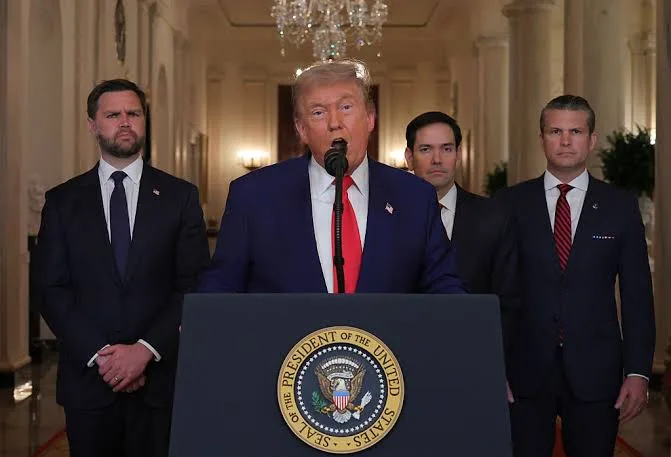
JD Vance breaks ranks with Trump over Iran war
One of the most significant developments following the election defeat has been the public disagreement between Trump and his deputy, JD Vance, over the consequences of the Iran conflict.
In a post on X on November 4, Vance directly attributed the Republican Party's electoral losses to the war, arguing that voters had rejected the administration's handling of the conflict.
"The reason we lost is the war," Vance wrote.
He further challenged Republicans who believed the military campaign was worth the political consequences, pointing to the loss of control of the Senate.
Vance also described an earlier recommendation to end the conflict as "sound advice", signalling a shift in his public position on the military campaign.
His remarks have attracted attention because he is widely viewed as a potential Republican presidential contender in 2028.
The vice president's comments have also raised questions about divisions within Trump's administration over the long-term costs and objectives of the war.
Trump, however, has continued defending his decision.
"I did the right thing," he told The Wall Street Journal. "I would have done it again."
The president has maintained that preventing Iran from obtaining nuclear weapons justified the military action, despite the political consequences facing his party.
Trump weighs renewed military action against Iran
Beyond the political disagreements in Washington, the biggest question remains whether Trump will authorise another major military offensive against Tehran.
According to Reuters, Trump was briefed by US Central Command chief Admiral Brad Cooper on options for restarting combat operations.
The discussions reportedly included possible military responses following months of fighting and the failure of an earlier ceasefire to produce a lasting peace agreement.
Reuters also reported that US intelligence assessments had raised doubts about whether renewed strikes would fundamentally change Iran's negotiating position or achieve regime change.
This presents Trump with a difficult strategic calculation.
Further military action could increase pressure on Tehran, but it could also trigger retaliation and deepen instability across the Middle East.
The president must therefore consider whether additional strikes would deliver meaningful progress towards America's stated security objectives or prolong a conflict that has already become politically costly.
Qatar steps in as diplomatic efforts intensify
As Washington considers its military options, diplomatic efforts to prevent another escalation are continuing.
On Friday, November 6, Trump held discussions with Qatar's Emir, Sheikh Tamim bin Hamad Al Thani, focusing on efforts to reduce tensions and find a comprehensive agreement to end the crisis.
According to a statement from the Qatari ruler's media office, the discussions centred on international mediation and the need to prevent further instability in the region.
The Qatari emir emphasised dialogue and diplomatic solutions, alongside the importance of protecting maritime navigation and energy supplies.
Qatar has a significant interest in preventing the conflict from spreading, given its position in the Gulf and the security and economic consequences of further military escalation.
The diplomatic engagement offers another possible route towards ending the conflict, although Washington and Tehran still face major disagreements over the conditions for a lasting settlement.
Democrats prepare to challenge Trump's administration
The Republican election defeat has also fundamentally changed the political environment in Washington.
Democrats are preparing to assume control of both chambers of Congress when the new Congress convenes in January 2027.
The incoming majority is expected to focus on government accountability, economic affordability and increased scrutiny of Trump's policies.
House Democratic Leader Hakeem Jeffries has already signalled a tougher relationship with the White House.
"We don't work for Donald Trump. We work for the American people," Jeffries said, outlining the incoming Democratic majority's position.
The change in congressional control could complicate Trump's domestic legislative agenda and give Democrats greater influence over investigations, government spending and oversight of the administration.
However, the election results do not automatically remove Trump's authority over foreign policy or his constitutional role as commander-in-chief.
He will retain significant powers over military decisions, although congressional scrutiny and political opposition could make the consequences of those decisions more difficult to manage.
Trump's Iran decision could have consequences beyond America
The growing disagreement between Trump and Vance, combined with the Republican election defeat and renewed diplomatic activity, has placed the future of the Iran war at a critical point.
A decision to resume large-scale military operations could deepen instability in the Middle East and threaten international energy supplies.
The Strait of Hormuz remains particularly important because of its role in global oil transportation. Any prolonged disruption could increase pressure on fuel prices and economies that depend on imported energy.
For countries across Africa, including Kenya, developments in the Middle East are worth watching because higher international oil prices can eventually translate into increased fuel and transportation costs.
On the other hand, a successful diplomatic settlement could reduce the risk of further escalation and ease pressure on global energy markets.
Trump is therefore facing a challenge that goes beyond the battlefield.
He must defend his national security strategy, manage growing disagreements within his own political camp and respond to an electorate that has handed his opponents control of Congress.
With Democrats preparing to take over in January and Qatar stepping up diplomatic engagement, Trump's next decision on Iran could become one of the defining moments of his second presidency.
Comments
No approved comments yet.