

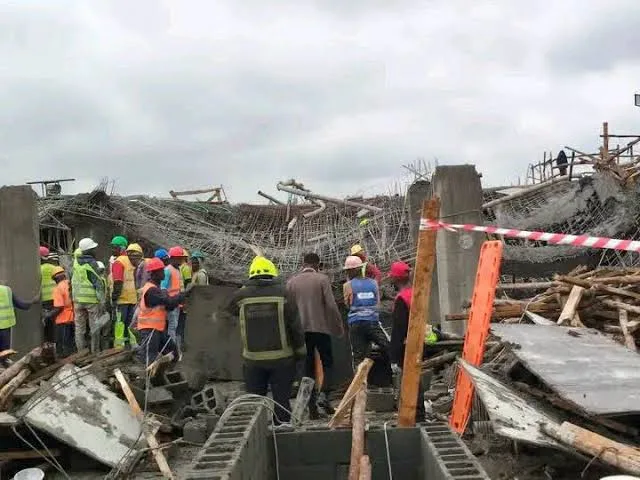
The tragedy occurred along the Syokimau SGR access road, near Mombasa Road and the Nairobi Standard Gauge Railway Terminus.
According to reports by Reuters and Capital FM, the incident happened at approximately 9am when part of an eight-storey building under construction gave way during construction work.
The upper section of the structure collapsed, trapping workers beneath the debris and prompting an emergency rescue operation.
The Kenya Red Cross Society confirmed that its response team had been deployed to the scene alongside other emergency responders.
In its initial update, the humanitarian organisation reported that three people had been rescued and taken to hospital, while search and rescue operations continued for another person reported missing.
However, subsequent updates established a higher casualty figure as rescue teams continued examining the rubble.
Reuters, citing police disaster-management official Duncan Ochieng, later reported that six people had been confirmed dead, while five others were taken to hospital.
The police official also indicated that approximately 405 workers had been at the construction site and that all had been accounted for. The construction site was subsequently closed.
K24 Digital and Nairobi Leo also reported on the emergency response, citing information from the Kenya Red Cross and other authorities.
The circumstances surrounding the collapse have raised serious questions about construction supervision, structural safety and compliance with building regulations.
Although preliminary reports pointed to a possible failure during construction work, authorities had not officially established the exact cause of the collapse by the time of the latest reports.
The National Construction Authority (NCA) is among the agencies whose involvement will be important in establishing whether the project complied with the required construction standards.
The authority is responsible for regulating the construction industry, registering contractors and overseeing compliance with applicable construction requirements.
The latest incident comes barely three weeks after another devastating building collapse in Eastleigh, Nairobi, which claimed eight lives.
The Eastleigh building collapsed on October 23, 2026, triggering a prolonged rescue and recovery operation involving the Kenya Red Cross, National Police Service, Kenya Defence Forces and other emergency agencies.
According to reports by the National Police Service, eight bodies were eventually recovered, while four people were rescued alive.
The Eastleigh tragedy also raised questions about construction approvals and enforcement after Nairobi Governor Johnson Sakaja said the collapsed development lacked the necessary county construction approvals.
The National Construction Authority subsequently outlined investigations and regulatory interventions following the Eastleigh disaster, including plans for a broader compliance audit of buildings.
The Syokimau collapse has therefore renewed public concern over whether existing construction regulations are being adequately enforced, particularly as Nairobi and neighbouring counties continue experiencing rapid urban development.
For families who have lost their loved ones, the immediate concern is finding answers about what happened and ensuring that those responsible are held accountable if investigations establish negligence.
The latest incident also places renewed attention on the responsibilities of developers, contractors, engineers and government agencies involved in approving and supervising construction projects.
With six people confirmed dead, the central question now is whether the investigations will establish what caused the structure to collapse and whether warning signs were missed before the tragedy.
Kenyans will be watching closely for the findings of the relevant authorities as questions over construction safety continue to grow.

Comments
No approved comments yet.