

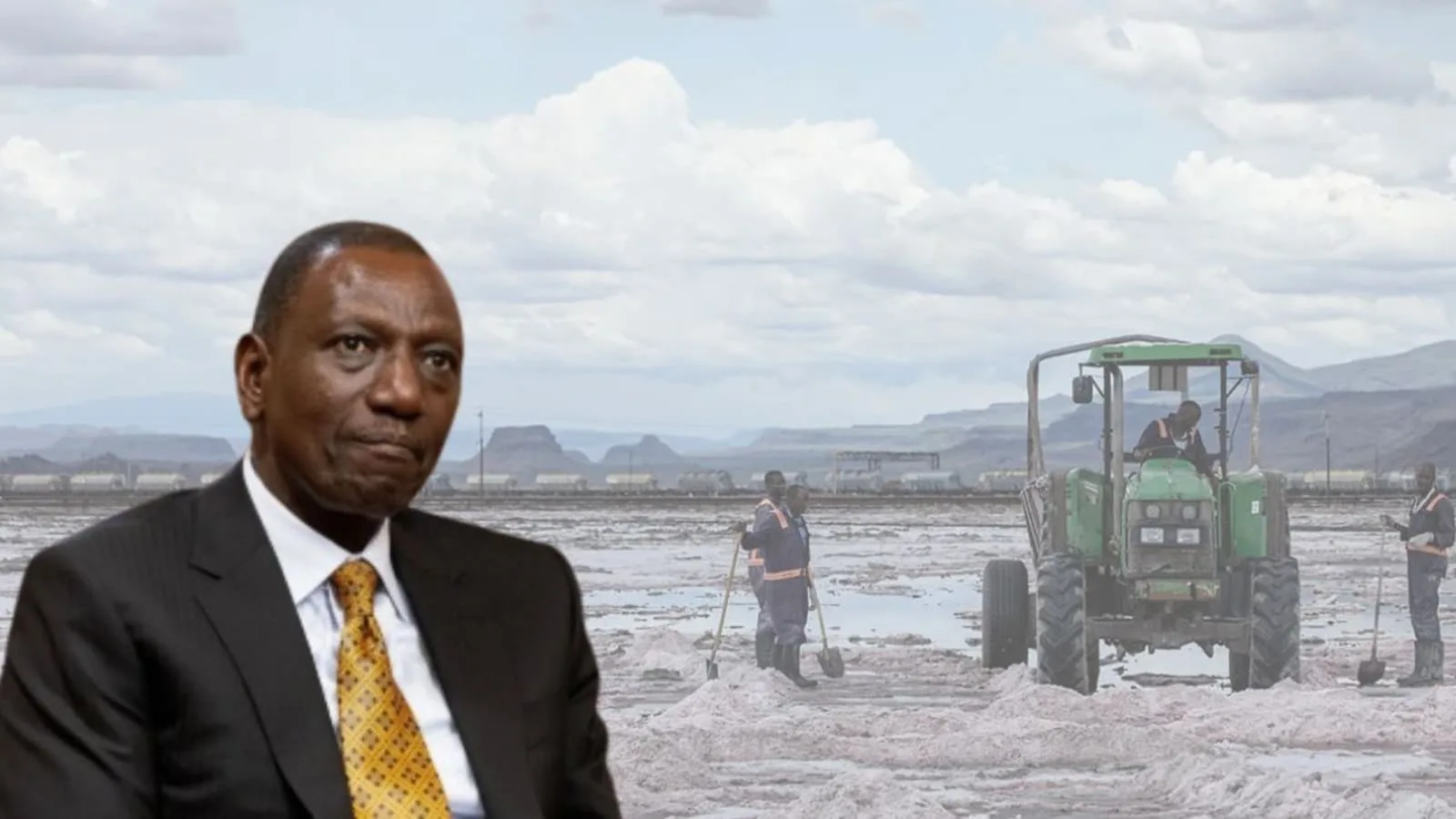
At the heart of the controversy is the century-old arrangement involving Tata Chemicals and the Lake Magadi soda ash operation, which the government has moved to terminate.
President William Ruto says the deal has not delivered enough value to Kenya.
But that immediately raises another question: if the arrangement was so exploitative, why has the government chosen to act now, four years into the Kenya Kwanza administration and less than a year before the 2027 General Election?

Ruto’s Case: Kenya Must Get More From Magadi
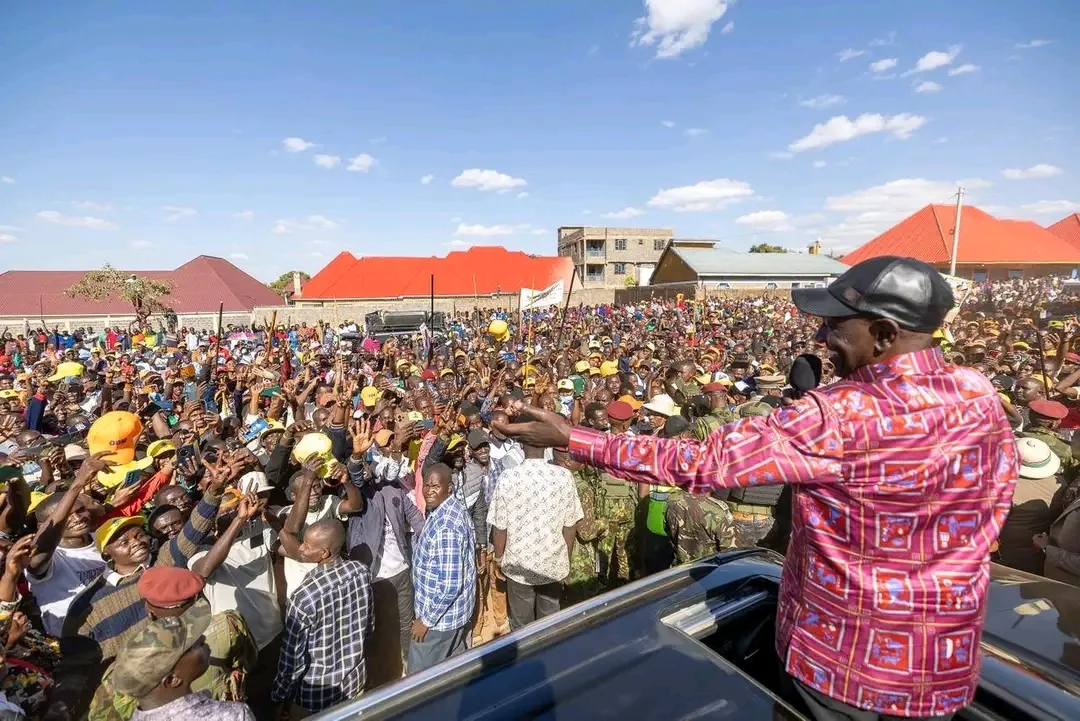
During his tour of Kajiado County on Thursday, President Ruto defended his administration’s decision, arguing that the existing arrangement had denied the country and the local economy the full benefits of Lake Magadi’s resources.
Reuters reported on September 4 that Ruto told residents that Tata had held the contract for 100 years but had not built a factory in Kajiado.
“That TATA company had that contract for 100 years. They have not built anything in Kajiado, they have not built any factory in Kajiado,” Ruto said, according to Reuters.
The President’s argument is straightforward: Kenya should no longer be satisfied with extracting minerals, exporting them and importing finished products that could potentially be manufactured locally.
Reuters also reported that the government suspended Tata’s operations at the Magadi soda ash factory in late July and halted soda ash exports pending a compliance review.
Tata, for its part, said it respects the authority of the Kenyan government and remains committed to engaging through legal channels.
That leaves Kenya facing an important economic test: can the country turn Magadi’s natural resources into a genuine industrialisation opportunity without destroying investor confidence?
From Exporting Soda Ash to Creating Jobs
The government has placed value addition at the centre of its defence.
LiveNowAfrica reported on September 5 that Kenya exported 254,779 tonnes of soda ash worth $56.9 million in the year to July 2025.
Those figures have become central to the government’s argument that Kenya should move beyond simply extracting and exporting raw materials.
The argument is not necessarily that exports are bad. Rather, the bigger question is how much additional economic value Kenya could capture if more processing and manufacturing took place locally.
Industrialization Principal Secretary Dr Juma Mukhwana has backed the government’s position, pointing to plans to transform the area into a broader manufacturing hub.
The ambition is significant: instead of Magadi being primarily associated with the extraction and export of soda ash, the government wants future investment to support industries such as glass and chemical manufacturing.
That could create jobs, expand Kenya’s industrial base and generate more tax revenue.
But the success of that vision will depend on what happens after Tata.
The Question the Government Must Answer: Why Now?
This is where the political debate begins.
The government says it is correcting an old economic arrangement and pursuing a better deal for Kenya.
Critics, however, are questioning the timing and manner of the intervention.
Their argument is not necessarily that Kenya should never renegotiate an old mining arrangement. It is that a major decision affecting a long-established foreign investor requires transparency, due process and a clear explanation of the evidence behind it.
If the government believes the Tata arrangement was exploitative, Kenyans deserve to see the evidence.
Was there a comprehensive audit?
Was the original agreement reviewed against current Kenyan law and mining policy?
What specific contractual obligations were allegedly breached?
What economic benefits did Kenya receive over the decades, and what did the government conclude was missing?
These are not questions that should be dismissed as opposition politics.
They are legitimate questions in a country seeking to attract investment while also demanding a larger share of the value generated from its natural resources.
Investor Confidence Matters Too
There is another uncomfortable reality.
Kenya needs industrial investment.
It needs factories, jobs, technology, exports and companies willing to commit capital for decades.
That means the government must demonstrate that Kenya can simultaneously protect national interests and provide investors with predictable rules.
A government can legitimately review an old mining agreement. It can demand greater value addition. It can insist that communities benefit more from natural resources.
But how that process is conducted matters.
If investors conclude that long-term agreements can be abruptly overturned without transparent procedures, Kenya could face a confidence problem.
Conversely, if the government demonstrates that the Magadi arrangement was reviewed fairly, that contractual and legal requirements were followed and that the new model will genuinely deliver more value to Kenya, the decision could ultimately strengthen the country’s investment environment.
That is why transparency is so important.
And What About the Magadi Community?
Perhaps the most important question is one that can easily get lost in the political confrontation between the government and Tata.
Where does the Magadi community fit into the new arrangement?
Kajiado Senator Samuel Seki has called for the local community to be fully included in discussions surrounding a new investor.
That demand deserves serious attention.
The people living around Magadi should not merely watch politicians and corporations negotiate over resources found in their backyard.
They should have a meaningful voice in decisions affecting land, employment, environmental protection, infrastructure and the distribution of economic benefits.
For the community, this is not simply an argument about Tata or the Kenya Kwanza administration.
It is about a much more fundamental question:
After a century of mining, what does Magadi get?
The 2027 Question
There is also no escaping the political timing.
Kenya is heading towards the 2027 General Election, and virtually every major government decision will increasingly be interpreted through a political lens.
The Ruto administration says its approach represents a break from the past — a determination to ensure that Kenya gets more from its natural resources and that raw materials support local manufacturing.
Critics see the possibility of political messaging being mixed with economic policy.
Both possibilities can exist at the same time.
The only way to separate genuine reform from political theatre is through transparency.
The Daily Whistle Question
The government may be right that Kenya deserves a better deal from Magadi.
It may also be right that the country should move from exporting raw materials towards local value addition.
But being right about the destination is not enough. Kenyans also need to understand the journey.
If the Tata arrangement was genuinely exploitative, where is the detailed audit or contractual review that demonstrates this?
What exactly triggered the government’s decision?
Was the Magadi community adequately consulted?
What legal process was followed?
And, perhaps most importantly, what guarantees will prevent the next investor from entering into another arrangement that Kenyans will be questioning 50 or 100 years from now?
The real test of the Magadi decision will not be the political speeches made today.
It will be whether, years from now, the people of Kenya can look back and say that their natural resources were finally used to create jobs, industries, revenue and lasting prosperity.
So, is the Magadi decision genuine economic reform, or a politically timed intervention ahead of 2027?
Kenyans deserve enough transparency to decide for themselves.
What do you think?
Do you want to be published? E-mail info@thedailywhistle.co.ke or WhatsApp 0721930260


Comments
No approved comments yet.