

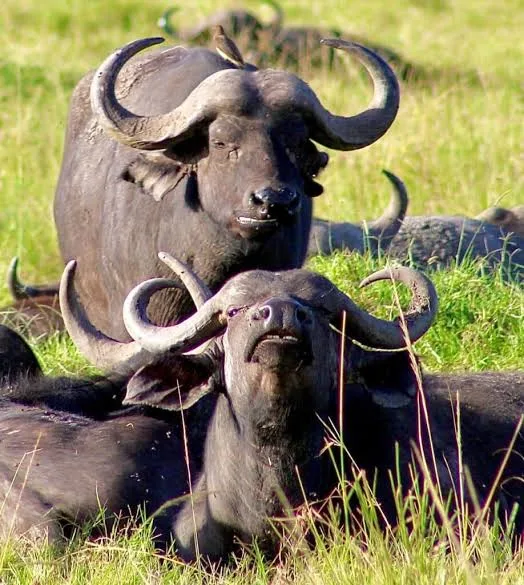
The proposal, announced during the Agriculture and Food Security Transformation Summit in Nairobi on October 9, 2026, would see Kenya explore importing buffaloes alongside improved camel breeds to diversify milk production.
Ruto said he had directed Livestock Development Principal Secretary Jonathan Mueke to pursue the initiative, pointing to countries such as India, where domesticated water buffaloes play a significant role in commercial dairy farming.
The announcement comes as prolonged dry conditions put pressure on livestock production, raising concerns about milk availability and the challenges facing dairy farmers.
But while buffalo milk is widely consumed in other parts of the world, questions remain about whether introducing it into Kenya would increase supply, lower prices or create a new premium dairy market.
For consumers already grappling with the cost of living, the central question is whether the proposal could make milk more affordable.
1. Buffalo Milk vs Cow's Milk: What Is the Difference?
The most noticeable difference between buffalo milk and cow's milk is their fat content.
According to the Food and Agriculture Organization of the United Nations (FAO), cow's milk generally contains about 3 to 4 per cent fat, while buffalo milk typically contains considerably more.
The exact composition varies according to breed, feeding practices, stage of lactation and other production conditions.
The higher fat content gives buffalo milk a richer, creamier consistency. It can also make it particularly useful for manufacturing butter, cream, cheese, yoghurt and ghee.
Buffalo milk contains protein, calcium and other nutrients found in cow's milk. However, its higher fat content also generally means that it contains more calories per comparable serving.
That distinction matters to consumers who compare dairy products for nutritional reasons.
Neither type of milk is automatically the healthier choice for everyone. Nutritional needs, portion sizes, fat intake and the overall diet all influence which option is appropriate.
For Kenya, the commercial question is whether consumers would embrace buffalo milk as an everyday beverage or whether demand would initially come mainly from specialised dairy processors.
2. Why India Relies on Buffalo Milk
India offers an established example of how domesticated water buffaloes can support a large dairy industry.
Buffalo milk is widely used in the country's dairy supply chain, serving both household consumers and manufacturers of products such as butter, cheese and yoghurt.
Its relatively high fat and milk-solids content makes it valuable to processors producing concentrated dairy products.
Ruto cited India's experience when explaining why Kenya should consider diversifying its sources of milk.
However, reproducing that model would require more than importing animals.
Kenya would need to identify appropriate dairy breeds, assess local farming conditions and establish reliable systems for feeding, milking, veterinary care, milk collection and processing.
The government would also need to determine the costs involved and whether farmers could earn a sustainable return from buffalo farming.
India's experience demonstrates that buffalo dairying can work at scale, but it does not establish that the same system would automatically be profitable under Kenyan conditions.
3. Could Buffalo Milk Lower Prices in Kenya?
For many Kenyan households, affordability would be the most important measure of success.
If buffalo farming increases the volume of milk available to processors, it could eventually contribute to a more diversified dairy supply.
However, increased production does not automatically translate into lower retail prices.
The final price would depend on the cost of importing the animals, establishing farms, providing feed and veterinary services, transporting milk and processing it to meet food-safety requirements.
The scale of production would also matter. A small number of imported buffaloes would be unlikely to transform the national milk supply immediately.
Furthermore, buffalo milk's higher fat content may make it attractive for specialised products that command different prices from ordinary drinking milk.
Whether it could compete directly with cow's milk would depend on production costs, consumer demand and the way processors choose to market it.
The government has not yet publicly established the number of buffaloes it intends to import, the total programme budget or a timeline for introducing the animals.
Without those details, it is too early to conclude that the initiative will reduce milk prices.
For consumers, the key issue is not simply whether Kenya can produce buffalo milk, but whether it can do so efficiently enough to offer a meaningful benefit at the point of sale.
4. What Would It Take to Establish Buffalo Farming in Kenya?
Introducing a new dairy animal would require careful planning, particularly if the government intends to develop a commercially viable industry.
The first consideration would be the choice of breed.
Domesticated water buffaloes, scientifically known as Bubalus bubalis, are used for milk production in several countries. They are different from African buffaloes, which are wild animals and are not the domesticated dairy animals commonly used in commercial buffalo farming.
The government would need to identify suitable breeds and establish veterinary and quarantine requirements before any imports take place.
Farmers would also need guidance on animal management, feeding, breeding and milk hygiene.
Infrastructure would be another important consideration.
Milk must be collected, cooled, transported and processed under appropriate conditions to preserve its quality and protect consumers.
If buffalo farming is to become a viable alternative, the government and private investors would need to assess whether existing dairy infrastructure could accommodate the animals and their milk or whether new facilities would be necessary.
The costs of these investments would ultimately influence whether the milk could be sold competitively.
5. Could Camel Milk and Buffalo Milk Change Kenya's Dairy Industry?
Ruto's proposal also includes introducing improved camel breeds to increase milk production.
Unlike conventional dairy cattle, camels are well adapted to arid and semi-arid environments, making them important livestock in parts of northern and eastern Kenya.
Camel milk already contributes to local livelihoods and commercial activity in areas where camel keeping is established.
Improved breeds could potentially increase milk output, although actual results would depend on breed suitability, nutrition, animal health and farm management.
Buffaloes and camels would serve different production systems rather than necessarily replacing conventional dairy cattle.
For Kenya, the two proposals could offer opportunities to diversify milk production and create additional income streams for farmers.
However, the government would need to assess each initiative separately, considering the cost of introducing the animals, the areas where they could be kept successfully and the demand for their milk.
A successful diversification programme would also need to complement existing dairy farmers rather than divert resources from practical measures that could improve current production.
These measures include better access to animal feed, veterinary services, improved breeding and reliable milk collection facilities.
What Kenyan Dairy Experts Need to Explain
Although the proposal has attracted attention, several important questions remain unanswered.
How much would importing buffaloes and improved camels cost? How many animals would be needed to make a meaningful contribution to milk production? How soon could they begin supplying commercial quantities of milk?
The government also needs to explain whether the initiative would be implemented through public farms, private farmers or partnerships with existing dairy processors.
Most importantly, there needs to be an assessment of whether the resulting milk could be sold at prices accessible to ordinary Kenyan households.
The Kenya Dairy Board and livestock experts could help clarify the potential contribution of buffalo farming to national production, the challenges of establishing the industry and the likely costs of introducing a new dairy animal.
Such assessments would help distinguish the long-term potential of the initiative from its immediate impact on milk availability.
What the Proposal Means for Kenyan Consumers
Ruto's announcement signals an intention to explore new ways of expanding Kenya's milk supply at a time when climate pressures have exposed vulnerabilities in livestock production.
Buffalo milk could create opportunities for specialised dairy products, while improved camel breeds could potentially support production in suitable dryland areas.
However, neither initiative is guaranteed to reduce prices or resolve existing supply challenges.
Their success will depend on the cost of implementation, animal productivity, infrastructure, consumer demand and the government's ability to develop a sustainable production system.
For now, Kenyan consumers should view the proposal as a potential long-term diversification strategy rather than an immediate solution to the price and availability of milk.
The real test will be whether the initiative can translate into reliable production, viable businesses for farmers and tangible benefits for consumers.
Until the government provides detailed figures on costs, imports and implementation, the question of whether buffalo milk will make milk more affordable in Kenya remains open.


Comments
No approved comments yet.