

Kenya has sharpened its arsenal in the fight against financial crime, as the Directorate of Criminal Investigations (DCI) reaffirmed its commitment to aggressively pursue money laundering, terrorism financing, and organized crime through smarter, more coordinated investigations.
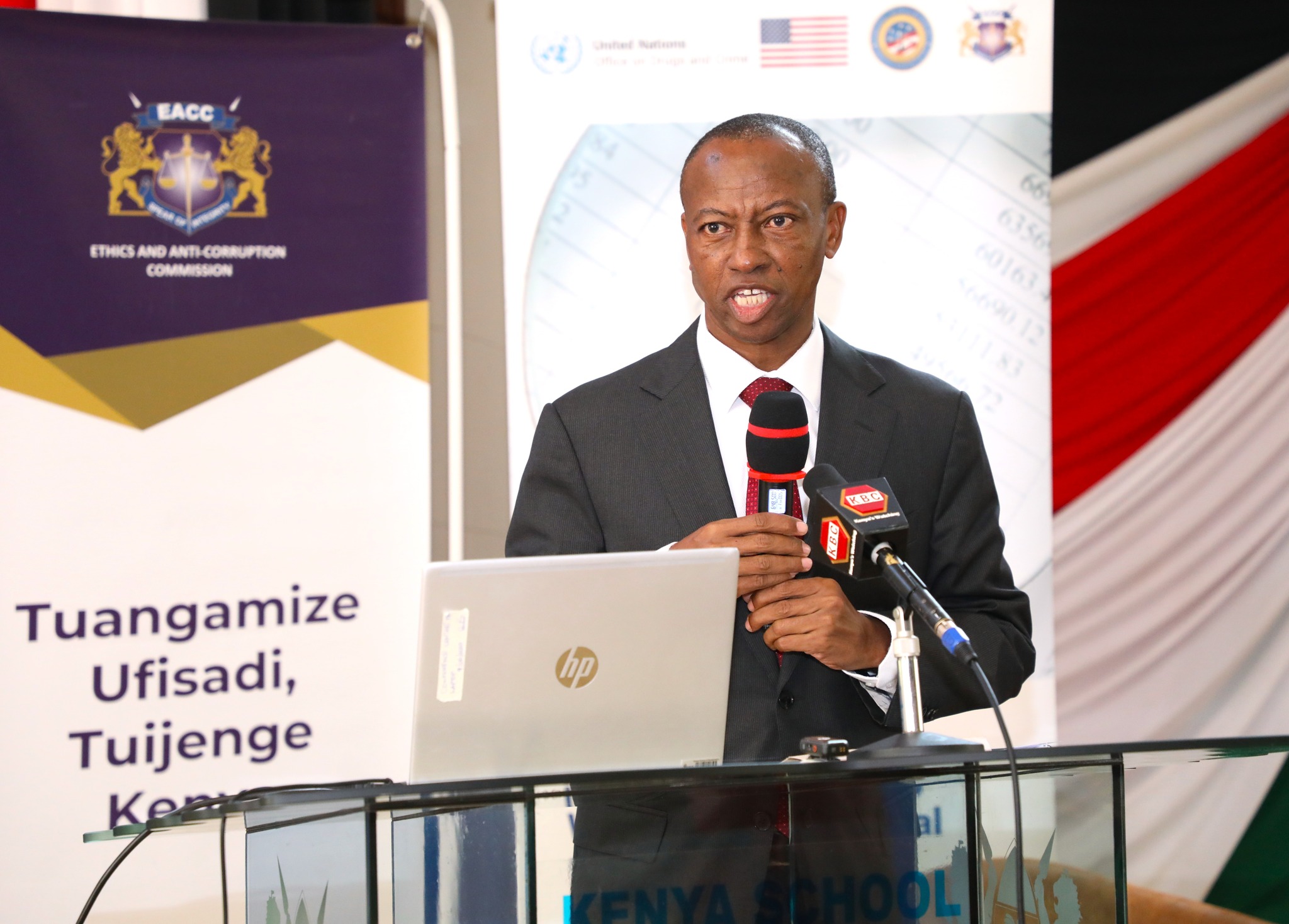
Speaking on behalf of DCI Director Mohamed I. Amin, Mr. Komesha, Director of the Investigations Bureau, delivered a compelling address at the Financial Investigations and Asset Recovery Workshop held at the Kenya School of Government in Kabete.
“Proceeds of crime are no longer hidden under mattresses; they are laundered through complex corporate structures, layered across global bank accounts, and concealed within real estate or cryptocurrency,” said Mr. Komesha. “As the landscape of criminality transforms, so too must our response.”
The five-day workshop brings together financial crime investigators, prosecutors, regulators, and development partners to enhance technical capacity and inter-agency collaboration. At the heart of the DCI’s new strategy is the strengthening of its Financial Investigations Unit and a more aggressive implementation of the “Follow the Money” policy — a blueprint aimed at not just arresting suspects but recovering stolen wealth.
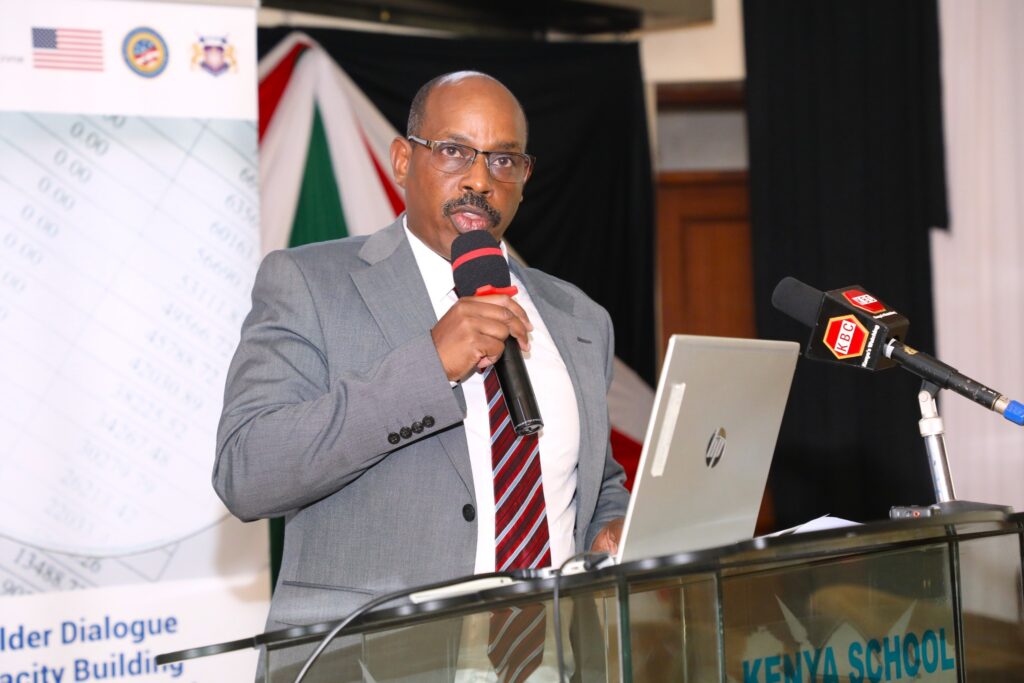
In his written remarks, DCI Director Mr. Amin urged stakeholders to move beyond reactive investigations and instead adopt parallel financial probes as a matter of routine. “We must not only catch the thief, but also follow the trail and recover the loot. Without asset recovery, justice remains incomplete,” stated Mr. Amin.
The event is backed by a broad coalition of partners, including the Ethics and Anti-Corruption Commission (EACC), UNODC’s Africa Anti-Corruption Hub, the EU/UNODC PLEAD II Programme, the Global Programme on Money Laundering (GPML), and the National Integrity Academy. Francesco Checchi, Team Lead of the UNODC Africa Anti-Corruption Hub, emphasized the critical need for unified responses to financial crime.
“To win the fight against financial crime, countries must build bridges, not silos. Cooperation, information sharing, and capacity-building are no longer optional—they are indispensable,” Checchi said.
Director of the Asset Recovery Authority, Mark Ogonji, underscored that targeting illicit wealth is a key pillar of justice. “Our message is simple—crime must not pay. We are committed to ensuring that every illegally acquired shilling is traced, seized, and returned to the public,” Ogonji asserted.
The event was graced by high-level guests including John Lolkoloi, Director of Ethics and Leadership at the EACC, who spoke on the need for institutional integrity and ethical leadership in safeguarding national resources.
Kenya, like many developing nations, faces rising threats from complex financial crimes that often involve transnational networks and advanced digital tools like cryptocurrency. The shift toward proactive, intelligence-led investigations—combined with stronger legal frameworks and partner support—marks a significant leap in the country’s anti-corruption infrastructure. As the workshop continues through the week, the message is clear: Kenya is not just chasing criminals. It's chasing their money—and bringing it back home.


Comments
No approved comments yet.