

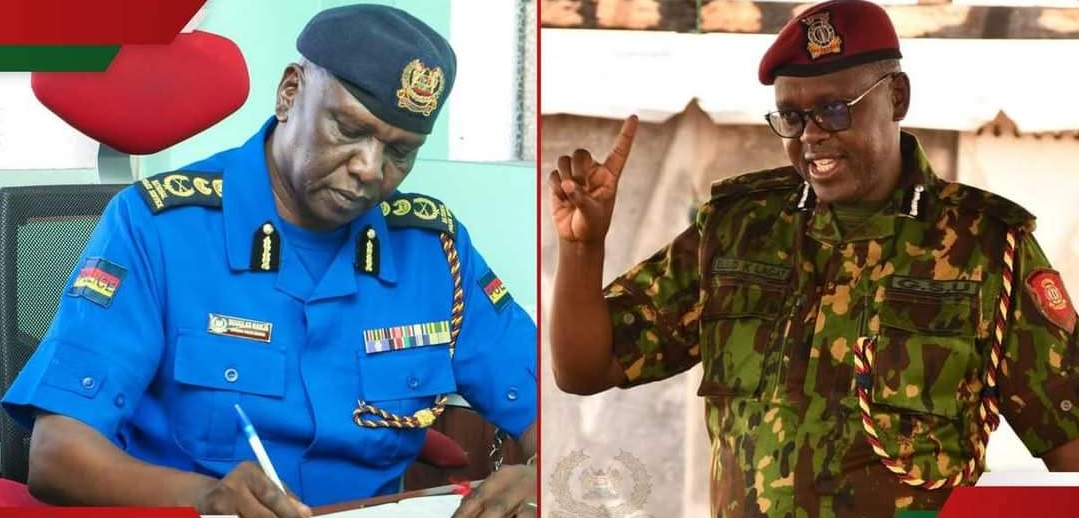
The Police Reforms Working Group–Kenya (PRWG-K) has issued a powerful call for the immediate stepping aside of Deputy Inspector General of Police Eliud Lagat, citing grave concerns over conflict of interest in the investigation into the suspicious death of 31-year-old Albert Ojwang.
The group, a broad civil society alliance of over 20 organizations, says the postmortem findings unequivocally disprove claims by the National Police Service (NPS) that Ojwang died by suicide. The death, they argue, points to serious misconduct and possible torture under police custody.
“Justice cannot be impartial when the complainant is sitting at the apex of the police command. Mr. Lagat must step aside to allow truth to prevail,” said the PRWG-K in a joint statement.
Unlawful Transfer, Opaque Detention
Ojwang was reportedly arrested and transferred over 350 kilometres from his hometown to Central Police Station in Nairobi, raising serious legal questions.
PRWG-K now demands that the NPS explain why a suspect was removed from his local jurisdiction in clear violation of the law, which stipulates that all offences must be tried in the nearest court unless transferred by a judicial order.
“The National Police Service must account for Albert's whereabouts for the entire period before he was booked at Central. This includes producing a full chain of custody, officer names, and transport records,” the coalition said.
Demanding Transparency and Accountability
The coalition strongly condemned the Inspector General of Police for announcing the interdiction of unnamed officers without disclosing who was responsible for Central Police Station at the time of Ojwang’s death.
PRWG-K also called on the Independent Policing Oversight Authority (IPOA) to immediately:
- Summon and take statements from Deputy IG Lagat, OCS Mr. Talam, and all involved officers.
- Investigate the legality and procedural integrity of the arrest and detention.
- Disclose surveillance footage, medical reports, and transport logs tied to the incident.
“Police stations are meant to be places of protected custody — not death chambers,” PRWG-K declared.
Constitutionality and Public Trust
The group reminded authorities that Article 244 of the Constitution of Kenya mandates police officers to respect human dignity, protect rights and freedoms, and avoid torture or inhumane treatment.
The failure to observe these constitutional obligations, PRWG-K argues, is not just a violation of individual rights — it’s a threat to national security and public trust in law enforcement institutions.
“The chain of impunity — from arbitrary arrest to custodial deaths — must be broken. If not now, when?” the statement asked.
Call to Action: Real Justice, Not Cosmetic Suspensions
PRWG-K demands that IPOA and the Kenya National Commission on Human Rights (KNCHR) lead a fully independent and external investigation — one that goes beyond internal suspensions and results in prosecutions before a court of law.
“Unless those responsible are arrested and tried, such practices will continue to rob innocent Kenyans of life, dignity, and justice.”
They also urged Parliament, the Judiciary, and independent media to keep the spotlight on this case to ensure it is not quietly buried by bureaucracy or spin
Do you want to be published? Email info@thedailywhistle.co.ke or Whatsapp 0721930260

Comments
No approved comments yet.