

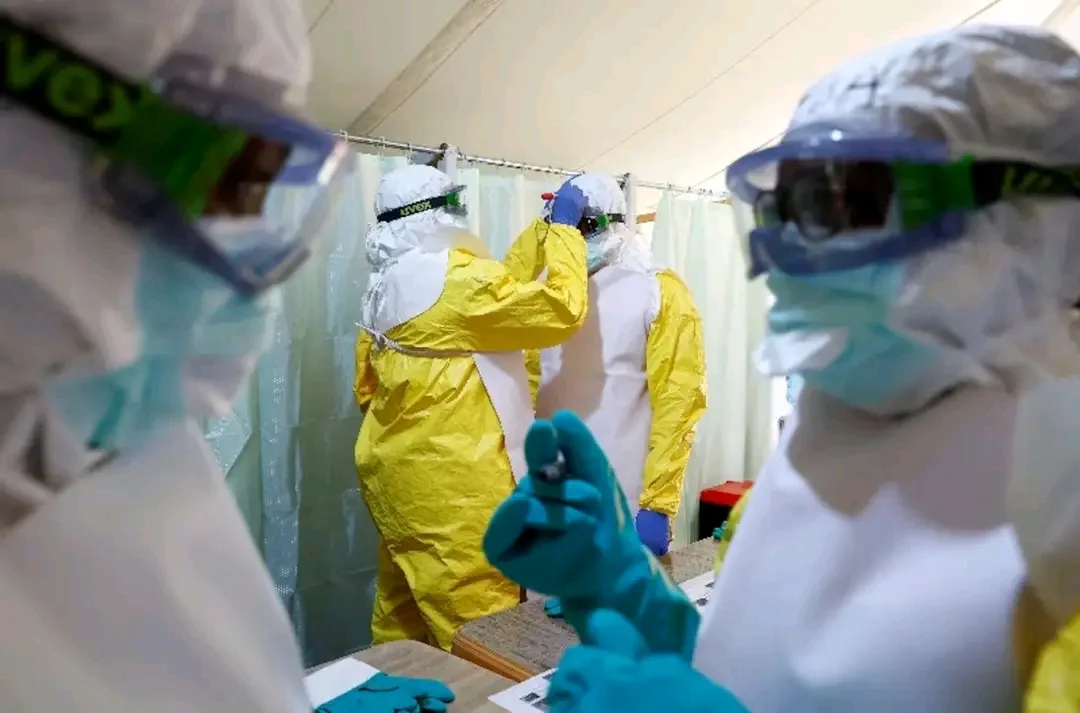
According to the update provided, the new cases involve a close relative of the initial patient and three medical workers, raising concerns about possible transmission among family members and healthcare personnel.
However, the reported increase to seven cases has not been independently verified against an official Ministry of Health statement. The latest independently verified information available for this report indicated three confirmed cases, including one death.
Three Healthcare Workers Among Reported New Cases
The reported infections among three healthcare workers are particularly concerning because medical personnel can face an increased risk of exposure when treating patients with Ebola.
The virus can spread through direct contact with the blood and other body fluids of an infected person or through contaminated objects. Strict infection prevention measures, appropriate protective equipment and early identification of suspected cases are therefore essential in healthcare facilities.
Confirmation of the four additional cases would be an important development in Kenya's efforts to contain the outbreak. Further official information is needed to establish the patients' conditions, where the new infections were detected and the measures being taken to prevent further transmission.
How Kenya's Outbreak Began
Kenya confirmed its first imported case of Bundibugyo virus disease on October 6, 2026, involving a Kenyan man who had been living in the Democratic Republic of Congo.
The patient travelled through Uganda before arriving in Nairobi on October 3. He was taken to hospital, isolated and assessed before laboratory tests confirmed the infection. He died on October 5, according to information released by health authorities.
Authorities subsequently identified and monitored people who had come into contact with him.
Kenya later confirmed infections involving two close relatives of the first patient. The contacts were monitored, and patients who developed symptoms were isolated and tested.
The reported involvement of additional family members and healthcare workers highlights the importance of contact tracing and close monitoring of people who may have been exposed to the virus.
What Is Bundibugyo Virus Disease?
Bundibugyo virus disease is a severe illness caused by Bundibugyo ebolavirus, a member of the Ebola virus group.
Symptoms can include fever, headache, muscle pain, fatigue, sore throat, vomiting and diarrhoea. Some patients may also experience unexplained bleeding.
The virus spreads through direct contact with the blood or body fluids of an infected person, or through contaminated materials. It can also spread through contact with the body of someone who has died from the disease.
People who develop symptoms after possible exposure should seek medical attention promptly and inform healthcare workers about their exposure history.
What Kenyans Should Do
Members of the public should follow guidance issued by the Ministry of Health and avoid direct contact with the blood and body fluids of anyone suspected of having Ebola.
Anyone who develops symptoms after contact with a suspected or confirmed patient should seek immediate medical assessment and disclose the possible exposure.
Healthcare workers are also expected to follow infection prevention and control procedures, including the appropriate use of protective equipment when handling suspected cases.
Contact tracing, isolation, laboratory testing and public awareness remain critical measures in preventing further spread.
Official Confirmation Remains Crucial
If confirmed, the four additional infections would bring Kenya's reported Bundibugyo virus disease total to seven, including healthcare workers who attended to the first patient.
The reported increase underscores the need for timely updates from health authorities as investigations continue.
The additional cases and revised total require confirmation through an official Ministry of Health statement before they can be treated as established figures.

Comments
No approved comments yet.