

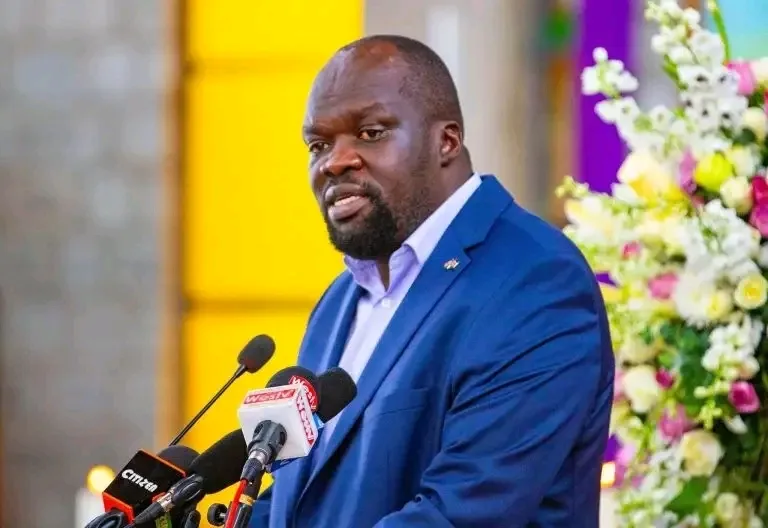
Alai argued that ODM's traditional dominance in Nyanza should be protected through voluntary political support rather than attempts to restrict leaders who wish to explore alternative political parties.
His remarks come amid growing debate over political zoning in the region, with questions emerging about whether ODM can maintain its traditional stronghold as alternative political formations attract leaders seeking different political platforms.
In a strongly worded statement, Alai maintained that ODM remains deeply rooted in Nyanza and does not need to intimidate politicians to retain its influence.
He estimated that approximately 90 per cent of voters in the region would still choose ODM if allowed to make their political decisions freely.
"I believe ODM is a very strong party. Its organic support in Nyanza is real and deep. That is precisely why coercion, cajoling, blackmail and intimidation have no place in forcing people to belong to it or vie on its ticket," Alai stated.
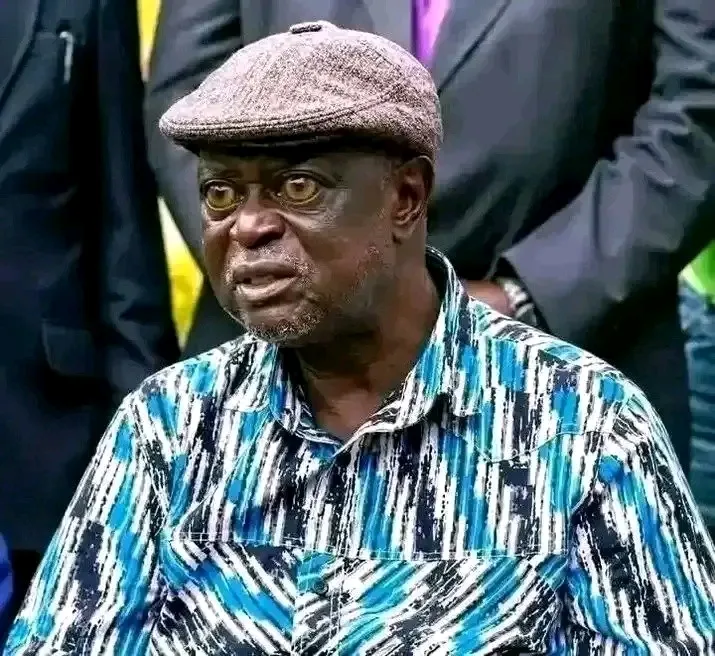
Alai invokes Raila Odinga's legacy to challenge ODM leadership
The politician invoked the democratic legacy of ODM's founding leader, the late Raila Amolo Odinga, arguing that the party should remain faithful to the principles that informed his decades-long struggle for political freedom.
He recalled Raila's years in detention, exile and involvement in the fight against Kenya's one-party political system under KANU.
Alai also referenced the 1991 repeal of Section 2A of the former Constitution, which restored multiparty democracy and opened the way for political competition in Kenya.
He argued that it would be contradictory for a party founded on the struggle for political pluralism to now discourage alternative political opinions within its traditional strongholds.
"The party he founded has no business now telling people in Nyanza they must not hold different views," he said.
According to Alai, ODM's historical strength was built on the voluntary support of Kenyans who believed in Raila's political leadership, not through political brokers enforcing exclusivity.
MDG emerges as an alternative as ODM faces internal pressure
Alai also pointed to the growing interest in alternative political platforms as evidence of the political tensions facing ODM in Nyanza and surrounding regions.
He cited the Movement for Democracy and Growth (MDG), associated with Ugenya MP David Ochieng, as one of the political alternatives attracting leaders.
Among those he mentioned were Teso North MP Oku Kaunya, Alego Central MCA David Ragen and Kanyaluo MCA Jeff Ongoro.
He further noted that some politicians had openly questioned ODM's nomination processes or explored alternative political vehicles.
Alai argued that dismissing such leaders as rebels instead of addressing their concerns could accelerate political fragmentation.
The developments also raise questions about the future of political competition in Nyanza, where ODM has historically enjoyed considerable electoral support.
Why ODM's zoning debate could benefit Linda Mwananchi
One of the biggest political questions emerging from the zoning debate is whether attempts to restrict competition could create more room for Linda Mwananchi and other alternative political formations.
The Linda Mwananchi movement has emerged as a significant part of the wider debate over political independence, leadership and the direction of opposition politics.
Alai warned that efforts to compel politicians to remain within ODM could strengthen the grievances that encourage some leaders to explore alternative platforms.
His argument is that political movements gain an opportunity to attract new supporters when established parties are perceived to be intolerant of competing ambitions.
He also criticised public declarations suggesting that politicians outside ODM would be chased away or aggressively de-campaigned across wards.
According to him, such statements create unnecessary political hostility and risk damaging ODM's democratic image.
Alai cited Ghana's New Patriotic Party (NPP) and National Democratic Congress (NDC), which have alternated in power, arguing that political competition should be determined by voter confidence and performance rather than attempts to eliminate alternatives.
He also referenced Botswana's long period of political dominance by one party as an example in his argument that sustained political influence should come through delivery rather than threats.
Alai tells ODM to compete through performance, not intimidation
Alai maintained that ODM could protect its political influence by strengthening its engagement with voters, delivering on promises and allowing aspirants to compete freely.
He warned that intimidation could give emerging political outfits, including MDG, UDA-aligned aspirants and Linda Mwananchi supporters, an opportunity to position themselves as alternatives for dissatisfied politicians.
His intervention adds to the wider debate over whether ODM can preserve its traditional dominance in Nyanza while accommodating competing political ambitions and the growing demand for freedom of political choice.
"Convince, do not compel. Deliver, do not dictate," Alai declared.
The remarks present a challenge to ODM's leadership as the party navigates questions surrounding zoning, nominations and its relationship with politicians who are considering alternative political vehicles.
Ultimately, the question facing ODM is whether it can maintain its influence in Nyanza through the loyalty it has built over decades without turning political competition into a test of party allegiance.
For Alai, the answer lies in returning to the democratic principles that shaped Raila Odinga's political struggle: winning people's support through persuasion, performance and the freedom to choose.
Comments
No approved comments yet.