

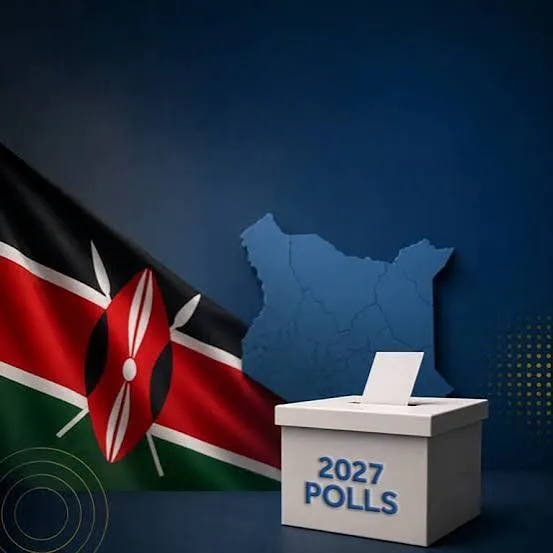
With several politicians already positioning themselves for the presidency, attention is shifting towards the resources required to sustain their ambitions. Behind the public rallies, political declarations, overseas visits and growing alliances lies an expensive campaign operation that could determine which candidates remain competitive as the election approaches.
A report published by the Daily Nation on Tuesday, November 17, has exposed the financial demands facing presidential hopefuls, estimating that a serious presidential campaign could require between Sh10 billion and Sh20 billion.
The figures raise questions about the accessibility of Kenya's presidency, particularly for politicians who enjoy considerable public support but lack wealthy business networks and established financial connections.
The Independent Electoral and Boundaries Commission (IEBC) has already established a presidential campaign spending ceiling of approximately Sh6.1 billion for the 2027 General Election. However, the limit covers the officially designated two-month campaign period, while political mobilisation and efforts to build national support often begin much earlier.
University of Nairobi political economist Professor Karuti Kanyinga has previously estimated that mounting a serious presidential campaign could cost approximately Sh14 billion.
The challenge becomes clearer when considering the geographical demands of a presidential election. Candidates must establish their presence across all 47 counties and 290 constituencies, requiring substantial resources for transportation, campaign personnel, communication, advertising and mobilisation.
The Standard has also reported on the spending limits established by the electoral commission, highlighting the enormous financial requirements facing political parties and individual candidates.
For political parties, the IEBC has set an overall spending ceiling of approximately Sh24.45 billion, with transportation accounting for the largest allocation at more than Sh16 billion.
These figures demonstrate the scale of financial organisation required to maintain a serious nationwide political campaign.
The growing importance of money in electoral competition is also becoming visible through the activities of politicians seeking financial support beyond Kenya's borders.
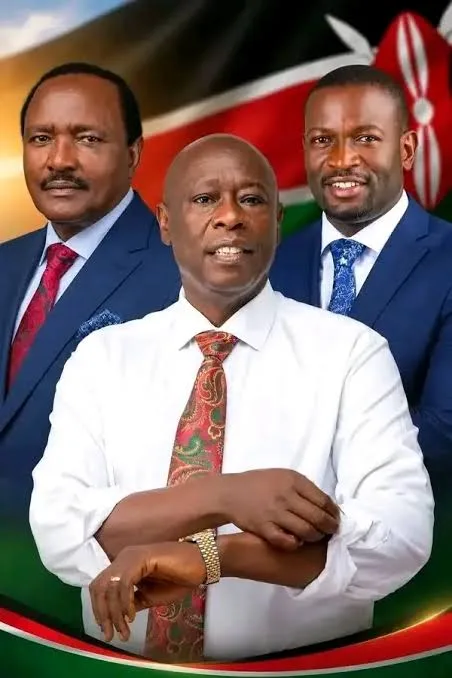
According to the Daily Nation, opposition figures including Democracy for the Citizens Party leader Rigathi Gachagua, Nairobi Senator Edwin Sifuna and Wiper Party leader Kalonzo Musyoka have been associated with efforts to establish international networks and mobilise financial support from Kenyans living abroad.
Gachagua previously undertook an extended tour of the United States, where he held meetings with Kenyans in the diaspora. Sifuna has also planned overseas engagements as he builds his political profile and seeks support for his ambitions.
Meanwhile, former Chief Justice David Maraga and other political figures have explored grassroots fundraising as an alternative to relying exclusively on wealthy political financiers.
However, questions remain about whether small contributions from ordinary supporters can sustain campaigns that require billions of shillings to maintain a nationwide presence.
The issue goes beyond the individual presidential candidates. It raises a fundamental question about the nature of democracy in a country where financial resources can determine how widely a politician communicates their message, how frequently they reach voters and how effectively they organise their supporters.
Researchers from the University of Nairobi, writing in an analysis published by the Brookings Institution in June 2026, warned that expensive election campaigns can make political competition increasingly exclusive and undermine democratic accountability when campaign financing regulations are not effectively enforced.
Kenya's Election Campaign Financing Act provides a legal framework for regulating political contributions and campaign expenditure. Article 88(4)(i) of the Constitution also gives the IEBC responsibility for regulating the amount of money spent by or on behalf of candidates and political parties.
The electoral commission has introduced spending limits and financial accountability requirements ahead of the 2027 elections. However, the effectiveness of these measures will depend heavily on transparency, monitoring and enforcement.
The situation presents a difficult challenge for emerging political leaders who may have strong grassroots support but lack the financial networks enjoyed by established political figures.
It also raises concerns about the influence of wealthy individuals and business interests in determining which presidential candidates receive the resources necessary to compete.
As Kenya moves closer to the 2027 General Election, the battle for State House could therefore expose a deeper divide between political popularity and financial power.
But as billions of shillings become central to presidential ambitions, one question remains: Is Kenya heading towards an election where the most popular candidate wins, or where the wealthiest political camp has the greatest advantage?
Comments
No approved comments yet.