


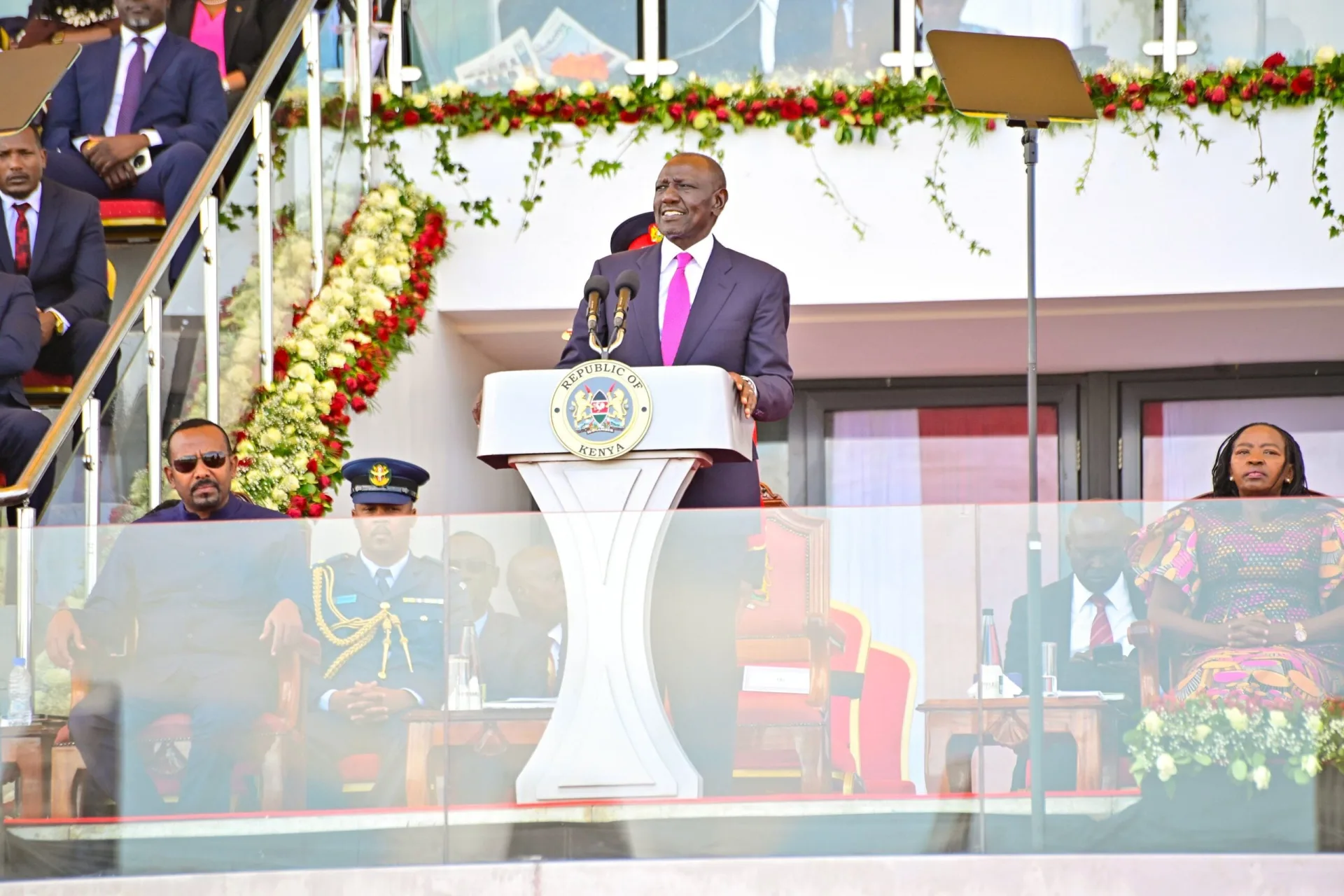
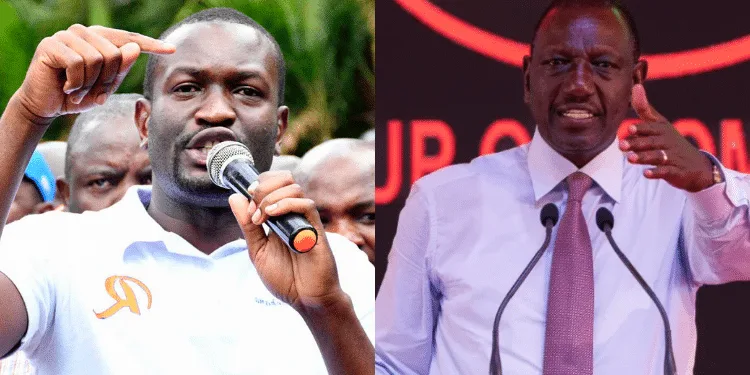
Treasury Cabinet Secretary John Mbadi has dismissed claims that Nairobi Senator Edwin Sifuna enjoys greater support among young voters than President William Ruto, insisting that the government’s internal opinion polls show the Head of State performing strongly among Generation Z.
Speaking during an interview on Sunday, October 25, 2026, Mbadi claimed that Ruto enjoys significant support among young people, citing opinion polls he said are conducted every two weeks.
“We do our opinion polls every two weeks. William Ruto has more support among the Gen Z than even the elderly,” Mbadi said.
He also dismissed the argument that Sifuna’s growing popularity on social media and the large crowds attending Linda Mwananchi rallies necessarily translate into votes during an election.
“My friend, present your election, Team Sifuna. Social media talk does not translate to votes,” Mbadi added.
Mbadi argued that political popularity should be measured by electoral performance rather than online conversations and the size of crowds at political gatherings.
He also acknowledged Sifuna’s intelligence but warned that a presidential election would be a difficult undertaking for the Nairobi senator.
“If he runs, he will lose. Presidential elections are no joke,” Mbadi said.
To reinforce his argument, the Treasury CS reportedly pointed to Charity Ngilu’s political history, recalling how she attracted large crowds at Uhuru Park in 1997 but ultimately finished fifth in that year's presidential election.
His remarks come amid growing political attention surrounding Sifuna and the Linda Mwananchi movement, whose rallies have attracted supporters as the country’s political debate increasingly focuses on the 2027 General Election.
A day earlier, National Assembly Speaker Moses Wetang’ula had also questioned whether Sifuna was ready to become president, citing the lengthy political journeys of previous Kenyan presidents.
Wetang’ula pointed to the careers of Daniel arap Moi, Mwai Kibaki, Uhuru Kenyatta and William Ruto to argue that becoming president requires years of political experience.
Moi entered Parliament in 1957 and became president in 1978. Kibaki entered Parliament in 1963 before ascending to the presidency in 2002. Uhuru Kenyatta and Ruto entered Parliament in 1997 and later became presidents in 2013 and 2022, respectively.
Wetang’ula used these examples to argue against the expectation that an individual can move directly from serving as a member of Parliament to becoming president within a short period.
“There is no miracle of MP today, President tomorrow,” Wetang’ula said.
However, Mbadi's claims about Ruto's support among young voters remain his own assessment of the internal opinion polls he cited. Without publicly available polling data showing the methodology, sample size and results, the figures cannot independently establish the level of support Ruto enjoys among Generation Z.
As the political debate continues, Sifuna's response to Mbadi's latest remarks was not immediately available.

Comments
No approved comments yet.