

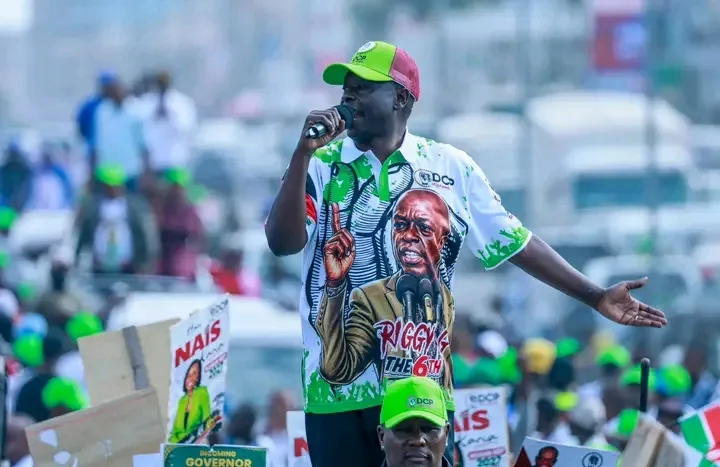
The latest developments suggest that the region's political direction could become a major determinant of the country's next presidential contest.
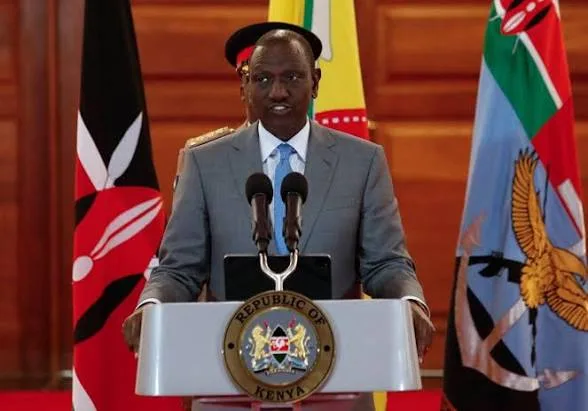
On Wednesday, November 18, President William Ruto delivered a strong message to political leaders seeking to control how entire communities vote.
During his fourth State of the Nation Address at Parliament Buildings in Nairobi, Ruto declared that no community should be reduced to a voting bloc or surrender its political judgement to an individual.
According to a report published by The Star on Wednesday, the President challenged politicians to convince Kenyans through policies, development proposals and their ability to deliver on campaign promises.
His remarks come at a time when Gachagua has intensified his political mobilisation in Mount Kenya through his Democracy for the Citizens Party (DCP).
The former Deputy President has been positioning himself as a major political voice in the region, arguing that communities should consolidate their political strength before negotiating political agreements ahead of the next election.
However, Ruto's latest remarks have introduced another dimension into the growing political contest over who should influence Mount Kenya's political decisions.
The political developments have also been accompanied by fresh defections from the ruling United Democratic Alliance (UDA) to Gachagua's DCP.
According to Daily Nation's report published on Wednesday, Gatundu South MP Gabriel Kagombe, Laikipia West MP Wachira Karani and Nyeri Woman Representative Rahab Mukami have joined Gachagua's party.
The three lawmakers were received at Gachagua's Wamunyoro residence in Nyeri County on Tuesday.
Gachagua described the defections as part of a wider political movement, claiming that more leaders were interested in joining his party.
He also expressed confidence that DCP would significantly expand its parliamentary representation before the 2027 elections.
The development presents another challenge for UDA as political competition within the region intensifies.
However, Gachagua's growing influence has also attracted resistance from other political leaders who are unwilling to surrender their political parties or influence to one individual.
Democratic Party leader Justin Muturi has emerged as one of his strongest critics.
In a report published by The Star on Wednesday, Muturi accused Gachagua of attempting to dominate opposition politics while sidelining political parties from Mount Kenya East.
Muturi questioned why Gachagua repeatedly mentioned consultations with Kalonzo Musyoka, Edwin Sifuna, Fred Matiang'i and Eugene Wamalwa without giving similar recognition to other opposition leaders.
He maintained that every political party deserved respect regardless of its size or regional influence.
The disagreement exposes another challenge facing the opposition as leaders attempt to establish a united political front against Ruto in 2027.
Meanwhile, the contest for Mount Kenya's political influence is no longer limited to the national presidential debate.
Nairobi Governor Johnson Sakaja has also found himself at the centre of the emerging political confrontation after Gachagua declared that his party was preparing to take control of Nairobi County in the next elections.
Citizen Digital reported on Wednesday that Nairobi traders and business leaders had defended Sakaja, accusing Gachagua of introducing ethnic divisions into the city's political contest.
The traders argued that Nairobi's diverse population required inclusive leadership and that political competition should focus on development rather than ethnic identity.
These developments demonstrate how political disagreements involving Mount Kenya leaders are increasingly extending beyond the region.
For Ruto, retaining the political support he enjoyed in Mount Kenya during the 2022 General Election remains an important consideration as he prepares for another presidential contest.
For Gachagua, building a strong political movement could strengthen his bargaining position in negotiations with other opposition leaders.
However, the existence of other influential politicians and independent political parties means that establishing one undisputed political centre in the region may prove difficult.
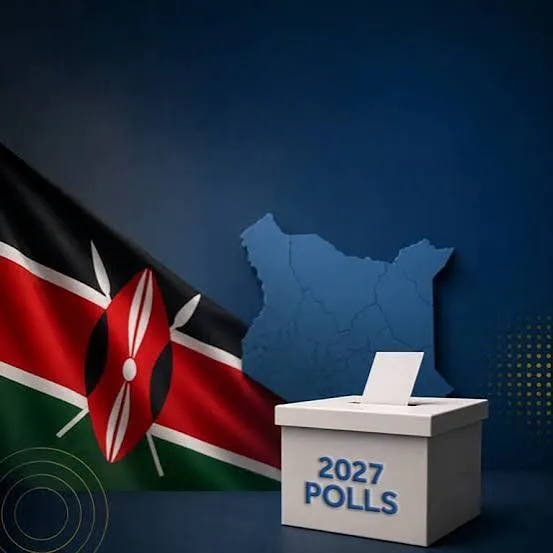
With the 2027 General Election approaching, the biggest question is whether Mount Kenya leaders will eventually unite behind one political direction or enter the next election divided by competing ambitions.
Will Ruto manage to retain Mount Kenya's support, or is Gachagua building a political force capable of changing the region's loyalty in 2027?
Comments
No approved comments yet.