

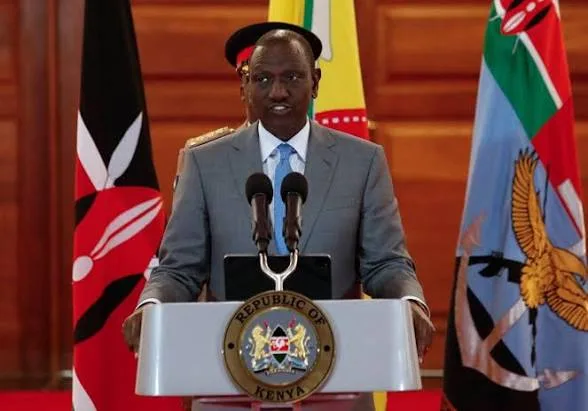
Speaking during his fourth State of the Nation Address at Parliament Buildings on Wednesday, November 18, Ruto insisted that Kenyans should be allowed to make independent political decisions without surrendering their judgement to individual politicians.
According to The Star's November 18 report by WANDERI KAMAU, the President declared:
"No community should be reduced to a voting bloc. No region should be asked to surrender its judgement to a personality."
Ruto further challenged politicians seeking elective positions to explain their development proposals, how they intended to implement them and how Kenyans would measure their performance.
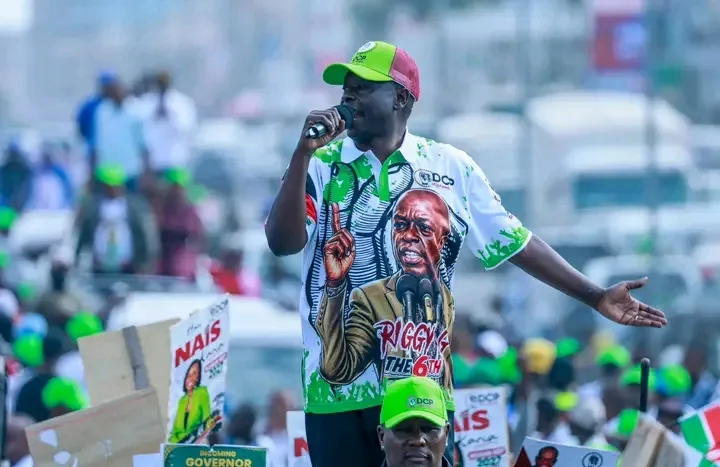
The remarks were particularly significant because of the ongoing political competition in Mount Kenya, where Gachagua has been mobilising support through his Democracy for the Citizens Party (DCP).
Capital FM, in a report published on November 18 by Jeremiah Wakaya, described the President's remarks as a veiled swipe at Gachagua's political mobilisation in the region.
The broadcaster reported that Ruto's comments came as the former Deputy President continued presenting DCP as an alternative political home for Mount Kenya residents.
Gachagua has repeatedly argued that communities should consolidate their political support before entering negotiations with other political formations over government positions and political agreements.
His position was particularly evident on November 17 when he warned Mount Kenya residents against emerging political parties that he claimed were sponsored to divide the region.
In a report published that day, The Star detailed Gachagua's allegations that political efforts were underway to weaken Mount Kenya's political unity.
The former Deputy President maintained that the region needed to protect its political bargaining power ahead of the 2027 elections. These were Gachagua's allegations, not independently established facts.
The political confrontation has also been accompanied by changes in party membership, with three sitting lawmakers recently abandoning Ruto's United Democratic Alliance (UDA) for Gachagua's DCP.
According to Citizen Digital's November 17 reporting, the defectors included Gatundu South MP Gabriel Kagombe, Laikipia West MP Wachira Karani and Nyeri Woman Representative Rahab Mukami.
Gachagua received the lawmakers at his Wamunyoro residence in Nyeri County, where he presented their arrival as part of his party's expansion ahead of the next General Election.
Capital FM independently reported on November 18 that the three defections increased DCP's parliamentary numbers from 19 to 25, with Gachagua expressing confidence that the party would attract more lawmakers.
The development has added another dimension to the competition between the President's ruling party and Gachagua's political movement.
Meanwhile, the political differences between the two camps were also visible on Wednesday when several lawmakers allied to Gachagua skipped Ruto's State of the Nation Address.
According to The Star's November 18 report, the legislators instead joined Gachagua at his Wamunyoro residence in Nyeri as the President addressed Parliament.
Among those reported to have attended the gathering were Kiambu Senator Karungo wa Thang'wa, Kamukunji MP Yusuf Hassan, Kajiado North MP Onesmus Ngogoyo and Starehe MP Amos Mwago.
The gathering demonstrated the continued political coordination between Gachagua and several elected leaders as the country approaches the 2027 elections.
Ruto's message, however, went beyond the Mount Kenya political contest.
During his address, he challenged both government and opposition leaders to move away from personality-driven politics and explain how they intended to address the cost of electricity, employment, healthcare, education and infrastructure financing.
The official parliamentary coverage of the address also records his emphasis on national unity, accountability and development across different communities.
The President maintained that political differences should not prevent Kenyans from pursuing shared national development objectives.
With competing political mobilisation efforts continuing in Mount Kenya, the disagreement over regional political representation is likely to remain an important issue in the preparations for the 2027 General Election.
Is Ruto's latest message a response to Gachagua's growing political mobilisation, or is Mount Kenya heading towards a political contest that could redefine its relationship with the government?
Comments
No approved comments yet.