
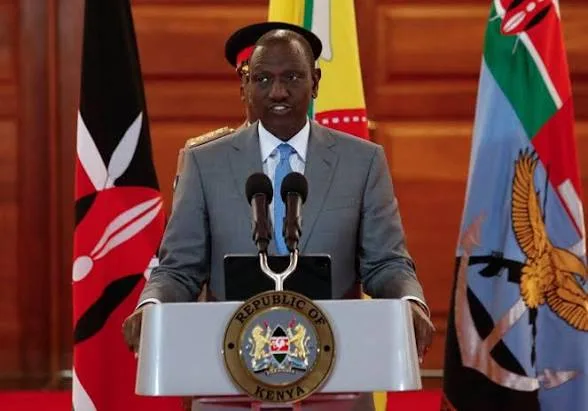
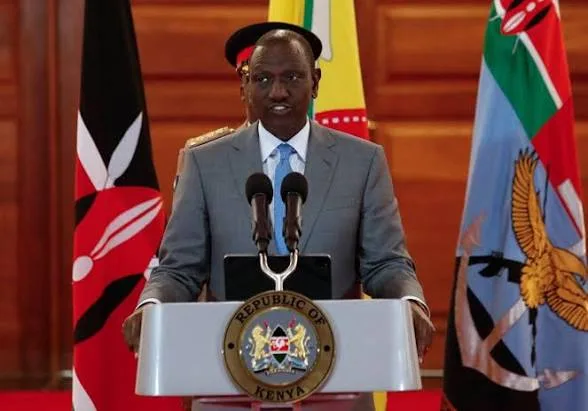
The President delivered his annual address before a joint sitting of the National Assembly and Senate on Wednesday, November 18, 2026, outlining his administration's achievements in infrastructure, healthcare, education, agriculture and economic management.
However, the speech has exposed growing divisions between government allies and opposition figures, with Nairobi Senator Edwin Sifuna, Wiper Party leader Kalonzo Musyoka and other political leaders delivering a sharp assessment of the President's performance.
One of the strongest reactions came from Sifuna, who dismissed the address as a 'State of Imagination', arguing that the President concentrated on development projects while overlooking constitutional obligations and concerns surrounding human rights.
Speaking after the address, the Nairobi senator questioned why the President was presenting achievements in road construction, markets and other infrastructure projects without adequately addressing issues of accountability, democracy and the protection of citizens.
In remarks reported by Capital FM on November 18, Sifuna argued that Article 132 of the Constitution requires the President to report on measures taken and progress achieved in implementing the national values and principles of governance outlined under Article 10.
He maintained that these principles include human rights, equality, democracy, public participation, freedom and the rule of law.
Sifuna also questioned the government's handling of cases involving alleged abductions and deaths, insisting that accountability should be among the central issues addressed during the annual presidential report.
His remarks placed the State of the Nation Address at the centre of the growing political confrontation ahead of the August 2027 General Election.
Kalonzo Musyoka also joined the criticism, particularly questioning the President's handling of victims of the Gen Z protests and the persistent unemployment affecting young Kenyans.
According to Citizen Digital's November 18 report, the Wiper leader said he had expected the President to provide details about those killed during protests and disclose how much compensation affected families had received.
Kalonzo further questioned why the government had not adequately addressed the difficulties facing unemployed young people, arguing that these were among the issues ordinary Kenyans expected to hear about.
The opposition's criticism was not limited to the contents of the speech.
Several opposition-aligned lawmakers boycotted the parliamentary address, turning their absence into another demonstration of political dissatisfaction with the administration.
Daily Nation reported on November 19 that the boycott was part of a wider political protest, with government allies attending the proceedings and defending the President's record while opposition figures questioned his achievements.
The criticism, however, was met with strong resistance from government supporters.
Health Cabinet Secretary Aden Duale defended the President's performance, describing the administration as one that had delivered on its campaign commitments.
He pointed to infrastructure development, healthcare reforms, agricultural programmes and improvements in economic management as evidence of progress since Ruto assumed office in 2022.
Government-aligned legislators also defended the address, arguing that the President had presented achievements across several sectors of the economy.
One of the major issues highlighted by Ruto was the Social Health Authority, with the President telling Parliament that 33.7 million Kenyans had registered under the new healthcare system.
He also cited the number of patients receiving cancer treatment, dialysis and kidney transplants under the programme as evidence of expanded access to healthcare.
In education, the President highlighted the recruitment of 100,000 teachers, the construction of 23,000 classrooms and the ongoing development of school laboratories.
He further said the government had increased the annual education allocation from KSh521 billion in the 2022/2023 financial year to KSh784 billion in the current financial year.
On the economy, Ruto defended his administration's record, pointing to improvements in inflation, the exchange rate, foreign exchange reserves and commercial lending rates.
However, the competing assessments have raised questions about how Kenyans should evaluate the administration's performance as the country moves closer to another General Election.
The disagreement is particularly significant because the 2026 address was delivered less than nine months before Kenyans return to the ballot in August 2027.
With Sifuna increasingly positioning himself as a prominent opposition voice, Kalonzo maintaining his criticism of the administration and government allies defending Ruto's record, the debate could become an important feature of the coming election campaign.
The bigger political question is whether the President's development record will convince voters or whether concerns about unemployment, the cost of living, human rights and public accountability will become more influential in determining the country's political direction.
As the political temperature rises, Ruto's latest address has provided both sides with fresh ammunition in the battle to win public support ahead of 2027.
Comments
No approved comments yet.