

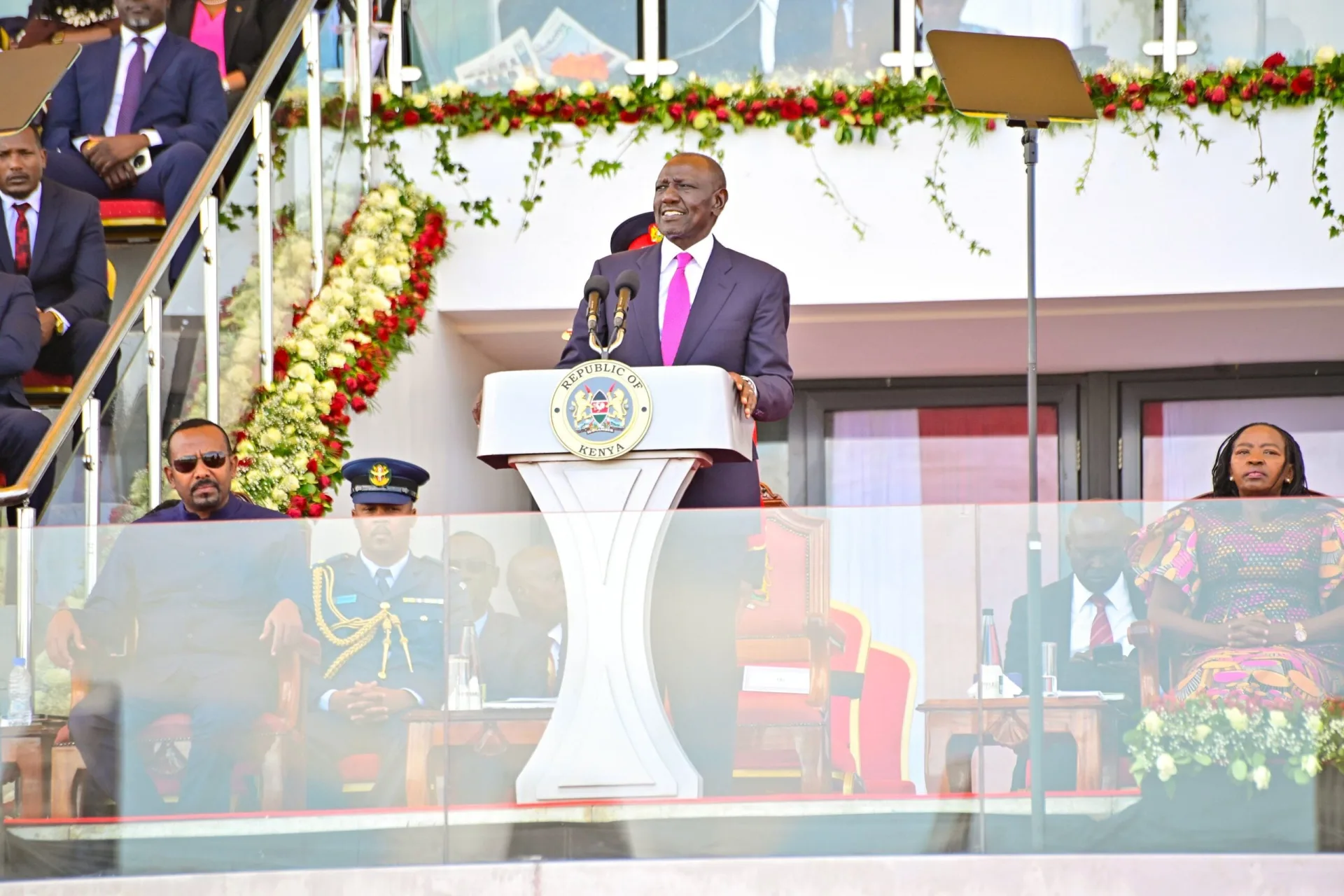
President William Ruto’s Mashujaa Day speech in Eldoret has reignited debate over the country’s economic situation, with concerns emerging over milk prices, food costs and the financial pressure facing ordinary Kenyans.
During the 63rd Mashujaa Day celebrations at Kipchoge Keino Stadium on Tuesday, October 20, 2026, the President highlighted his administration’s achievements in agriculture, arguing that increased production and government interventions had improved farmers’ earnings and helped address the cost of living.
However, figures published by the Central Bank of Kenya (CBK) and reports on rising food prices have raised questions about how these gains are translating into relief for consumers.
Daily Nation reported that Ruto used his Mashujaa Day address to defend his economic record ahead of the 2027 General Election, citing progress in agriculture and outlining measures intended to improve household incomes. The President also announced proposals on taxation, youth employment and access to economic opportunities.
One of the key issues he addressed was milk production, which has become a subject of public discussion in recent weeks.
Citizen Digital reported on October 8 that Ruto had announced an increase in Kenya’s annual milk production from approximately 4.5 billion litres to 5.6 billion litres. The President attributed the growth to agricultural interventions, including reduced fertiliser prices, which he said had helped farmers increase fodder production and improve dairy productivity.
During his Mashujaa Day speech, Ruto repeated the claim, saying national milk production had increased by one billion litres. He also announced that dairy farmers would receive KSh65 per litre, alongside an additional bonus of KSh2 per litre payable quarterly.
The Star reported on October 20 that the new payment arrangement was part of the government's efforts to increase farmers’ earnings and strengthen the dairy sector. According to the publication, Ruto said the price paid to farmers had risen from KSh35 to KSh60 per litre before the latest adjustment.
However, the increase in national production has not eliminated concerns about milk availability and retail prices.
People Daily reported on October 20 that the President's announcement came amid continuing milk supply challenges that had affected households, retailers and businesses. The publication also reported that the government intended to improve milk collection and distribution while addressing outstanding payments to dairy farmers.
The situation raises an important distinction: increased national production does not automatically guarantee that consumers will find milk readily available or affordable in every market.
For households already struggling with essential expenses, the price displayed on supermarket shelves is often more immediate than the production figures announced by the government.
The cost of living formed another major part of Ruto's defence of his administration's economic record.
Citizen Digital reported on October 19 that the President had assured Kenyans that his administration had put measures in place to address food shortages caused by drought. Ruto argued that government support for farmers would help sustain production and keep food costs under control.
However, data released by the Central Bank of Kenya the following day highlighted continuing pressure on food prices.
The Central Bank of Kenya, in its September 2026 Agriculture Sector Survey published on October 20, reported that prices of several sampled food commodities had increased during September compared with August. The survey also indicated that expectations of higher prices for key food items had generally increased, partly because of prolonged dry weather and elevated global oil prices.
The survey examined price movements and expectations among farmers, wholesalers and retailers, providing a picture of the challenges affecting agricultural production and food distribution.
Business Daily reported on October 21, citing the CBK survey, that households faced renewed pressure from food prices and transport costs. The publication highlighted concerns about milk, maize flour, wheat flour and cooking oil, with respondents pointing to supply challenges and higher transportation expenses.
These findings complicate the picture presented in the President's speech. While the government points to increased agricultural production and measures intended to improve farmers' incomes, the latest data show that pressure on food prices remains a concern.
The difference is particularly important for low-income households, which spend a significant proportion of their earnings on basic necessities.
The debate has also extended beyond food prices to the cost of fuel and transportation, both of which affect the cost of moving agricultural produce from farms to consumers.
The Star reported on October 1 that Kenya's cost of living had risen for the third consecutive month in September, with food and transport costs contributing to the pressure on household budgets.
The publication cited Kenya National Bureau of Statistics data showing that annual inflation had risen to 6.8 per cent in September, up from 6.6 per cent in August. The report also highlighted increases in the prices of several essential commodities, including fresh packeted milk and wheat flour.
These figures do not mean that every household has experienced the same price increases, but they illustrate why claims of economic improvement continue to be measured against the everyday experiences of consumers.
With the 2027 General Election approaching, the difference between government economic announcements and the cost pressures facing households is likely to remain an important subject of public debate.
For many Kenyans, the real test of economic progress will be whether they can afford milk, maize flour, transport and other necessities without placing additional pressure on already stretched incomes.
Do you believe President Ruto's Mashujaa Day speech reflects the economic reality facing ordinary Kenyans, or is there still a gap between government claims and what people experience on the ground? Share your views in the comments section.


Comments
No approved comments yet.