

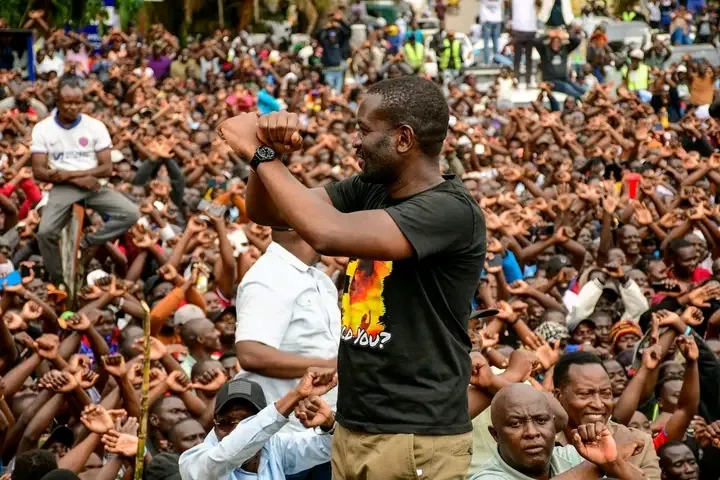
Two recent polls, alongside political engagements involving former Deputy President Rigathi Gachagua and the Linda Mwananchi movement's activities, have intensified questions about whether Sifuna could emerge as a compromise candidate to challenge President William Ruto.
The Research 8020 poll published by The Standard on October 25, 2026, placed Ruto at 26 per cent and Sifuna at 25 per cent. Kalonzo Musyoka followed at 11 per cent, Fred Matiang'i at 9 per cent and Gachagua at 7 per cent, with 5 per cent undecided.
The reported one-percentage-point difference between Ruto and Sifuna has attracted attention, although the poll's methodology, margin of error and question wording are important in determining what the figures actually mean. The results alone do not establish that Sifuna is the strongest opposition candidate.
A separate poll by TIFA reportedly found that 62 per cent of respondents believe Gachagua should not run for president but instead support the strongest candidate capable of defeating Ruto. The survey also found that 52 per cent opposed the broad-based government arrangement, while 30 per cent supported it.
If accurately reported, these findings point to significant questions about opposition unity, candidate selection and public attitudes towards cooperation between political rivals.
Sifuna's growing prominence also comes amid the activities of the Linda Mwananchi movement, which has been seeking to expand its political reach through countrywide engagements. The movement's appeal and its ability to translate public attention into electoral support will be important factors in assessing its influence ahead of 2027.
Another development drawing attention is Sifuna's reported engagement with Gachagua's Democracy for the Citizens Party (DCP). Deputy party leader Cleophas Malala was quoted as saying, "We have settled on Sifuna," a statement that has fuelled speculation about the senator's potential role in a future opposition alliance.
Sifuna also reportedly met Gachagua at Wamunyoro on October 20, ahead of subsequent opposition consultations involving Kalonzo Musyoka.
The political significance of these engagements lies in the possibility of former rivals working together against a common opponent. Sifuna voted in favour of Gachagua's impeachment in 2024, but their current political calculations appear to leave room for cooperation.
Speaking on Citizen TV, Sifuna reportedly said:
"I voted to impeach Gachagua. He paid for his mistakes. But he feels responsible for putting Ruto in power, so has greater responsibility to remove him. We will work with anyone who believes Ruto doesn't deserve an extra day beyond his first term."
The remarks underline Sifuna's willingness to work with political figures who share his opposition to Ruto's re-election, despite their differences over previous political events.
Gachagua has also indicated that the question of who should lead an opposition ticket remains open.
"I can deputise Sifuna. Sifuna can deputise me. Sifuna can deputise Kalonzo. Kalonzo can deputise Sifuna. Formula yet to be decided," Gachagua reportedly said.
His remarks suggest that discussions about the presidential candidate and running mate have not produced a final agreement. Whether the different opposition factions can settle on one ticket without internal disagreements remains a major question.
The economic concerns facing Kenyan voters could also shape the contest. The cost of living, unemployment and opportunities for young people are among the issues likely to influence political debate, particularly among younger voters.
However, the reported polling figures should be treated cautiously until the underlying reports, survey questions and methodologies are independently verified. A national poll showing a close contest does not automatically translate into equivalent support across counties or guarantee a similar outcome on election day.

Comments
No approved comments yet.